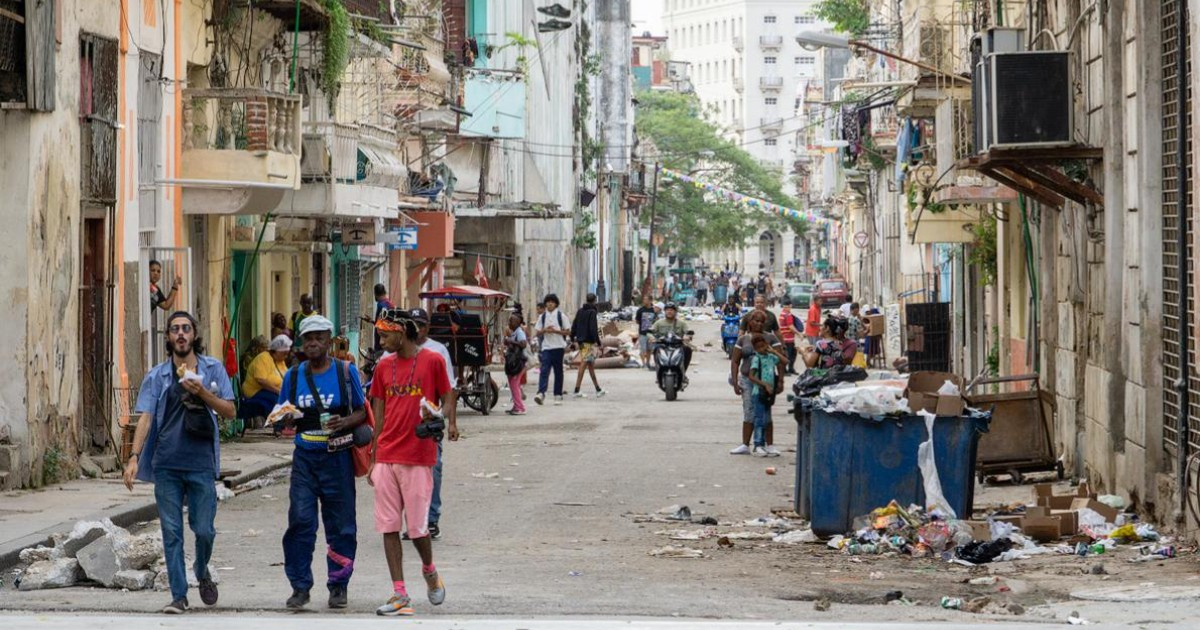
A group of eight independent United Nations human rights experts has issued a joint statement accusing the United States of jeopardizing human rights in Cuba through what they describe as a "fuel blockade." They urge Washington to "immediately" reassess its policy.
The signatories include special rapporteurs on the right to health, access to clean water, and food security, among others, who claim that Washington has pushed Cuba into an "energy famine," with dire implications for the nation’s development and human rights.
The statement emphasizes, "The disruption of fuel supply has worsened the economic and humanitarian challenges in Cuba, disproportionately affecting vulnerable populations."
Highlighting the broader impact, the document notes that restricting fuel access has drastically aggravated shortages across the island, pushing essential services to their limits.
"While the order cites human rights concerns in Cuba, it fails to consider how the measure itself—a unilateral coercive measure—directly undermines the Cuban people's enjoyment of human rights," it asserts.
The Impact on Essential Services
The experts have documented over 96,000 delayed surgeries on the island, including 11,000 affecting children, warning that the crisis has led to "the interruption of critical medical services, contamination of drinking water, and the inability to refrigerate food and medicine."
They referenced data from the Cuban government indicating that 80% of the country's electricity generation relies on fuel oil, with reserves falling below 10% in several refineries. The electrical generation deficit reached an unprecedented 1,945 MW on April 1, resulting in blackouts lasting up to 30 hours in some areas.
Conflicting Narratives
However, the UN experts' narrative starkly contrasts with statements made by Secretary of State Marco Rubio from the White House podium last Monday: "There is no oil blockade against Cuba as such."
Rubio explained that Cuba had been receiving free oil from Venezuela, which the regime resold—about 60% of it—rather than using it for the population: "It wasn't even benefiting the people." He attributed the energy crisis to the collapse of Venezuelan supply—definitively cut off in January after Nicolás Maduro's capture—and to the regime's ineptitude, calling them "incompetent communists running that country."
On the same Friday, Rubio disclosed from Rome that the U.S. has offered $100 million in humanitarian aid to Cuba, of which the regime has only allowed $2.5 million to be distributed through Caritas and the Catholic Church: "It's the regime that's standing in the way."
Havana dismissed the offer as a "dirty political business" and "alms," while the Ministry of Foreign Affairs claimed the U.S. aims to "provoke an outbreak" on the island.
Last Wednesday, Rubio also introduced new sanctions against GAESA, the military conglomerate controlling between 40% and 70% of Cuba's formal economy, describing it as "a holding company created by generals in Cuba that has generated billions of dollars in revenue, none of which benefits the Cuban people." Foreign companies operating with GAESA have until June 5 to cease operations.
The UN experts concluded their statement with a stern warning: "Unilateral sanctions should not be used as a tool for regime change."
This isn't the first instance of such criticism; in February, they had already condemned Trump’s Executive Order 14380—which imposed tariffs on countries exporting oil to Cuba—as a "severe violation of international law," while Trump signed another executive order on May 1 extending sanctions to the energy, defense, mining, and finance sectors.
Understanding the U.S.-Cuba Fuel Dispute
What are the main accusations made by the UN experts against the U.S.?
The UN experts accuse the U.S. of endangering human rights in Cuba through a "fuel blockade," exacerbating economic hardships and disproportionately affecting vulnerable populations.
How has the U.S. responded to the accusations?
The U.S. Secretary of State, Marco Rubio, has denied the existence of a fuel blockade, attributing Cuba’s energy crisis to the collapse of Venezuelan oil supply and the incompetence of the Cuban regime.
What impact has the alleged fuel blockade had on Cuba?
The alleged blockade has led to severe shortages, affecting essential services, delaying surgeries, and causing blackouts, among other humanitarian impacts.