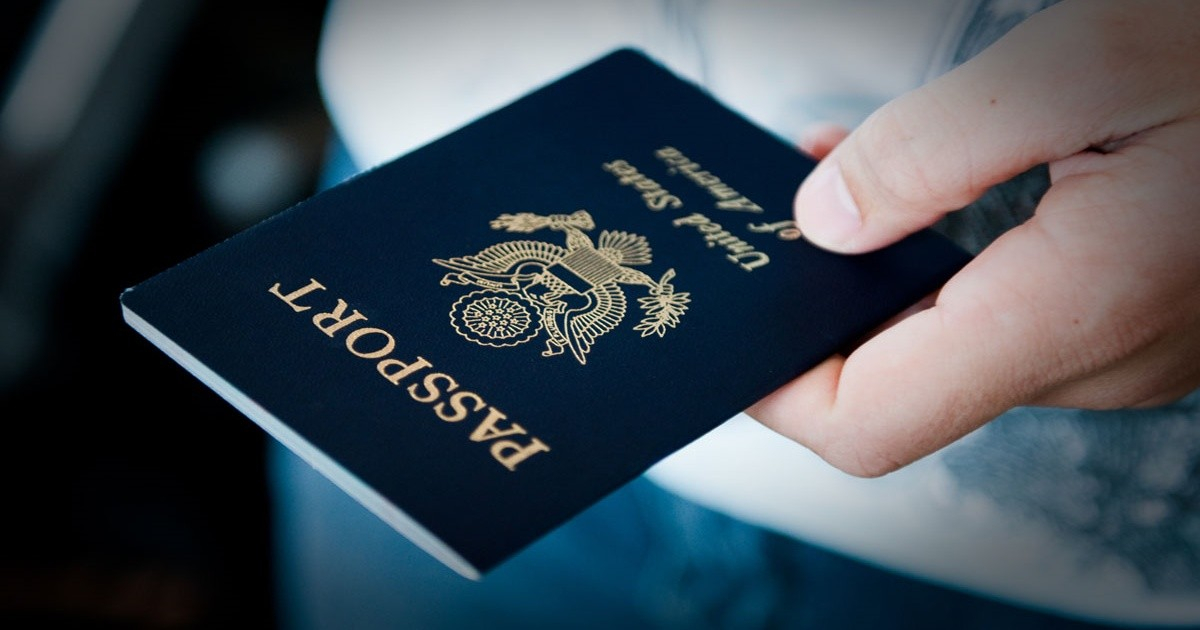
The U.S. State Department has initiated a process to revoke passports from citizens who owe substantial child support, marking the most assertive expansion of a federal program that has been in place since 1996.
Initially, the focus is on around 2,700 passport holders with outstanding child support debts of $100,000 or more, based on figures from the Department of Health and Human Services (HHS).
Subsequent phases will broaden the scope to include any individuals with debts exceeding the legal threshold of $2,500, potentially impacting "many more thousands" of people.
A key aspect of this initiative is that, until now, penalties were only enforced when a debtor applied for a new passport or its renewal.
As of Thursday, HHS will proactively inform the State Department of any debts over $2,500, leading to the automatic revocation of existing and valid passports.
"We are expanding a common-sense practice that has proven effective in compelling those who owe child support to settle their debts. Once these individuals clear their dues, they can once again enjoy the privilege of holding a U.S. passport," stated Mora Namdar, Assistant Secretary of State for Consular Affairs.
The State Department's official notice warns those affected: "Any American with significant child support debt should address their payment with the relevant state immediately to avoid passport revocation."
Once a passport is revoked, it cannot be used for travel. Eligibility for a new one is only restored when the debt is paid to the appropriate state child support enforcement agency, and the individual is no longer listed as delinquent in HHS records.
This measure aligns with the Trump administration's policy of unprecedented coordination with HHS to enforce legal child support obligations.
The State Department views it as a tool to "put American families first through the passport process."
The federal program to deny passports due to child support debts is grounded in the Deficit Reduction Act of 2006, which set the threshold at $2,500.
Historical data supports its effectiveness: in fiscal year 2022, 9,657 passports were denied, collecting $383 million; in 2023, denials increased to 10,200 with $410 million collected.
Overall, the program has recouped $621 million in child support debts.
This action is part of other Trump administration measures related to identity documentation, including issuing commemorative passports featuring Trump, considering the involvement of banks in citizenship verification, and petitioning the Supreme Court to limit birthright citizenship.
Critics argue that restricting travel for debtors could decrease their available income, thus reducing their actual payment capacity, particularly affecting parents with criminal records.
However, the initial announcement of the expanded program, reported in February 2026, appears to have prompted results: since then, hundreds of parents reportedly settled their arrears with state authorities before their documents were formally revoked.
FAQs on Child Support Debt and Passport Revocation
What triggers the revocation of a U.S. passport due to child support debt?
Passports are revoked when an individual owes more than $2,500 in child support, as reported by the Department of Health and Human Services to the State Department.
Can a revoked passport be used for travel?
No, a revoked passport cannot be used for travel. It only becomes valid again once the outstanding debt is resolved with the state agency, and the individual is cleared from delinquency records.
How much child support debt was collected in recent years through this program?
In fiscal year 2022, $383 million was collected, and in 2023, $410 million was collected through the program, totaling $621 million in recovered debts.