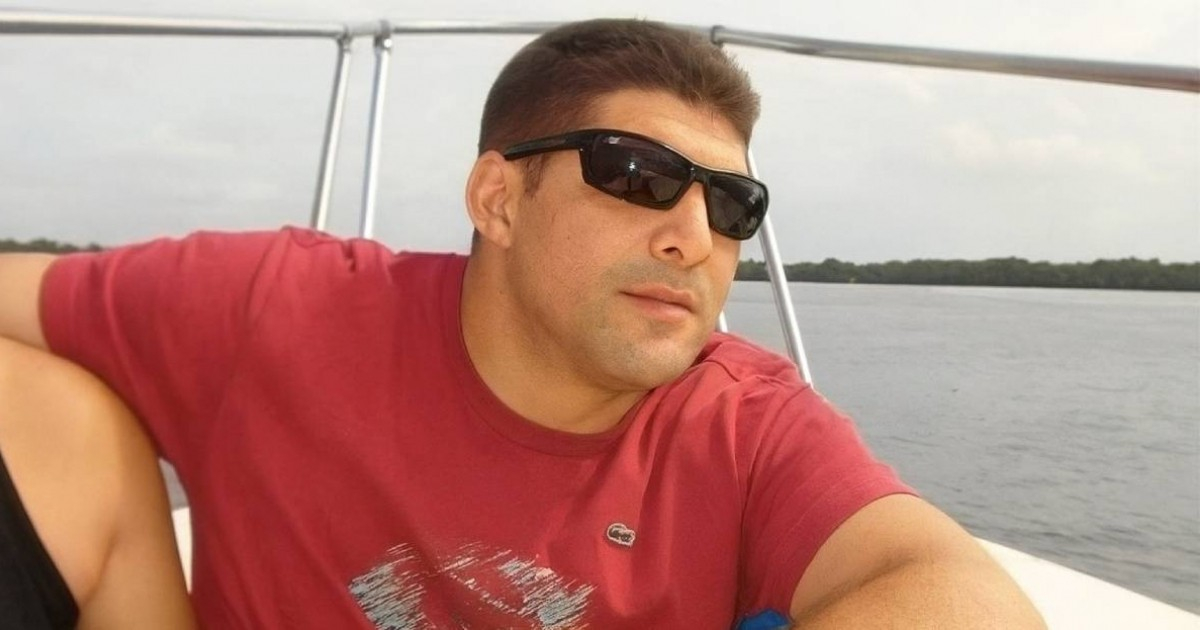
Recently, the Trump administration unveiled a fresh set of sanctions against Cuba, targeting Ania Guillermina Lastres Morera, the executive president of the Business Administration Group S.A. (GAESA), as part of the SDN list. However, conspicuously absent from any punitive actions was Raúl Guillermo Rodríguez Castro, often referred to as "El Cangrejo." He is the grandson of Raúl Castro and a lieutenant colonel in the Ministry of the Interior (MININT).
The omission stands out, considering that currently only eight Cubans are included in the SDN list—one of the most stringent measures by the Treasury Department, which entails asset freezes and financial blockades. Despite being the son of the late General Luis Alberto Rodríguez López-Calleja, the former president of GAESA and the first Cuban individually sanctioned by Washington in 2020, El Cangrejo does not appear on this list.
Comparing Cuban Sanctions with Other Regimes
The contrast becomes more striking when comparing Cuba's situation with other sanctioned regimes. For instance, Russia has over 1,500 individuals on the SDN list due to the conflict in Ukraine, while Venezuela's count exceeds a hundred. Despite over six decades of dictatorship, Cuba has only eight names on the list, including one deceased individual, even after notable events like the Maleconazo, the 1989 Cause 1, and the death of Oswaldo Payá.
Moreover, figures such as Raúl Castro, Miguel Díaz-Canel, and Alejandro Castro Espín—long considered a key intelligence operator for the regime—are not part of the SDN. Instead, they face only immigration restrictions under Section 7031(c), which bars entry to the United States without freezing assets or blocking financial dealings.
The Strategic Role of "El Cangrejo"
The prevailing theory for El Cangrejo's exclusion suggests his role as a crucial communication channel between Washington and Raúl Castro's inner circle. Since February 2026, Marco Rubio's advisors have reportedly held surprisingly cordial meetings with Rodríguez Castro in Basseterre, the capital of Saint Kitts and Nevis, focusing on Cuba's future.
Additionally, on April 10, a U.S. State Department delegation arrived in Havana on the first official American flight since 2016. A senior official from the delegation reportedly had a separate meeting with El Cangrejo, confirmed by both Washington and Cuba's Ministry of Foreign Affairs (MINREX).
In the following days, Rodríguez Castro attempted to establish direct communication with Donald Trump through a letter delivered by Roberto Carlos Chamizo González, a MININT agent with business cover. Although Chamizo reached Miami on April 18 with the document, the contact attempt was unsuccessful.
El Cangrejo's Unique Position in Cuban Power
El Cangrejo holds a unique position within Cuba's power structure. Since 2016, he has led the General Directorate of Personal Security for Raúl Castro, controlling access to the former leader. Despite not holding visible posts within the government, Communist Party, or Political Bureau, he was recently seen seated alongside top political body members during a high-level meeting broadcast by Canal Caribe.
Imposing sanctions on him at this time could have severed one of the few communication channels between the Trump administration and Raúl Castro's circle. This comes at a time when Washington continues to publicly apply pressure but remains open to potential negotiations.
Marco Rubio, while announcing the new measures against GAESA and other Cuban officials, indicated that "more sanctions against the Cuban regime will follow in the coming days and weeks," suggesting that El Cangrejo's exclusion is perhaps a strategic choice rather than a political pardon.
Understanding the U.S. Sanctions on Cuba
What is the SDN list?
The SDN list, or Specially Designated Nationals list, is administered by the U.S. Treasury Department. It includes individuals and entities subjected to asset freezes and financial blockades due to their activities or affiliations.
Why was Raúl Guillermo Rodríguez Castro excluded from the sanctions?
The primary reason appears to be his role as a communication channel between the U.S. and Raúl Castro's inner circle, which might be strategically significant for future negotiations.
How do Cuba's sanctions compare to other countries?
Cuba has far fewer individuals on the SDN list compared to countries like Russia and Venezuela, despite its long-standing authoritarian regime and history of human rights violations.