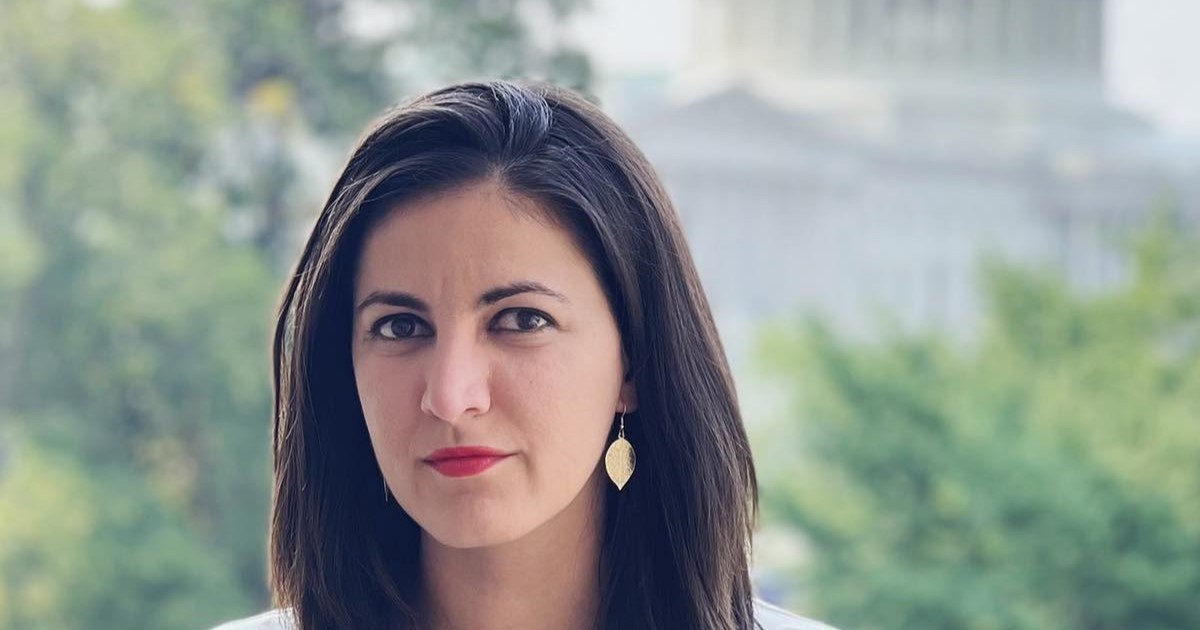
Cuban activist Rosa María Payá expressed her gratitude on Thursday to President Donald Trump and Secretary of State Marco Rubio for the newly imposed sanctions on GAESA and the military leadership of the Cuban regime. She described these measures as a show of solidarity with the people of the island.
Payá shared her message on X (formerly known as Twitter) in response to an announcement from the U.S. Embassy in Cuba, which detailed the State Department's sanctions under the banner "U.S. sanctions target the Cuban military regime and its elites."
"Sanctions targeting the military leadership demonstrate solidarity with the Cuban people. For decades, GAESA and its leading generals have lived luxuriously at the expense of our nation's suffering, while ordinary Cubans endure hunger and blackouts. Holding them accountable is long overdue. Thank you, @POTUS and @SecRubio," the activist wrote.
The sanctions announced by Rubio this Thursday fall under Executive Order 14404, signed by Trump on May 1, which expanded the legal framework for sanctioning individuals and entities linked to repression in Cuba, including secondary measures against foreign banks.
The new measures aim at GAESA as an institution, its executive president, Brigadier General Ania Guillermina Lastres Morera, the mining company Moa Nickel S.A., 12 current and former regime officials, seven military and security entities, and three vessels.
Rubio characterized the military conglomerate as "the heart of Cuba's communist kleptocratic system," designed to generate wealth not for the Cuban people but for the exclusive benefit of its corrupt elites.
The influence of GAESA on the Cuban economy is overwhelming, controlling between 40% and 70% of the island's formal economy, including tourism, ports, remittances, foreign trade, and mining. It holds assets estimated at over $18 billion, with additional illicit assets potentially reaching $20 billion hidden in offshore accounts.
This is not the first time Payá has voiced her support for such measures. On May 2, the activist publicly thanked Trump and Rubio for signing Executive Order 14404, consistently backing Washington's maximum pressure policy.
Since January 2026, the Trump administration has imposed over 240 sanctions against the Cuban regime as part of this strategy, which also led to the release of over 2,000 political prisoners on April 3 under pressure from Washington, although Rubio ruled out any relief without structural political change on the island.
Payá, founder of the Cuba Decide platform and daughter of dissident Oswaldo Payá, has been one of the most vocal supporters of sanctions against GAESA, viewing it not only as an economic mechanism but as a tool of repression against the Cuban populace.
Impact of U.S. Sanctions on Cuba
What is GAESA and why is it significant in Cuba?
GAESA is a powerful military conglomerate in Cuba, controlling a significant portion of the island's economy, including sectors like tourism, ports, and foreign trade. It is seen as a key element in the Cuban regime's control and wealth accumulation.
How do the U.S. sanctions affect the Cuban regime?
The U.S. sanctions aim to target the financial resources of the Cuban regime by restricting entities and individuals linked to its military and economic apparatus. This is intended to pressure the regime towards political change and reduce its repressive capabilities.
What role does Rosa María Payá play in supporting these sanctions?
Rosa María Payá is an activist who has consistently supported U.S. sanctions against the Cuban regime. She views these measures as necessary to hold the regime accountable and support the Cuban people's struggle for freedom and democracy.