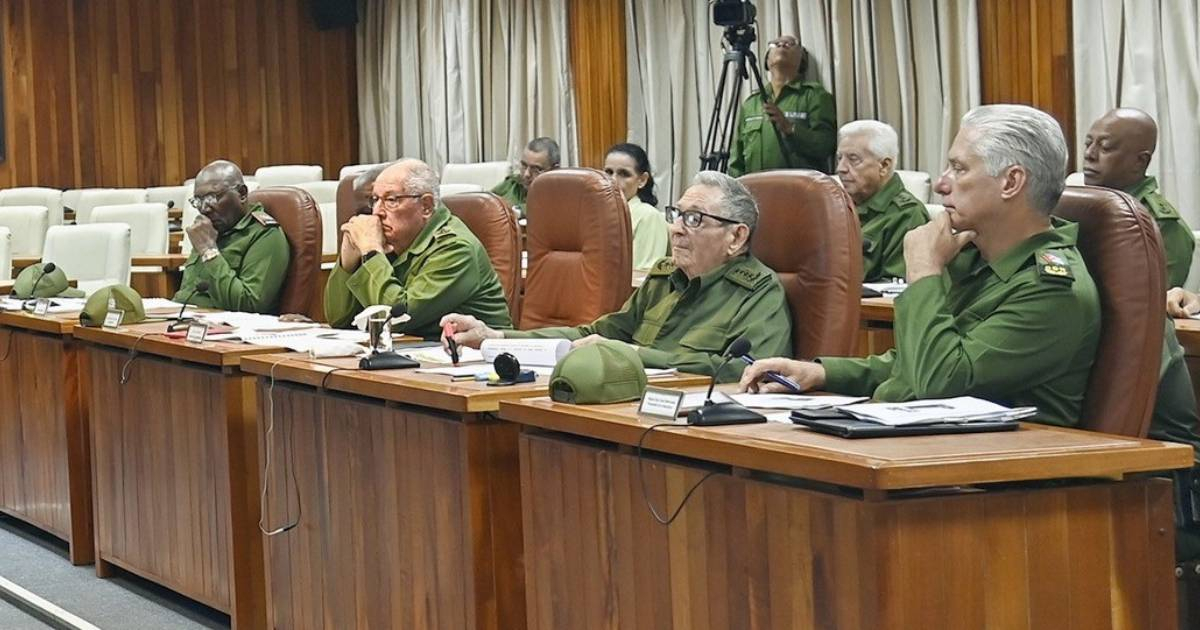
The Executive Order 14404, signed by President Donald Trump on May 1 and officially published today in the Federal Register, tightens sanctions against the Cuban regime by extending them to the adult relatives of individuals designated under this regulation. This unprecedented measure further constrains the military elite's influence on the island.
This order builds upon the national emergency declared by Executive Order 14380 on January 29, labeling the regime's policies as an "unusual and extraordinary threat" to U.S. national security and foreign policy.
The presidential text leaves no room for doubt: "The policies, practices, and actions of the Cuban Government are not only intended to harm the United States but are also offensive to the moral and political values of free and democratic societies."
The Impact of Family Sanctions
The clause targeting family members immediately gains relevance with a documented case: Adys Lastres Morera, sister of GAESA's executive president Ania Guillermina Lastres Morera, arrived in Florida in January 2023. She is listed as the manager of two real estate firms in the state: REMAS Investments LLC and Santa Elena Investments LLC.
This case exemplifies the pattern Washington aims to disrupt: relatives of Cuba's military elite managing assets on U.S. soil.
Initial Designations Under New Order
On the same day as the publication, Secretary of State Marco Rubio announced the first designations under the new order: GAESA, its executive president Ania Lastres Morera, and the mining company Moa Nickel S.A., a joint venture between the Cuban military conglomerate and Canadian Sherritt International.
Rubio described GAESA as "the core of Cuba's kleptocratic communist system," noting its control over approximately 40% or more of the island's economy. He highlighted that its revenue "likely triples the state budget," with illicit foreign assets potentially reaching $20 billion.
Broader Economic and Political Implications
Sanctions on Moa Nickel have already halted mining operations, impacting up to 15% of Cuba's electricity generation capacity and worsening a blackout crisis with outages reaching up to 25 hours daily. This occurs as the nation faces a projected GDP decline of 7.2% by 2026.
The order also freezes all assets and interests in properties within the United States linked to key sectors of the Cuban economy—energy, defense, metals and mining, financial services, and security—and bars their entry into the country.
In addition, it authorizes the Secretary of the Treasury to sanction foreign financial institutions facilitating transactions with those designated, including banning correspondent accounts in the U.S.
The regulation specifies that designations will not require prior notification to those affected, as "the ability to instantly transfer funds or assets would render the measures ineffective" if advance notice were given.
Rubio warned that "new sanctions are anticipated in the coming days and weeks," as part of a maximum pressure strategy that already includes intercepting at least seven tankers bound for Cuba and banning the supply of Russian oil to the island.
Understanding U.S. Sanctions on Cuba
What is the significance of Executive Order 14404?
Executive Order 14404 expands U.S. sanctions against the Cuban regime to include adult relatives of designated individuals, tightening restrictions on the island's military elite.
Who are the initial targets of the new sanctions?
The initial targets include GAESA, its executive president Ania Lastres Morera, and the mining company Moa Nickel S.A., a joint venture with Canadian Sherritt International.
How do the sanctions affect Cuba's economy?
The sanctions impact Cuba's economy by halting operations at Moa Nickel, affecting electricity generation, and freezing assets in key economic sectors.