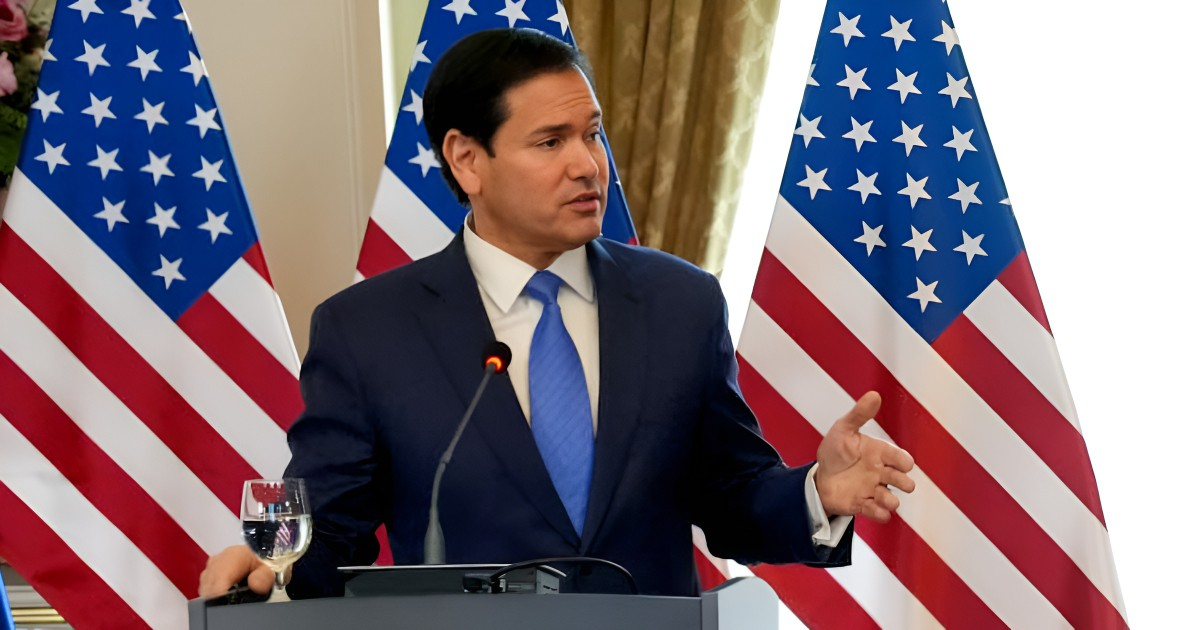
On Thursday, Secretary of State Marco Rubio issued a stern warning, declaring that the Trump administration will not remain idle while Cuba's communist regime poses a threat to U.S. national security. This statement was made in conjunction with the announcement of new sanctions targeting critical entities within Cuba's economic structure.
“Today's sanctions underscore that the Trump administration will not stand by passively as Cuba's communist regime threatens our national security within the hemisphere. We will continue to take action until the regime implements all necessary political and economic reforms,” Rubio stated.
New Sanctions Target Key Cuban Economic Players
The latest sanctions are directed at GAESA — Grupo de Administración Empresarial S.A. — its chief executive Ania Guillermina Lastres Morera, and the state-owned mining company Moa Nickel S.A.
Rubio described GAESA as “the heart of Cuba's kleptocratic communist system,” a military-run conglomerate that controls 40% to 70% of Cuba's formal economy, with assets valued over $18 billion, dominating sectors such as hotels, ports, remittances, and foreign trade.
Immediate Economic Repercussions
The impact was swift: Canadian company Sherritt International Corp., a partner of Moa Nickel, halted all operations in Cuba the same day, withdrew its expatriate employees, and saw three of its directors resign. The company's stock plummeted by up to 30%.
Sherritt's exit exacerbates Cuba's energy crisis, as the company operated the Energas plant, contributing 10% to 15% of the country's electricity generation capacity.
Legal Framework for Sanctions
The sanctions were enacted under Executive Order 14404, signed by Trump on May 1, titled "Imposing Sanctions on Those Responsible for Repression in Cuba and Threats to U.S. National Security and Foreign Policy."
This move is part of a sustained pressure campaign that, since January 2026, has seen over 240 sanctions levied against Cuba, the interception of at least seven tankers bound for the island, and a dramatic 80% to 90% reduction in Cuba's energy imports.
Consequences for Cuban Population
The effects on the Cuban populace are dire: power outages lasting up to 25 hours daily impact more than 55% of the island, and The Economist Intelligence Unit forecasts a 7.2% economic contraction for Cuba in 2026.
Rubio's warning comes shortly after he described Cuba's situation as “unacceptable,” labeling the regime “incompetent communists who don't know how to fix it,” and following his comment in a White House press briefing: “I'm not going to tell you what I discussed with Southern Command, but it had something to do with Cuba.”
On the same day, the U.S. deployed additional personnel to Southern Command amid escalating pressure on the island.
International Reactions to U.S. Sanctions
The Cuban regime's response was typical: Miguel Díaz-Canel condemned the measures as a “brutal genocidal blockade” and accused Trump of “moral poverty,” while Foreign Minister Bruno Rodríguez denounced them as “collective punishment on the Cuban people” and “illegal and abusive.” Meanwhile, China expressed “firm support” for Cuba and demanded Washington halt the sanctions.
Rubio had been unequivocal on April 30: “The deep economic reforms Cuba needs are impossible under the current regime.”
Understanding the Impact of U.S. Sanctions on Cuba
What are the key targets of the new U.S. sanctions on Cuba?
The new U.S. sanctions target GAESA, its CEO Ania Guillermina Lastres Morera, and the state-owned Moa Nickel S.A., aiming to disrupt key components of Cuba's economy.
How have these sanctions impacted Cuba's energy sector?
The sanctions have worsened Cuba's energy crisis, as Sherritt International Corp., which operated a major power plant, has ceased operations, affecting up to 15% of Cuba's electricity generation.
What has been the international response to the U.S. sanctions on Cuba?
China has expressed strong support for Cuba, demanding the U.S. lift the sanctions, while Cuban leaders have criticized the measures as unjust and damaging to their people.