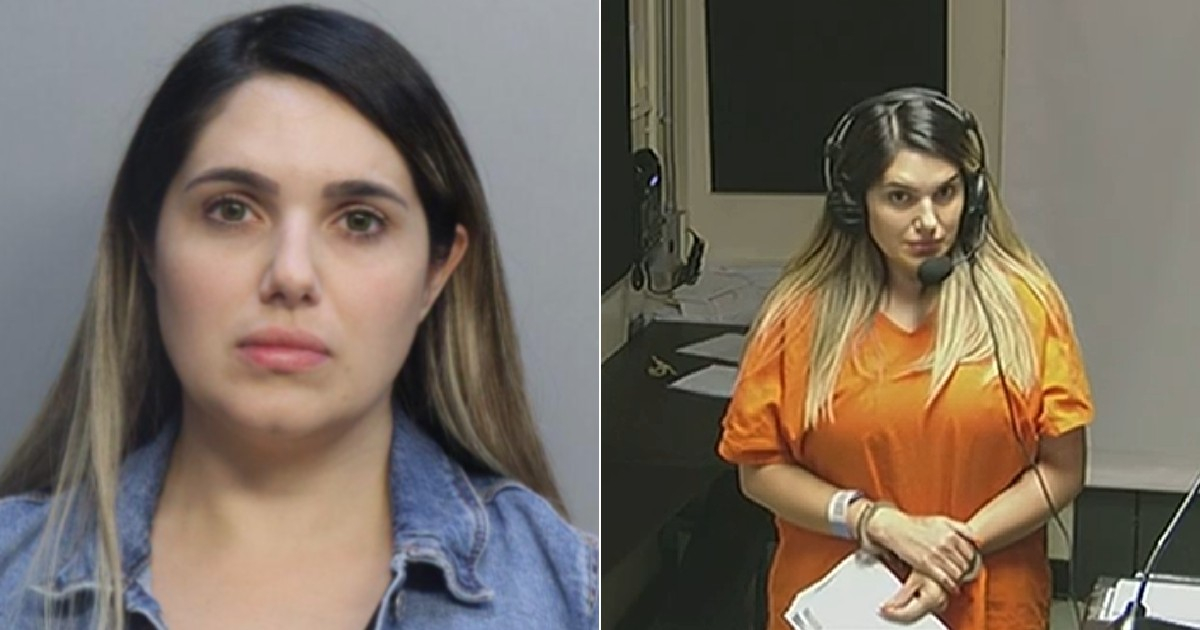
Miriam M. Alonso, a Cuban national, faces serious charges in connection with a vehicle fraud scheme involving the sale of a stolen car, tampering with identification numbers, and forging ownership documents, as announced by authorities.
Alonso, 37, who resides in North Miami, was apprehended on May 4th by agents from the Miami-Dade Sheriff's Office (MDSO) vehicle theft unit at a dealership located at 17301 NW 52 Place, according to the arrest report.
The investigation was initiated on March 18, 2025, when detectives inspected Miami Auto Sales at 2156 NW 27th Ave. in Miami. During this inspection, officers scrutinized a 2023 GMC Yukon and discovered several signs that the vehicle identification number (VIN) and federal safety labels had been altered or forged.
Further investigation revealed that the vehicle had no prior history before being registered in Florida in August 2023, which, according to the authorities, is a classic indicator of VIN fraud. A more thorough check linked the vehicle's true identity to a theft report from Baton Rouge, Louisiana.
To verify the title documents, detectives reached out to the Department of Transportation and Public Works of Puerto Rico, which responded with certified confirmation that the title presented was not valid for a 2023 GMC Yukon. The document's control number was nonexistent, and the registration number actually belonged to a 2011 Mitsubishi Lancer registered in Carolina, Puerto Rico, authorities reported.
The owner of Miami Auto Sales identified a man who claimed to have purchased the vehicle from Alonso and another individual for $50,000, believing the transaction was legitimate because he knew the sellers. The buyer stated that he received bills of sale and title documentation from them.
According to the police report, the man initially hesitated when identifying Alonso in a photo lineup, but confirmed her identity in a second review. Records showed that the vehicle was still registered under Alonso's name at the time of her arrest. Investigators later confirmed that the Puerto Rican title used in the transfer process was fraudulent.
Alonso was taken to the Turner Guilford Knight Correctional Center and faces charges of grand theft, trafficking in stolen property, using false documents, and other vehicle fraud-related offenses.
Vehicle fraud has become a growing issue in South Florida. In February, seven individuals were arrested for auto title fraud at the Hialeah Auto Tag agency, where an employee used their state system access to create fraudulent titles. Shortly after, police apprehended two more people for a fraud involving 25 luxury vehicles valued at $1.5 million.
In January, two Cuban individuals were arrested for stealing a Ferrari and a Rolls Royce Phantom in Miami Beach, and a month earlier, a family was accused of a million-dollar scam at a Miami dealership.
According to the United States Department of Justice's National Motor Vehicle Title Information System, the number of cloned vehicle identification numbers (VIN) doubled between 2019 and 2022, illustrating the growth of this type of fraud nationwide.
Understanding Vehicle Fraud in Florida
What charges does Miriam M. Alonso face?
Miriam M. Alonso is charged with grand theft, trafficking in stolen property, using false documents, and other offenses related to vehicle fraud.
How was the vehicle's true identity discovered?
The true identity of the vehicle was uncovered through a detailed inspection linking it to a theft report from Baton Rouge, Louisiana, and further validated by a certified response from Puerto Rico's Department of Transportation.
What recent trends are seen in vehicle fraud in South Florida?
Recent trends in South Florida show an increase in vehicle fraud cases, including fraudulent title creation and thefts involving high-value luxury vehicles.
What is VIN cloning and why is it a concern?
VIN cloning involves altering a vehicle's identification number to conceal its true identity, often linked to stolen vehicles. This practice is concerning as it complicates tracing vehicle origins and increases fraudulent activity in the market.