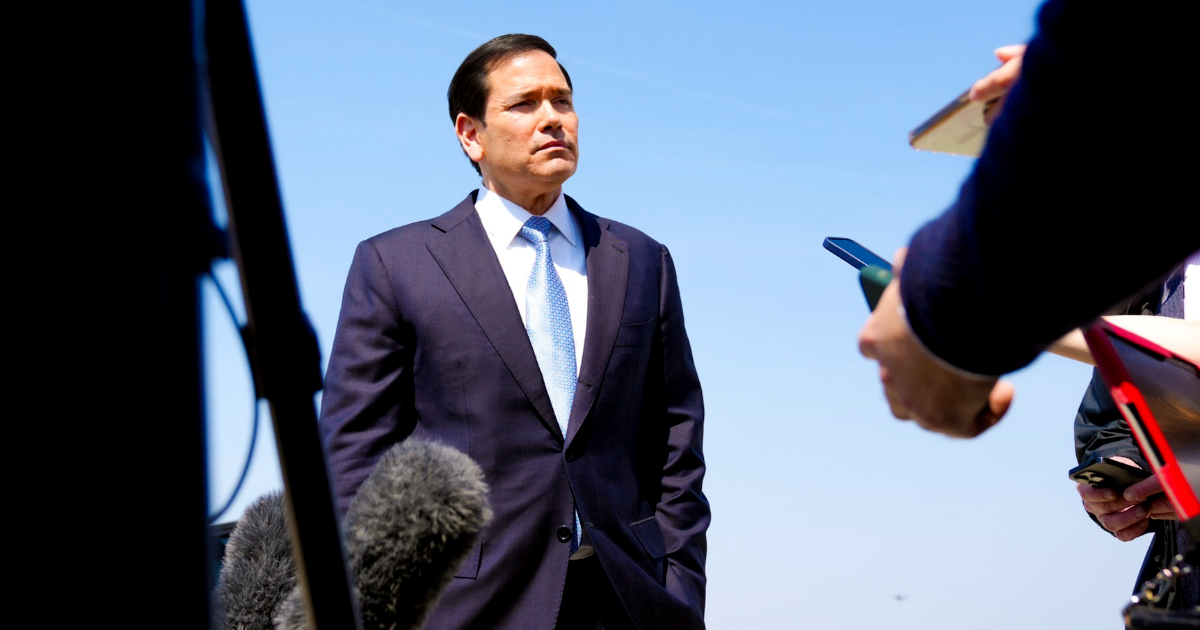
On Thursday, Senator Marco Rubio emphasized that the Trump administration will persist in exerting pressure on Cuba until the communist government enacts vital political and economic reforms. This declaration was made via his official social media account following the announcement of new sanctions against the island nation.
“Today's sanctions illustrate that the Trump administration will not stand idly by while Cuba's communist regime poses a threat to our national security within this hemisphere. We will continue our actions until the regime adopts all necessary political and economic changes,” Rubio declared.
Sanctions Target Key Entities
The sanctions, unveiled on Thursday, target GAESA (Grupo de Administración Empresarial S.A.), a military-run conglomerate controlling between 40% and 70% of Cuba’s formal economy, with assets valued at over $18 billion. Also sanctioned were Ania Guillermina Lastres Morera, an executive director of GAESA, and Moa Nickel S.A., a state-run nickel mining enterprise.
These measures were implemented under an executive order signed by Trump on May 1, titled "Imposing Sanctions on Those Responsible for Repression in Cuba and Threats to the National Security and Foreign Policy of the United States."
Repercussions on International Private Sector
The immediate impact on the international private sector was significant. Sherritt International Corp., a Canadian company, promptly suspended its direct involvement in joint ventures in Cuba, repatriated its expat employees, and witnessed the resignation of three of its directors—Brian Imrie, Richard Moat, and Brett Richards. Consequently, their stock value plummeted by up to 30%.
Since January 2026, these sanctions have been part of an ongoing escalation, totaling over 240 sanctions, intercepting at least seven tankers bound for Cuba, and reducing the island's energy imports by 80% to 90%.
Devastating Impact on Cuban Population
The sanctions' toll on the Cuban populace is severe: blackouts lasting up to 25 hours per day affect more than 55% of the territory. The Economist Intelligence Unit forecasts a 7.2% economic contraction for Cuba in 2026.
Days earlier, Rubio had been more forthright, describing the situation in Cuba as "unacceptable" and labeling the regime as "incompetent communists who don’t know how to fix it." On April 30, he asserted that "the deep economic reforms needed in Cuba are impossible under the current regime."
Cuban Government's Response
The regime responded with its usual rhetoric. Miguel Díaz-Canel condemned the measures as a "brutal genocidal blockade" and accused Trump of "moral poverty," while Foreign Minister Bruno Rodríguez called them "collective punishment on the Cuban people" and "illegal and abusive."
Additionally, on Thursday, the U.S. deployed additional personnel to Southern Command, amid speculation sparked by a viral photo showing Rubio in front of a map of Cuba during the Chiefs of Mission Conference held in Doral, Florida.
Rubio had further fueled this speculation on Wednesday by stating, "I won’t tell you what I discussed with Southern Command, but it had something to do with Cuba."
Frequently Asked Questions about U.S. Sanctions on Cuba
What are the new sanctions imposed on Cuba?
The new sanctions target GAESA, Ania Guillermina Lastres Morera, and Moa Nickel S.A., focusing on military and state-run enterprises in Cuba.
How have these sanctions impacted international companies?
International companies, such as Sherritt International Corp., have suspended operations, repatriated staff, and seen significant stock value drops.
What has been the Cuban government's reaction to the sanctions?
Cuban leaders have condemned the sanctions as a brutal blockade and accused the U.S. of moral poverty and illegal collective punishment.