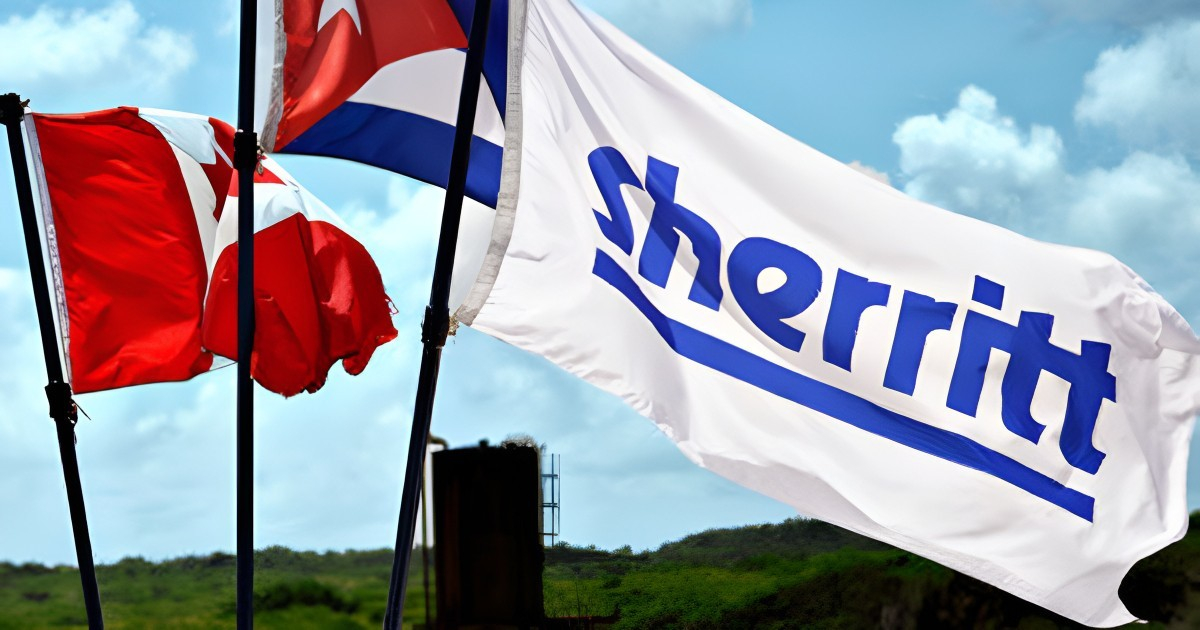
The U.S. State Department formally charged Canadian mining company Sherritt International on Thursday with "exploiting Cuba's natural resources to benefit the regime at the expense of the Cuban people," as part of a statement accompanying new sanctions against entities connected to the Cuban government.
Secretary of State Marco Rubio announced sanctions targeting three entities: Grupo de Administración Empresarial S.A. (GAESA), its executive president Ania Guillermina Lastres Morera, and Moa Nickel S.A. (MNSA), a joint venture that Sherritt has operated in Cuba since 1994.
The statement further accused Sherritt of "profiting from assets originally confiscated by the Cuban regime from U.S. citizens and corporations," referring specifically to the mining facilities in Moa, Holguín.
Sherritt responded promptly: the company announced the suspension of its direct involvement in all joint ventures in Cuba and began repatriating its expatriate employees on the same day.
Three board members, including President Brian Imrie, Richard Moat, and Brett Richards, resigned immediately.
The decisive factor was the implementation of secondary sanctions on foreign financial institutions dealing with blocked Cuban entities, a measure included in an executive order signed by Trump on May 1, which directly threatened Sherritt's access to the international banking system.
Two days earlier, on May 5, the mining firm had issued a corporate alert regarding the implications of the executive order, stating that it was consulting advisors to evaluate the next steps.
Sherritt's withdrawal deprives the regime of its largest foreign mining partner and approximately 10% to 15% of its independent power generation capacity, operated through Energas S.A., which manages 506 MW of installed power.
Rubio described GAESA as "the heart of Cuba's kleptocratic communist system," controlled by the Revolutionary Armed Forces.
The military conglomerate dominates between 40% and 70% of the formal Cuban economy, controls 95% of foreign currency transactions, and holds assets estimated at over $18 billion, with revenues exceeding 3.2 times the Cuban State Budget.
The labor model of joint ventures was also criticized: Sherritt paid the Cuban state in foreign currency, while Cuban workers received minimum wages in pesos, equivalent to just a few dollars monthly, without independent unions.
Sherritt's nickel production in Cuba fell from 34,876 tons in 2021 to 25,240 tons in 2025, affected by the energy crisis, supply shortages, and Hurricane Melissa.
In January 2026, the company had already temporarily suspended operations at Moa Nickel due to fuel shortages, anticipating the deterioration that led to its definitive exit.
Since January 2026, the Trump administration has imposed over 240 sanctions against the regime, intercepted at least seven tankers, and reduced the island's energy imports by 80% to 90%, causing power outages lasting up to 25 hours daily in more than 55% of Cuban territory.
Rubio warned that "additional designations can be expected in the coming days and weeks."
Impacts of Sanctions on Sherritt International and Cuba
What entities were sanctioned by the Trump administration?
The Trump administration sanctioned Grupo de Administración Empresarial S.A. (GAESA), its executive president Ania Guillermina Lastres Morera, and Moa Nickel S.A. (MNSA).
How did Sherritt International respond to the sanctions?
Sherritt International suspended its direct involvement in joint ventures in Cuba and initiated the repatriation of its expatriate employees. Additionally, three board members resigned immediately.
What impact did the sanctions have on Cuba's energy sector?
The sanctions led to a significant reduction in Cuba's energy imports, causing widespread power outages across more than 55% of the territory, and deprived the regime of its largest foreign mining partner.