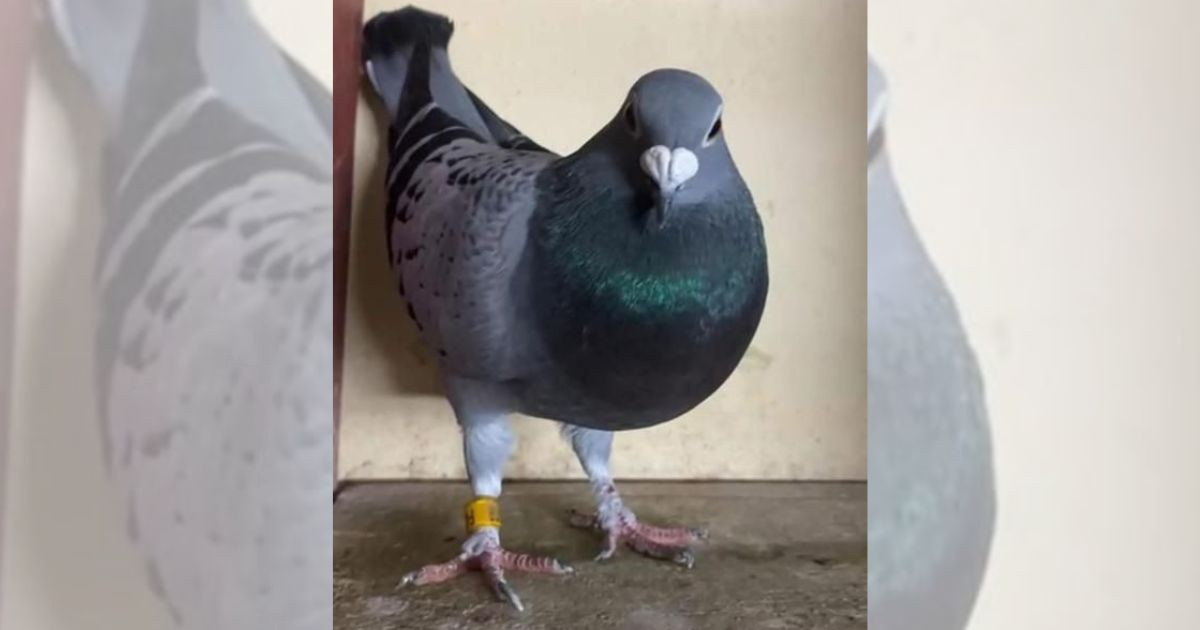
A $2,000 reward has sparked a buzz on Cuban social media following the disappearance of a registered carrier pigeon during a competitive flight from Maisí, Guantánamo, to Ciego de Ávila in central Cuba last Saturday.
The announcement was made on Facebook by Yunior Tamayo Barrios, acting as an intermediary for the bird's owner.
"It got lost on the Saturday flight from Maisí to Ciego, the pigeon's number is 903018. Please, whoever has it will receive a reward... $2,000 USD for its return," he posted, urging the message to be shared across groups to locate the bird "before it gets harmed."
The Pigeon's Distinctive Identification
The bird carries a yellow band on its left leg with the registration number 903018, indicating it is officially registered in Cuban pigeon racing.
These bands are placed between the seventh and ninth day of a squab's life and serve as a unique identification document for the pigeon within the relevant federation.
Challenging Flight and High Stakes
The Maisí-Ciego de Ávila route spans approximately 650-670 km in a straight line, one of the longest distances in the national Cuban pigeon racing championships, which includes flights up to 920 km.
This category, known as "long-distance" or "marathon," is the most demanding in the sport, and pigeons that undertake these journeys are of high genetic value, trained over several years.
A pigeon from Camagüey recently won the pigeon racing championship, highlighting the sport's active presence in the island's central region.
A Reward That Stands Out
The reward amount was as striking as the bird's story. With an average monthly salary in Cuba amounting to 6,930 pesos in 2025, roughly equivalent to five to 15 USD on the informal exchange, the $2,000 reward represents over two decades of the average Cuban salary.
The disparity did not go unnoticed in the comments.
"Is that a pigeon or a car?" asked Orleidys Lobaina in disbelief. "I never would have imagined a pigeon could be worth so much," commented Ailer Lezcano. Others were more optimistic: "With that sum, it will show up soon, don't worry," suggested Ey Ama Eve.
Community Reactions and Sighting Reports
Humor also found its place. "The hawk says he doesn't need dollars, just food," joked Dylan Alarcón Hernández. Roberto Felipe was more blunt: "Bro, it's probably soup by now." To which Chavely Alvarez replied, "Well, whoever made the soup must be crying seeing the reward for the pigeon."
Some users reported possible sightings. Chely Tamayo claimed to have seen "a blue pigeon in La Máquina, Maisí, perched on a roof, thirsty," although she couldn't confirm the number and clarified it was "quite similar" but not identical. From Nicaro, Holguín, Yisel Perez mentioned her husband found a pigeon on Tuesday, but after comparing the photo, they ruled out it was the same one.
There were also voices questioning the decision to fly the bird on such a long route. "If it has sentimental value, it's better not to fly it because the only one that doesn't get lost is the one that stays home," reflected Jeiner Carbajal Carballes. Vladimir Rodríguez echoed the sentiment: "Why fly it then, where it risks predators and human hunting? If they recover it, they shouldn't fly it again."
Anyone with information about the pigeon's whereabouts can contact via WhatsApp at 05 6919202.
Common Concerns About Pigeon Racing in Cuba
Why are pigeon races so popular in Cuba?
Pigeon racing is a long-standing tradition in Cuba, valued for its cultural heritage and the skill involved in raising and training pigeons for long-distance flights.
What makes a pigeon valuable in racing competitions?
Racing pigeons are valued for their genetic lineage, training, and ability to complete long and challenging flights. Their success in competitions can significantly enhance their worth.