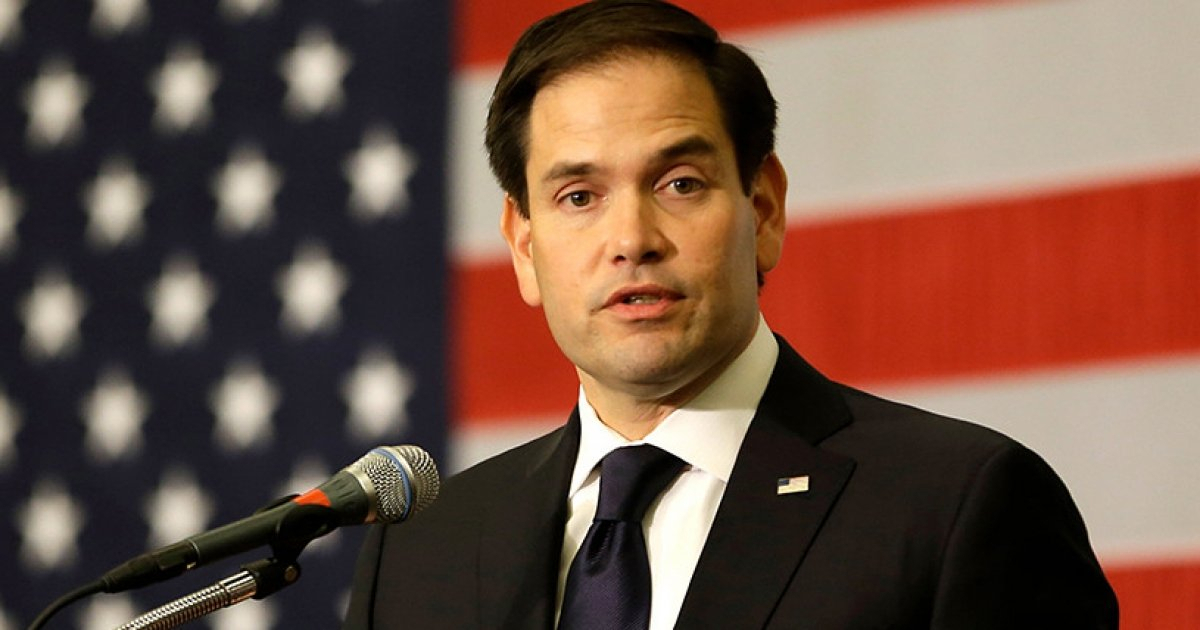
The Trump Administration unveiled a fresh wave of sanctions on Thursday, aimed squarely at the Cuban military conglomerate GAESA, which Washington views as the primary financial pillar of Havana's regime.
This escalation, spearheaded by Secretary of State Marco Rubio, is part of a broader strategy to intensify pressure on the Cuban government. Implemented under Executive Order 14404, signed by President Trump on May 1, the sanctions also target Cuban executive Ania Guillermina Lastres Morera and the company Moa Nickel S.A. (MNSA), associated with Cuba's mining sector.
In an official statement, Rubio emphasized that the Trump Administration is taking "decisive actions to safeguard U.S. national security and deny the Cuban communist regime and military access to illicit assets."
Washington accuses GAESA of exerting control over a significant portion of the Cuban economy and operating a system designed to enrich the military and political elite, while the general population suffers from severe economic hardship, frequent blackouts, and shortages of food and medicine.
"GAESA, a military-controlled umbrella company, is at the heart of Cuba's kleptocratic communist system," the State Department declared.
GAESA's Financial Grip on Cuba
The statement asserts that the military conglomerate oversees "approximately 40% or more of the island's economy" and generates revenue that "likely triples the state's budget."
Additionally, Washington alleges that GAESA might be managing up to $20 billion in illicit assets abroad.
The sanctions extend to include Ania Guillermina Lastres Morera, identified as the executive president of GAESA and accused by the U.S. of handling the organization's external assets.
Impact on Moa Nickel S.A.
The State Department also sanctioned Moa Nickel S.A., a joint venture between Canada's Sherritt International Corporation and Cuba's state-owned General Nickel Company.
According to U.S. officials, the company "has exploited Cuba's natural resources to benefit the regime at the expense of the Cuban people."
Rubio's statement further accused the Cuban regime of turning the island into "a platform for foreign intelligence, military, and terrorist operations" just 90 miles from U.S. shores.
Details of the Sanctions
As part of these measures, all properties and financial interests of the sanctioned entities and individuals located in the United States or under the control of U.S. citizens are frozen.
Additionally, financial or commercial transactions with the listed individuals and companies are prohibited.
The sanctions specifically include:
- GAESA's inclusion on the U.S. sanctions list, blocking the military conglomerate under Executive Order 14404.
- The freezing of assets under U.S. jurisdiction: all properties and financial interests of GAESA within the United States or under American control are frozen.
- The blocking of companies controlled by GAESA: entities where GAESA holds 50% or more ownership, directly or indirectly, are also affected.
- A ban on transactions with U.S. persons: U.S. citizens, companies, and institutions are prohibited from conducting business or financial transactions with GAESA, unless authorized by the OFAC.
- A prohibition on providing funds, goods, or services: supplying or receiving funds, goods, or services to/from GAESA is banned.
- Risk of sanctions for foreign third parties: non-U.S. individuals, companies, or financial institutions engaging in transactions with GAESA could face sanctions.
- Increased scrutiny of overseas assets: GAESA's control of illicit assets outside Cuba is now under heightened pressure from Washington.
Washington also cautioned that foreign companies and financial institutions doing business with sanctioned entities might be subject to future punitive actions.
The Trump Administration made it clear that these new sanctions are part of a larger strategy to increase pressure on the Cuban regime. "Further sanctions are expected in the coming days and weeks," the statement noted.
The State Department stated that these actions aim to intensify pressure on those responsible for repression in Cuba and promote "human rights, the rule of law, free markets, and democracy" on the island.
Frequently Asked Questions about GAESA Sanctions
What is GAESA and why is it significant?
GAESA is a military-controlled conglomerate that oversees a substantial portion of Cuba's economy, acting as a major financial pillar for the Cuban regime.
Why did the U.S. impose sanctions on GAESA?
The U.S. imposed sanctions on GAESA to deny the Cuban military and government access to illicit funds and to pressure the regime to respect human rights and democracy.
How do these sanctions impact U.S. citizens?
U.S. citizens and companies are prohibited from engaging in financial transactions with GAESA, and any assets under U.S. jurisdiction are frozen.