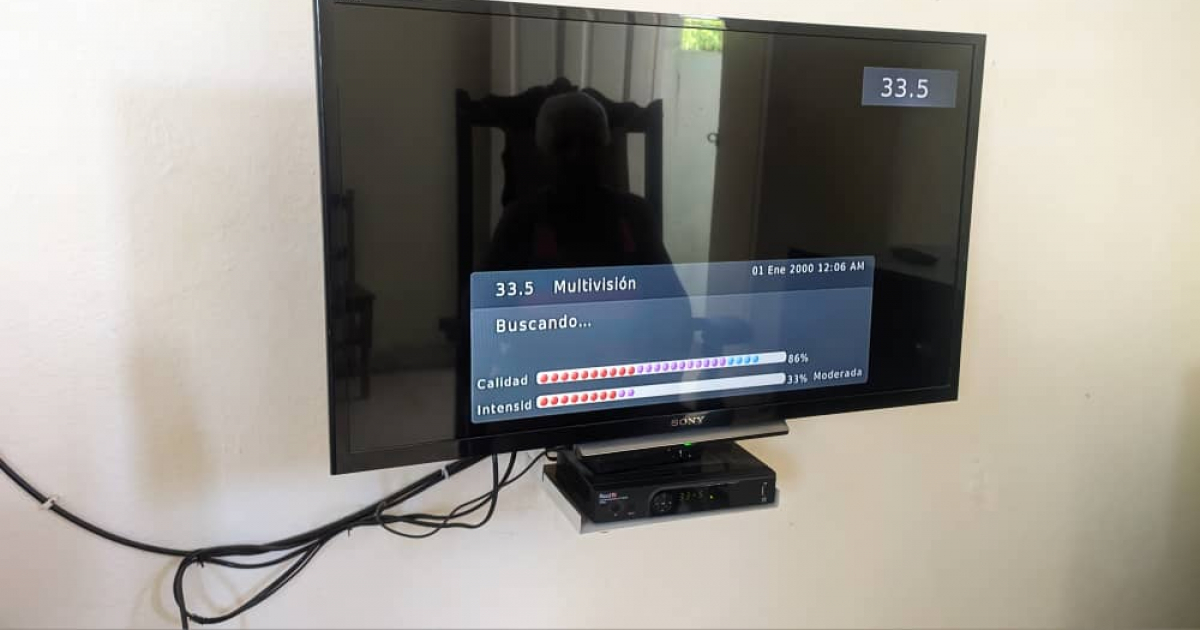
The main Broadcast Center for Radio and Television in Boniato, Santiago de Cuba, went off the air on Thursday morning, according to an official statement from TV Santiago, which confirmed a complete halt in transmissions at 9:00 am.
Authorities have cited a "shortage in power generation and fuel supply in the province" as the reason, as stated in a social media post.
Boniato serves as the hub for broadcasting all major radio and television signals throughout the province, including Radio Rebelde, Radio Progreso, CMKC Radio Revolución, Mambí, and Siboney on FM, as well as Cubavisión in both analog and digital formats.
This disruption leaves hundreds of thousands of residents in Santiago without access to any state-run broadcasting signals.
TV Santiago acknowledged in their statement that they "continue to communicate with the public through official channels" and offered "apologies for any inconvenience these disruptions may cause."
This incident is not isolated. In May 2025, Pinar del Río experienced a similar issue, when only seven out of 28 provincial transmission centers had backup power.
Other areas like Matanzas, Baracoa-Guantánamo, and Holguín have also faced interruptions due to the same reasons between 2025 and January 2026.
The ongoing energy crisis causing these collapses is a systemic problem. Cuba produces merely 40,000 barrels of crude oil daily while consuming over 110,000, and power generation dropped by 13.7% in 2025.
Between January and April 2026, Cuba received just one fuel shipment—the Russian tanker Anatoly Kolodkin carrying 730,000 barrels, which docked in Matanzas on March 31—while needing at least eight shipments monthly to meet electricity demands. Even Miguel Díaz-Canel admitted the nation "went four months without receiving a drop of fuel."
The fuel from that single shipment was distributed starting April 17 and ran out by the end of that month. Blackouts in eastern Cuba have worsened since, with Santiago de Cuba experiencing outages up to 24 hours daily during the last week of April.
The national electricity deficit reached 1,731 MW on May 5 at 8:20 pm, and the day before, availability was just 1,390 MW against a demand of 2,772 MW. The highest recorded level in 2026 was 2,075 MW on March 6, leaving over two-thirds of the country in darkness.
In February 2026, a failure at the Holguín 220 kV substation left 100% of Granma, Santiago de Cuba, and Guantánamo without power, highlighting the extreme fragility of the electricity grid in the eastern part of the country.
A second Russian tanker, the Sea Horse Universal, diverted in the North Atlantic with no confirmed arrival date, possibly delayed until the end of May. This suggests that radio and television signals in Santiago de Cuba might remain off indefinitely.
Understanding Cuba's Power Crisis
What caused the media blackout in Santiago de Cuba?
The blackout was caused by a shortage in power generation and fuel supply in the province, as stated by local authorities.
How is the energy crisis affecting Cuba?
Cuba's energy crisis has led to significant disruptions in electricity supply, affecting daily life and state-run media broadcasts. The country produces far less crude oil than it consumes, and power generation has significantly decreased.
How often does Cuba receive fuel shipments?
Cuba requires at least eight fuel shipments monthly to meet its electricity demand, but between January and April 2026, it only received one shipment.