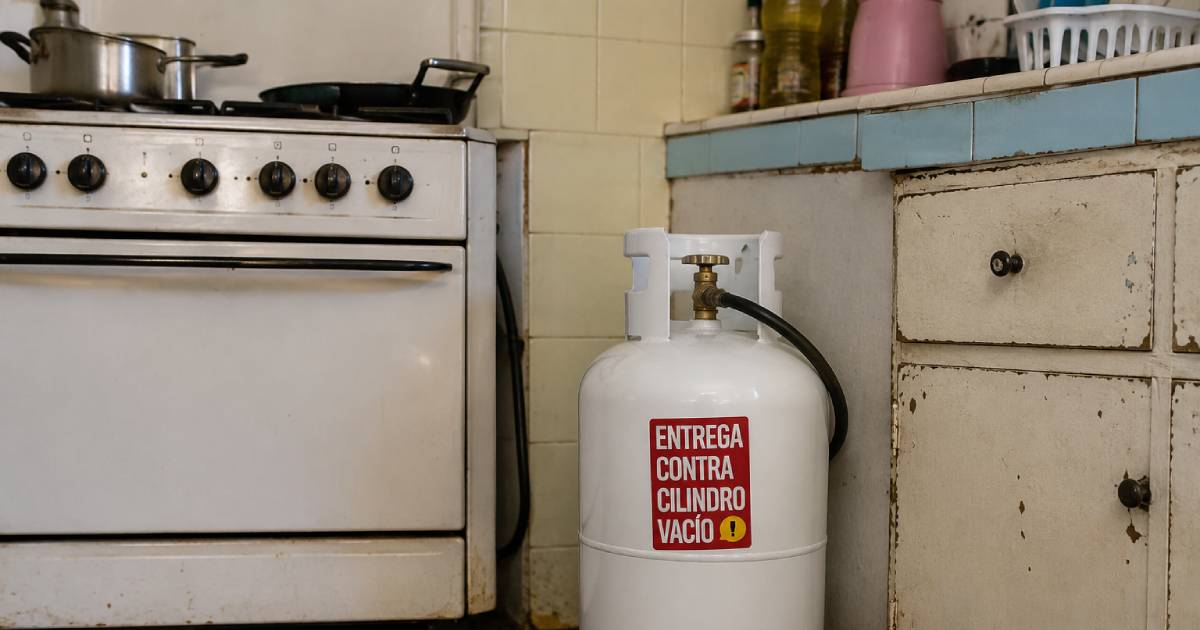
Faced with a severe energy crisis, the Cuban regime has opened the door to a venture once deemed unimaginable: the private importation of liquefied gas from the United States for sale in dollars on the island.
Recently, platforms such as Katapulk and Supermarket23 have begun offering 10-kilogram liquefied gas cylinders, commonly known as "balitas," for $29, with delivery options available in Havana.
This gas-for-dollars exchange requires customers to receive a filled cylinder in return for an empty one in good condition.
The gas supplied through these platforms is imported from the United States by Cuban micro-enterprises (mipymes) operating under licenses sanctioned by the U.S. government.
Shift in Cuba's Energy Landscape
This setup represents a substantial shift in Cuba's energy sector. As CUPET struggles with supply shortages and financial constraints to maintain state supply, private entities trading in foreign currency have identified a business opportunity amidst the scarcity.
The operation involves private LPG imports managed by mipymes, which then distribute the product through digital platforms primarily targeted at Cubans abroad who typically pay from outside the island.
The product is delivered sealed, without installation included. Furthermore, companies require that the returned empty cylinder must be free of perforations, advanced rust, or structural damage.
Challenges of a Dual Economy
The rise of this market coincides with one of the worst periods for state-supplied liquefied gas in Cuba. In January 2026, the tanker Emilia returned empty to the country due to the regime’s inability to pay, exacerbating shortages in several provinces.
Simultaneously, the government has been expanding the dollarization of strategic sectors. Dozens of state-owned service stations have begun selling fuel exclusively in dollars, while the private sector has been authorized to import diesel and now liquefied gas as well.
Currently, purchasing a "balita" at $29 equates to roughly 15,660 Cuban pesos at the informal exchange rate, an unaffordable amount for most workers earning in the national currency.
In reality, this new gas market highlights two parallel economies in Cuba: a state economy unable to provide basic services and a dollarized circuit where only those receiving remittances or with access to foreign currency can obtain essential fuels for cooking amid power outages.
Understanding Cuba's Energy Market Shift
How are private enterprises importing gas to Cuba?
Private enterprises in Cuba are importing gas from the United States using licenses authorized by the U.S. government. These imports are managed by micro-enterprises (mipymes), which then sell the gas through digital platforms.
What challenges does the state face in supplying gas?
The Cuban state faces significant challenges in supplying gas due to financial difficulties and a lack of resources, leading to shortages and an inability to meet the needs of the population.
Why is the importation of gas from the U.S. significant for Cuba?
The importation of gas from the U.S. marks a significant shift as it introduces a private, dollar-based market in a country where the state has traditionally controlled energy supplies. This move could provide a more reliable energy source for those with access to dollars.