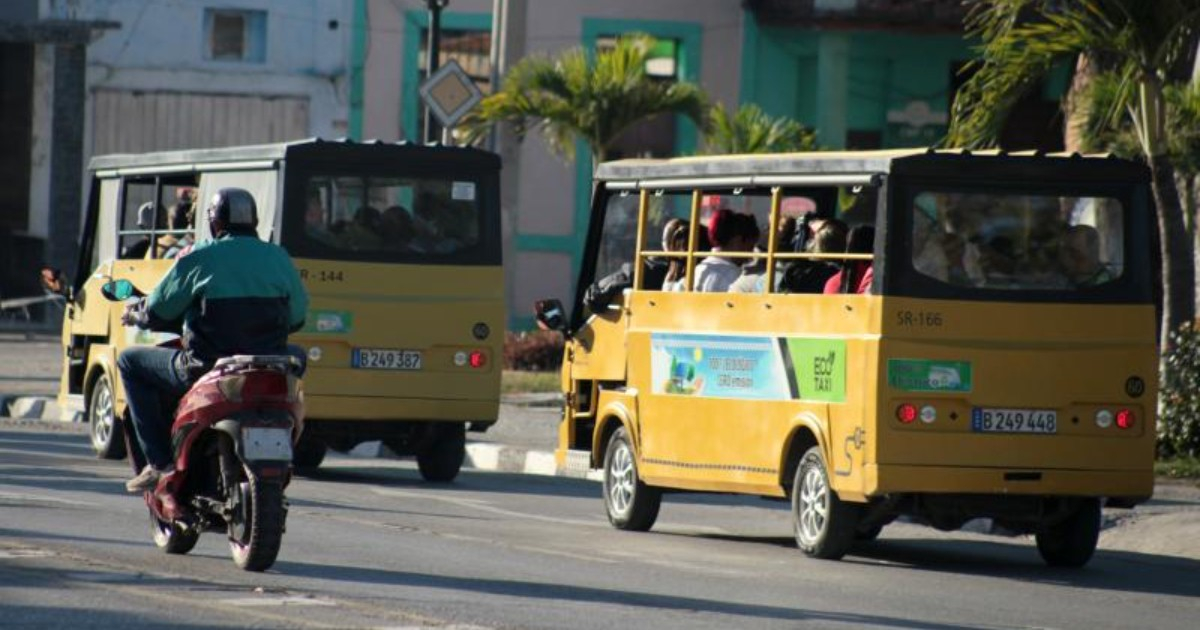
The ongoing fuel crisis in Cuba continues to severely impact public transportation. On Wednesday, authorities in Sancti Spíritus announced the suspension and adjustment of several passenger services due to the dwindling diesel supply in the province.
The Provincial Transportation Directorate of the People's Power Administration explained that the decision aims to prioritize "essential services" with the limited resources on hand.
Among the most significant disruptions is the cessation of bus services between municipalities and the provincial capital starting Thursday, as well as the halt of intercity transportation within Sancti Spíritus city.
Additionally, routes to the communities of Paredes, Guasimal, and Tunas de Zaza have been suspended, according to statements by Alberto Martínez García, director of the Provincial Transportation Company, as reported by state media Escambray.
For now, the connection between Sancti Spíritus and Havana will continue with one daily departure at 1:00 a.m. and a return trip at 2:40 p.m.
Authorities have ensured that some critical services will remain operational, such as the transport of medical staff to provincial hospitals and the medibús routes within the province, as well as those leading to Santa Clara and Havana.
In addition, transportation for dialysis patients and the distribution of food related to the basic food basket and social consumption will be maintained.
José Lorenzo García, director of Provincial Transportation, confirmed that ecomobiles will continue to operate in the municipalities of Trinidad, Yaguajay, Cabaiguán, and Sancti Spíritus.
Amidst the crisis, officials also announced the upcoming arrival of 10 electric cars for the Health system in Trinidad and 10 electric tricycles to serve Jatibonico and Fomento.
This is not the first time the province has faced such a predicament. In February, passengers were left stranded at the Sancti Spíritus terminal heading to eastern provinces for similar reasons, leading to the suspension of Diana buses, local trains, and intercity services.
The crisis stems from a structural collapse in the hydrocarbon supply. Since January 2026, Venezuela ceased its daily shipment of 32,000 to 35,000 barrels following Nicolás Maduro's capture, and Pemex halted exports to Cuba over debts exceeding $1.5 billion. The only relief came on March 31, when a Russian tanker docked in Matanzas with 730,000 barrels, sufficient for just seven to ten days of national consumption.
President Miguel Díaz-Canel acknowledged on May 2 that this oil supply was depleting with no timeline for new shipments. Energy Minister's admission revealed that Cuba requires eight fuel tankers per month but has only received one since December 2025.
As of Thursday, the Russian tanker Universal remains adrift in the Atlantic, about 1,600 kilometers from Cuba, carrying 270,000 barrels without a confirmed destination due to U.S. sanctions pressure.
Public reaction on social media has been one of outrage. Many comments pointed out the contradiction of mobilizing hundreds of buses for the May 1st parade, just days before these suspensions. "This was expected after wasting thousands of liters of fuel on May 1st," one user remarked. Another noted, "In my lifetime, I've never seen transportation unavailable on Mother's Day."
Radio Sancti Spíritus clarified that "these measures are temporary and will last until the hydrocarbon supply improves in the country," leaving Sancti Spíritus passengers in a state of uncertainty.
Understanding Cuba's Fuel Crisis Impact on Transportation
Why are transportation services being suspended in Sancti Spíritus?
The suspension is due to the severe fuel crisis in Cuba, resulting in a shortage of diesel, which has forced authorities to prioritize essential services.
What transportation services remain operational in Sancti Spíritus?
Essential services such as transport for medical personnel, medibús routes, transportation for dialysis patients, and food distribution remain operational.
What caused the current fuel shortage in Cuba?
The shortage is due to Venezuela halting oil shipments and Pemex suspending exports over debt issues, leading to a collapse in Cuba's hydrocarbon supply.