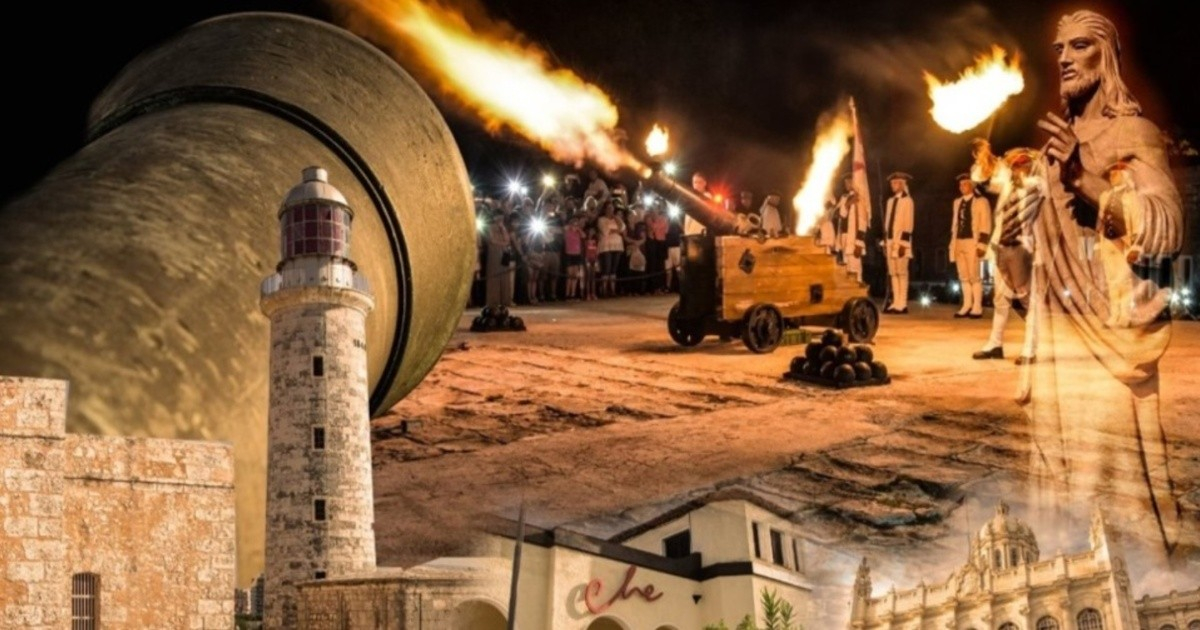
The Morro-Cabaña Military Historical Park has formally invited private entrepreneurs and cultural managers to develop projects within its premises. This represents a significant shift for an institution typically operated by the Ministry of the Revolutionary Armed Forces.
Coinciding with its 33rd anniversary, the call was announced on the park's official Facebook page. It encourages independent actors from new economic management forms, event organizers, artists, and entertainment entrepreneurs to utilize the heritage complex at the entrance of Havana Bay.
"Morro-Cabaña Military Historical Park opens its doors to a new era of collaboration," states the announcement, promising to be "an institutional partner committed to facilitating the conditions for your project to shine."
Available Spaces and Activities
The park offers open-air plazas, air-conditioned theaters, event halls, moats and walls, over 100 vaults, the Pavilion K Terrace, the San Ambrosio Bandstand, and the Jagüeyes Courtyard.
The activities sought range from concerts, theater, and outdoor cinema to weddings, quinceañeras, birthdays, canine exhibitions, martial arts, cosplay, themed fairs, picnics, and camping.
A Shift in Economic Strategy
The concept of "productive chaining" is utilized in the call to describe the relationship sought with private entities, a term commonly used in Cuba's official discourse about updating the economic model.
This move marks a notable change in approach, as a military-affiliated institution formally opens its cultural and heritage spaces to the private sector. It's driven by the necessity to generate income amid the island's severe economic crisis.
The complex, comprising the Castillo de los Tres Reyes del Morro—constructed between 1589 and 1630—and the Castillo de San Carlos de la Cabaña—built between 1763 and 1774—was declared a UNESCO World Heritage Site in 1978.
Recent Developments and Future Prospects
Earlier this year, the newspaper Tribuna reported the postponement of events at the venue due to Cuba's severe energy crisis.
Just last Friday, the park hosted a day of presentations by state-owned tourism companies such as Ecotur, Gaviota, and Iberostar, suggesting a broader strategy to reactivate the space.
This opening contrasts with the historical restrictions the Cuban state has imposed on the non-state sector in economic activities, including the list of prohibited activities for private individuals published by the Ministry of Labor and Social Security in 2021.
Interested parties should approach the Park Directorate Offices inside the San Carlos de la Cabaña Fortress or the Central Office of the Historical Military Museums Complex (CMHM).
"Let the cannons fall silent so that music, theater, the laughter of a wedding, or the barks of a canine exhibition can echo over the bay," concludes the announcement, encapsulating the transformation the regime aims to promote in one of the Caribbean's most iconic heritage sites.
FAQs about Morro-Cabaña Park's Private Investment Initiative
What kind of projects is Morro-Cabaña Park looking for?
The park seeks a wide range of activities, including concerts, theater, outdoor cinema, weddings, birthdays, canine exhibitions, martial arts, cosplay, themed fairs, picnics, and camping.
Why is the park opening its doors to private investors now?
This initiative is part of a broader strategy to generate income due to Cuba's deep economic crisis, marking a shift in how military-affiliated institutions engage with the private sector.
How can interested parties get involved?
Interested individuals should contact the Park Directorate Offices within the San Carlos de la Cabaña Fortress or the Central Office of the Historical Military Museums Complex (CMHM).