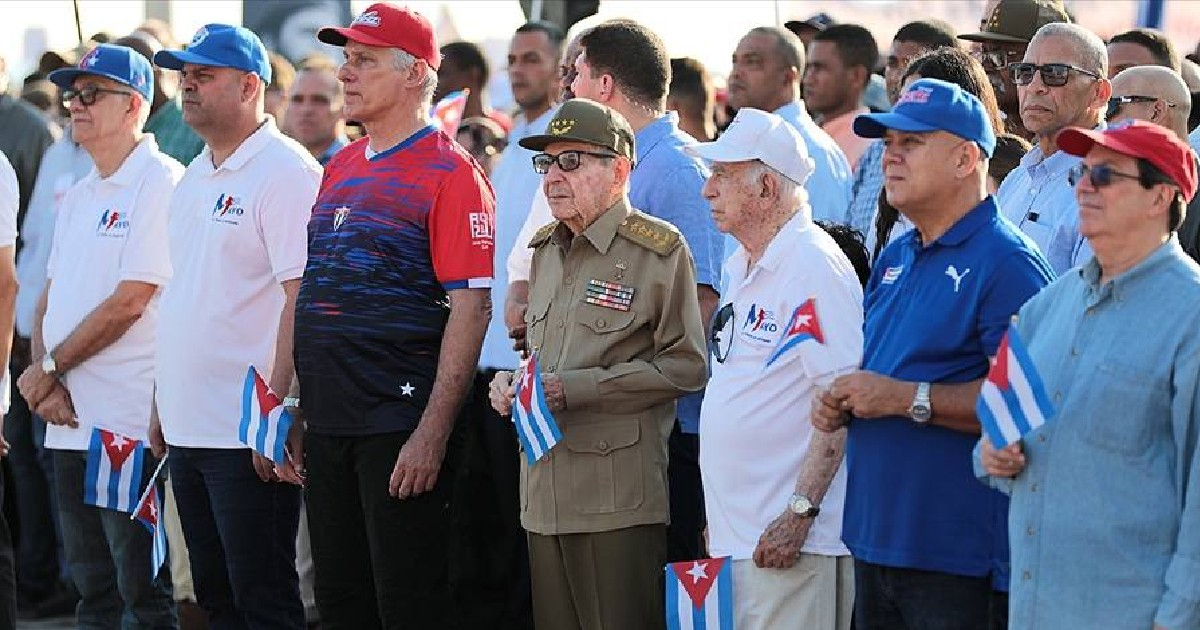
Cuban President Miguel Díaz-Canel responded on Wednesday to comments made by U.S. Secretary of State Marco Rubio, who labeled the Cuban government as a "failed state" run by "inept communists" and dismissed the existence of an oil embargo against the island.
On Monday, Rubio spoke from the White House podium, declaring, "There is no oil blockade on Cuba, per se," attributing Cuba's energy crisis to the end of Venezuelan subsidies rather than Washington's policies. He also claimed that Cuba was reselling approximately 60% of the oil it received from Venezuela "for cash, without benefiting the population."
Díaz-Canel expressed astonishment at Rubio's denial of the oil embargo, suggesting he was unaware of "what is stipulated in his own president's Executive Order issued on January 29."
Impact of U.S. Policies on Cuba's Energy Crisis
The Executive Order 14380, signed by Trump on January 29, 2026, labeled the Cuban government an "unusual and extraordinary threat" to U.S. national security, imposing secondary sanctions on any country, company, or entity exporting oil or its derivatives to Cuba.
Díaz-Canel also expressed surprise at the accusation of Cuban incompetence in handling economic difficulties, highlighting the U.S. government's extensive investments and political capital to undermine Cuba's economy.
Cuban Foreign Minister Bruno Rodríguez Parrilla had already responded to Rubio with a direct tone, accusing him of "choosing to simply lie" and contradicting both President Trump and the White House spokeswoman regarding the alleged oil blockade.
The Reality of Cuba's Energy Shortage
Rodríguez labeled Rubio as the "architect" of the energy blockade, asserting that the secretary "knows very well the damage and suffering the current oil blockade causes to the Cuban people, a blockade he himself proposed to his President."
The energy crisis in Cuba during 2026 manifested in power outages lasting 20 to 25 hours daily across the island, due to an 80-90% reduction in fuel imports.
Adding to the January Executive Order was the cessation of Venezuelan supply—ranging from 26,000 to 35,000 barrels daily—following the capture of Nicolás Maduro earlier that month, and the halt of Pemex shipments since January 9.
Díaz-Canel had acknowledged in March that Cuba operated for four months without any external fuel imports, an unprecedented situation for the island's economy.
Heightened U.S. Sanctions
The term "inept communists" was not new for Rubio, who had previously used it on March 27, 2026, to oppose economic agreements with Cuba without prior political change.
On May 1, Trump signed a second executive order that expanded sanctions to all assets linked to the regime in energy, defense, mining, and finance sectors, further intensifying pressure on Havana.
Understanding the Cuban Energy Crisis
What caused the energy crisis in Cuba in 2026?
The crisis was primarily due to an 80-90% reduction in fuel imports, exacerbated by U.S. sanctions and the cessation of Venezuelan oil supply.
How did the U.S. Executive Orders affect Cuba?
The orders labeled Cuba as a national security threat, imposing sanctions and secondary tariffs on any entity exporting oil to Cuba, intensifying the economic strain.