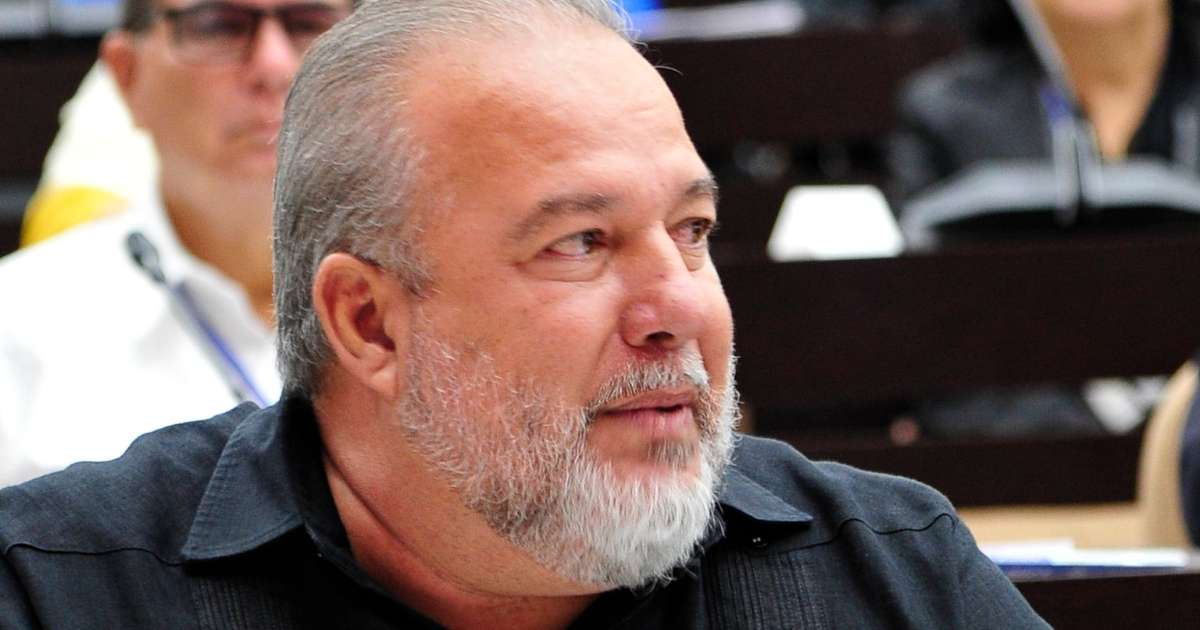
On Wednesday, Cuban Prime Minister Manuel Marrero Cruz turned to a quote from dictator Fidel Castro as a response to the increasing external pressures on the island. In a message shared on his X account, Marrero acknowledged the "growing challenges" faced by Cuba but refrained from announcing any significant structural reforms.
"Alongside the intensified blockade and energy encirclement, new suffocating measures are adding increasing challenges to the implementation of the Government Program. However, Cuba remains steadfast in the Fidelist endeavor of 'emancipating ourselves by our own efforts,'" Marrero wrote.
This message came just days after former President Donald Trump signed an Executive Order titled "Imposing Sanctions on Those Responsible for the Repression in Cuba" last Thursday. This order blocks assets and interests tied to the regime within the United States and threatens to shut down Wall Street accounts of foreign banks that facilitate transactions with sanctioned entities.
The order impacts strategic sectors such as energy, defense, mining, and financial services, taking effect immediately.
Foreign Minister Bruno Rodríguez Parrilla denounced the new sanctions as "illegal, abusive, despicable, curious, and ridiculous," while Miguel Díaz-Canel criticized them as evidence of the "moral poverty" of the United States.
Historical Context of Marrero's Quotation
The phrase invoked by Marrero is derived from Castro's "Concept of Revolution," proclaimed on May 1, 2000. Castro defined revolution as "emancipating ourselves by our own efforts; challenging powerful forces both within and outside the social and national sphere."
This isn't the first time Marrero has used this quote in 2026; he previously mentioned it in January during the Extraordinary Provincial Council in Santiago de Cuba, asserting that "Cubans always rise to the occasion." He also cited it at the VIII Congress of the Communist Party of Cuba, consistently using it as rhetorical response to crises without announcing concrete measures.
Accompanying the tweet was a cartoon by illustrator Lacoster, depicting a mechanical press with "MADE IN USA" inscribed, crushing a royal palm and the Cuban flag—an image frequently used in official discourse about the embargo.
Challenges Beyond External Sanctions
Despite the external sanctions, the challenges facing the island extend beyond them. Cuba is currently grappling with blackouts lasting between 20 to 25 hours daily in multiple provinces, with electricity generation deficits reaching up to 2,025 MW during peak hours.
Since January 9, the capture of Nicolás Maduro in Venezuela disrupted the delivery of 25,000 to 30,000 barrels of oil per day. Additionally, on January 27, Mexico ceased supplies that accounted for 44% of Cuba's imports under pressure from Washington.
Russian oil barely meets 10% of the country's energy needs, and the reserves from the last shipment were exhausted by the end of April, with no confirmed supplies for May.
Secretary of State Marco Rubio dismantled the official Cuban narrative by stating that there is no "naval blockade" or total embargo on oil. Instead, he pointed to a combination of failures in external subsidies and selective restrictions, while predicting further actions against the regime.
Marrero himself admitted last Sunday that the modular housing program "is not progressing at the desired pace," one of the few public acknowledgments of the magnitude of the failure. Meanwhile, he continues to insist on a plan that independent economists deem insufficient to address the worst economic crisis Cuba has faced in decades, with a projected GDP contraction of between 6.5% and 7.2% for 2026.
Understanding Cuba's Economic and Political Challenges
What were the key sectors affected by the U.S. sanctions announced by Trump?
The U.S. sanctions targeted strategic sectors such as energy, defense, mining, and financial services in Cuba.
How has the energy crisis impacted daily life in Cuba?
Cuba's energy crisis has resulted in blackouts lasting 20 to 25 hours daily in various provinces, with significant electricity generation deficits.
What has been the response of Cuban officials to the new sanctions?
Cuban officials, including Foreign Minister Bruno Rodríguez Parrilla and Miguel Díaz-Canel, have condemned the sanctions as illegal and evidence of the United States' moral shortcomings.