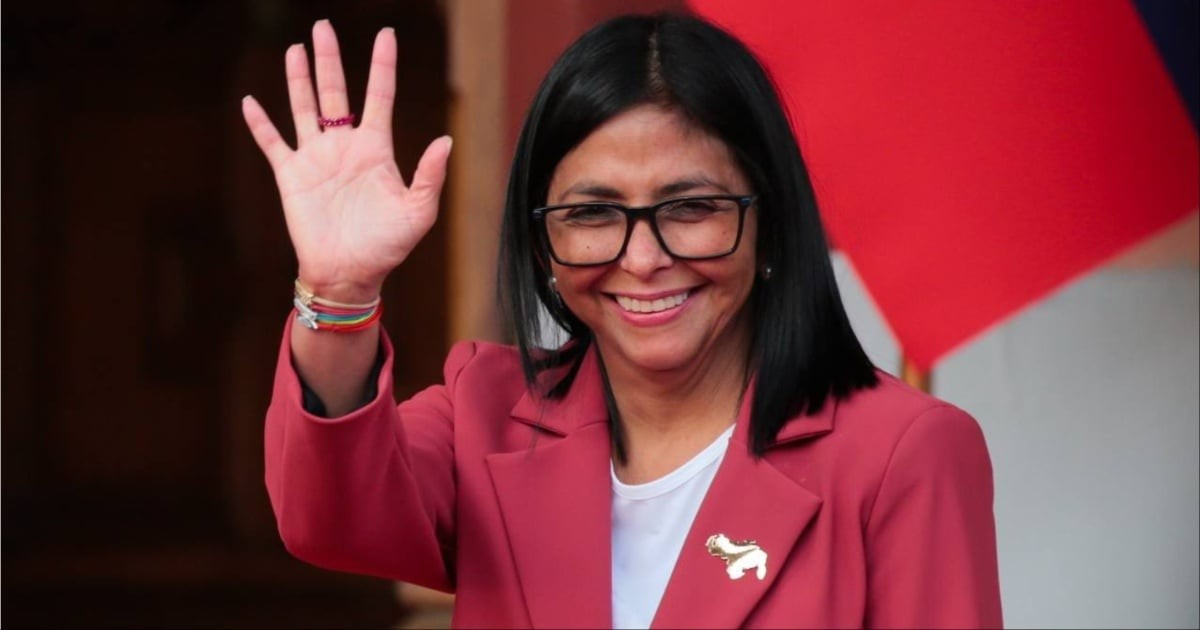
The Venezuelan opposition party, Voluntad Popular, has brought attention to a new strategy employed by the regime led by Delcy Rodríguez. The tactic involves the arbitrary detention of citizens and political figures, presenting them before the courts without any legal basis, and subsequently releasing them under restrictive measures that hinder their freedom.
A recent example highlighted by the organization is the case of Alexis Paparoni, a political leader who was detained by the Directorate General of Military Counterintelligence (DGCIM) at the Maiquetía International Airport in mid-April. Paparoni was attempting to enter the country when he was detained and later released with unspecified legal charges, but under restrictive conditions.
"They arbitrarily detain citizens and political leaders, as seen in the case of Alexis Paparoni. They present them without any legal basis and then release them under a presentation regime," noted Voluntad Popular in their statement.
According to the opposition group, the aim of this strategy is clear: to remove political prisoners from jails but keep them confined within Venezuela under precautionary measures, sometimes even barring their exit from the country.
This revelation comes shortly after Rodríguez claimed the conclusion of the Amnesty Law for Democratic Coexistence cycle, initially implemented on February 19, 2026, and abruptly ended just two months later on April 25, leaving hundreds still imprisoned.
The disparity between official figures and those verified by independent organizations is telling. While the Venezuelan government boasted about granting amnesty to over 8,616 individuals, the Non-Governmental Organization Foro Penal confirmed only 768 actual releases since January 8, 2026.
The practice of using precautionary measures as a political control tool is not new. Foro Penal has documented that around 12,000 individuals in Venezuela are subject to such restrictions — including travel bans and mandatory court appearances — a figure that has accumulated since 2014 and was updated in 2026.
Former political prisoners have also reported torture at El Helicoide in recent accounts, worsening the documented violations under Rodríguez's regime.
U.S. Senator Rick Scott recently labeled Rodríguez as the "head of a cartel" and claimed she was involved in "torture chambers" and the mistreatment of political prisoners, demanding the immediate release of all Venezuelan detainees.
Worldwide mobilizations have been organized in 120 cities, demanding the freedom of Venezuelan political prisoners amid mounting international pressure on the regime.
"We demand an end to this new form of persecution and intimidation against democratic leadership, as well as the unconditional release of over 500 political prisoners in Venezuela," concluded Voluntad Popular in their statement, a demand echoed by Foro Penal, which noted that political prisoners "remain the main obstacle to transition."
Understanding the Political Climate in Venezuela
What are the main accusations against Delcy Rodríguez's regime?
The regime led by Delcy Rodríguez is accused of arbitrarily detaining political figures and citizens, subjecting them to court processes without legal grounds, and keeping them under restrictive measures that limit their freedom.
How many political prisoners are reportedly still under restrictive measures in Venezuela?
According to Foro Penal, approximately 12,000 individuals are under restrictive measures, such as travel bans and mandatory court appearances, in Venezuela. This figure has been accumulating since 2014.
What international actions have been taken in response to the situation in Venezuela?
International mobilizations have been organized in 120 cities worldwide, demanding the release of Venezuelan political prisoners and putting pressure on the regime led by Delcy Rodríguez.