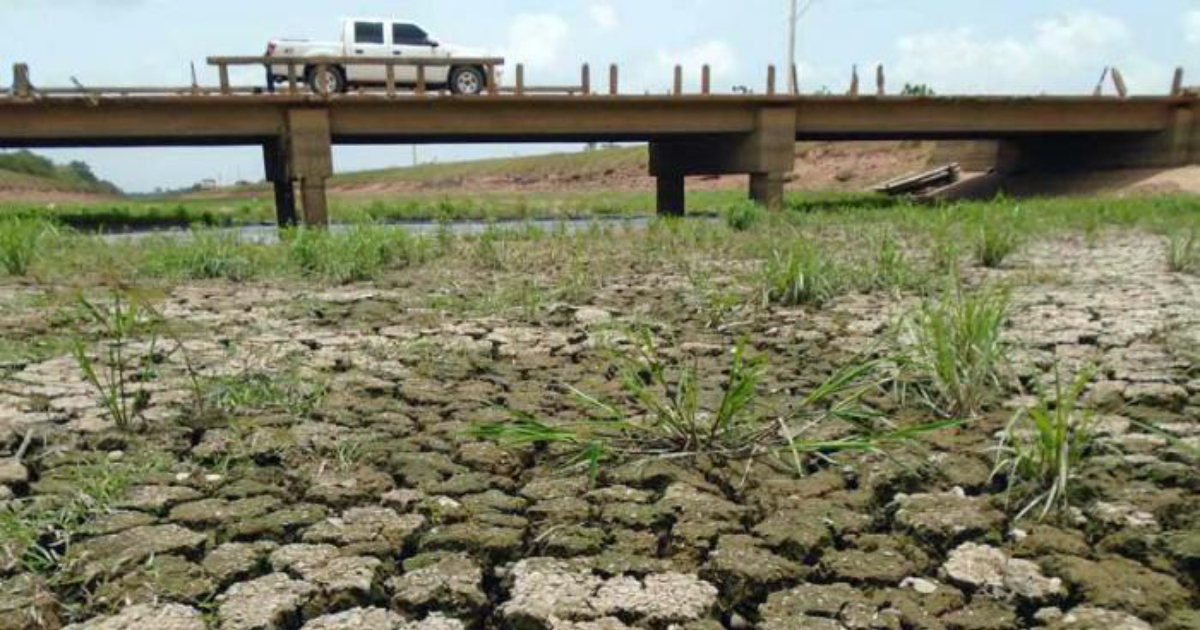
The Cuban Meteorological Institute (INSMET) announced today that the western region of the island will experience below-average rainfall in May, while precipitation levels in central and eastern areas are expected to remain near historical averages.
This forecast coincides with the onset of the rainy season in Cuba, which spans from May to October and accounts for approximately 70% to 75% of the annual rainfall across the archipelago.
According to INSMET, "May marks the beginning of the rainy season for most of the archipelago," and it is typical for rainfall totals to significantly increase compared to previous months, sometimes reaching very high levels.
Global Weather Patterns and Their Impact
Precipitation patterns are influenced by the migration of tropical systems, such as tropical waves and lows, and their interaction with mid-latitude systems, as noted by the institute.
On a global scale, INSMET highlighted that "the conditions associated with the La Niña event, which was weak in April, are transitioning to neutral conditions in May."
The outlook for the coming months is more concerning: "Most models indicate an increased likelihood of an El Niño event developing in July and persisting through the end of the year," warned the agency, adding that "while the event's magnitude is still uncertain, some forecasts suggest it could be strong."
Water Crisis and Infrastructure Challenges
The rainfall deficit in the west is occurring against the backdrop of a severe water crisis in Cuba: 2025 was the fifth driest year on record since 1901, with only 1,114 mm of rainfall, equivalent to 83% of the historical average.
Western Cuba was particularly hard-hit that year, with rainfall reaching just 74% of the historical average, severely affecting the provinces of Pinar del Río, Artemisa, and Havana.
By the end of 2025, Cuban reservoirs held 5,868 hm³, or 64% of their total capacity, and more than 3.1 million people—nearly 30% of the population—were facing total or partial water supply shortages.
The situation is exacerbated by the fact that 87% of the water supply system relies on the national electrical grid, which is undergoing a severe crisis, amplifying the impact of any rainfall deficit on the population.
Furthermore, April 2026 concluded with 84% of the national territory affected by a rainfall deficit, with Pinar del Río, Villa Clara, Cienfuegos, Sancti Spíritus, Ciego de Ávila, and Camagüey being the most affected provinces.
Cyclone Season and Temperature Concerns
Simultaneously, INSMET released its forecast for the 2026 hurricane season, predicting low activity in the North Atlantic, with 11 tropical cyclones, five hurricanes, and two major hurricanes expected.
May temperatures are anticipated to be above average throughout the country, according to INSMET's Climate Center, further increasing the demand for water in an already critical situation for western Cuba.
Understanding Cuba's Weather Challenges
What is causing the rainfall deficit in western Cuba?
The rainfall deficit in western Cuba is primarily due to below-average precipitation forecasts and the influence of global weather patterns, such as transitioning from La Niña to potential El Niño conditions.
How does El Niño affect Cuba's weather?
El Niño can significantly alter weather patterns, often leading to reduced rainfall in some regions, which can exacerbate existing water shortages in affected areas like western Cuba.
What are the predicted impacts of the 2026 cyclone season?
The 2026 cyclone season in the North Atlantic is expected to be less active, with forecasts predicting 11 tropical cyclones, five hurricanes, and two major hurricanes. This relatively low activity may reduce the chances of significant storm-related rainfall.