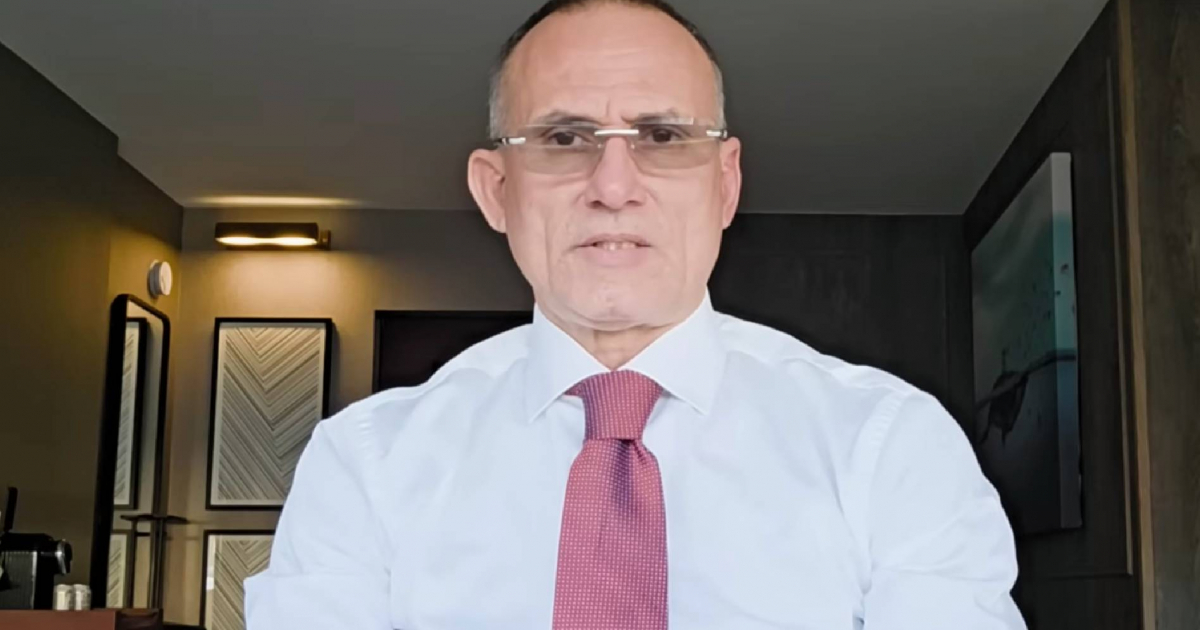
Cuban dissident José Daniel Ferrer appeared before the European Parliament's Foreign Affairs Committee and the Subcommittee on Human Rights in Brussels this Tuesday, making his most direct appeal yet: he urged the United States to undertake decisive action in Cuba similar to the capture of Nicolás Maduro by U.S. special forces in Venezuela on January 3rd.
Ferrer was clear in defending his request, stating, "We are advocates of international law, but when forced to choose between respecting international law and saving our people's lives, we choose our people's lives."
The leader of the Patriotic Union of Cuba (UNPACU) referred to the Absolute Resolution Operation on January 3, 2026, during which U.S. special forces captured Maduro and his wife Cilia Flores at Fort Tiuna in Caracas, transporting them to New York to face narcotics charges.
That operation resulted in the deaths of 77 individuals, including 32 Cuban intelligence agents, whose presence in Venezuela was confirmed by Havana itself.
The Dire Situation in Cuba's Prisons
Addressing the European deputies, Ferrer condemned the severe crisis engulfing Cuba, describing the country's prisons as "hellish" environments intended to physically and mentally break dissenters.
He highlighted the plight of Alexander Díaz Rodríguez, a political prisoner from the July 11th protests, who was released on April 12th after losing 44 kilograms during his imprisonment—dropping from 81 to 37 kilograms—while suffering from thyroid cancer, hepatitis B, and severe malnutrition.
"He emerged from a communist prison resembling survivors from Nazi Germany's concentration camps: skin and bones," Ferrer asserted.
Calls for EU Sanctions and Suspension of Cooperation
Ferrer reported that from 2020 to the present, at least ten political prisoners have died in Cuban jails, succumbing to severe malnutrition, tuberculosis, and medical negligence. He also accused the political police of facilitating sexual assaults by common inmates against young dissidents.
Regarding the Political Dialogue and Cooperation Agreement between the European Union and Havana, Ferrer was unequivocal: "It's like giving aspirin for a severe cancer."
He demanded the EU suspend the agreement and impose sanctions on Cuba similar to those on Venezuela and Nicaragua, regimes he labeled as "students" of Castroism.
Ferrer further alleged that the Cuban regime is allied with Russia, China, North Korea, Belarus, and Iran, and that without Havana's influence, Venezuela wouldn't have succumbed to Hugo Chávez, nor Nicaragua to Daniel Ortega.
In meetings with approximately 30 European deputies, Ferrer noted that only one supported the cooperation agreement with the Cuban regime.
International Concerns Over Cuba's Political System
Participating virtually in the session, Edgar Stuardo Ralón Orellana, President of the Inter-American Commission on Human Rights (IACHR), warned of Cuba's "structurally persistent and worsening" situation, declaring that the communist regime's single-party model has failed.
This appearance is part of a European tour Ferrer began on May 2nd upon arriving in Madrid. Exiled from Cuba in October 2025 with his family after a hunger strike in Mar Verde prison to protest torture, he presented the "Cuba Liberation Agreement" to European deputies, a coalition of over a hundred pro-democracy organizations formed two months ago.
The European Union initiated a review process of its agreement with Cuba in April, albeit without public disclosure, following a parliamentary vote of 331 in favor of taking a firmer stance toward Havana.
Ferrer concluded his address with a poignant statement encapsulating the core of his message: "The only claws the Cuban people want lifted from our country are those of the Communist Party."
Frequently Asked Questions about José Daniel Ferrer's Appeal
What did José Daniel Ferrer urge the United States to do in Cuba?
José Daniel Ferrer urged the United States to take decisive action in Cuba similar to the capture of Nicolás Maduro by U.S. special forces in Venezuela on January 3rd.
What was the outcome of the Absolute Resolution Operation on January 3, 2026?
The operation led to the capture of Nicolás Maduro and his wife, Cilia Flores, and resulted in the deaths of 77 individuals, including 32 Cuban intelligence agents.
How did Ferrer describe the conditions in Cuban prisons?
Ferrer described Cuban prisons as "hellish," intended to break dissenters both physically and mentally, likening released prisoners to concentration camp survivors.