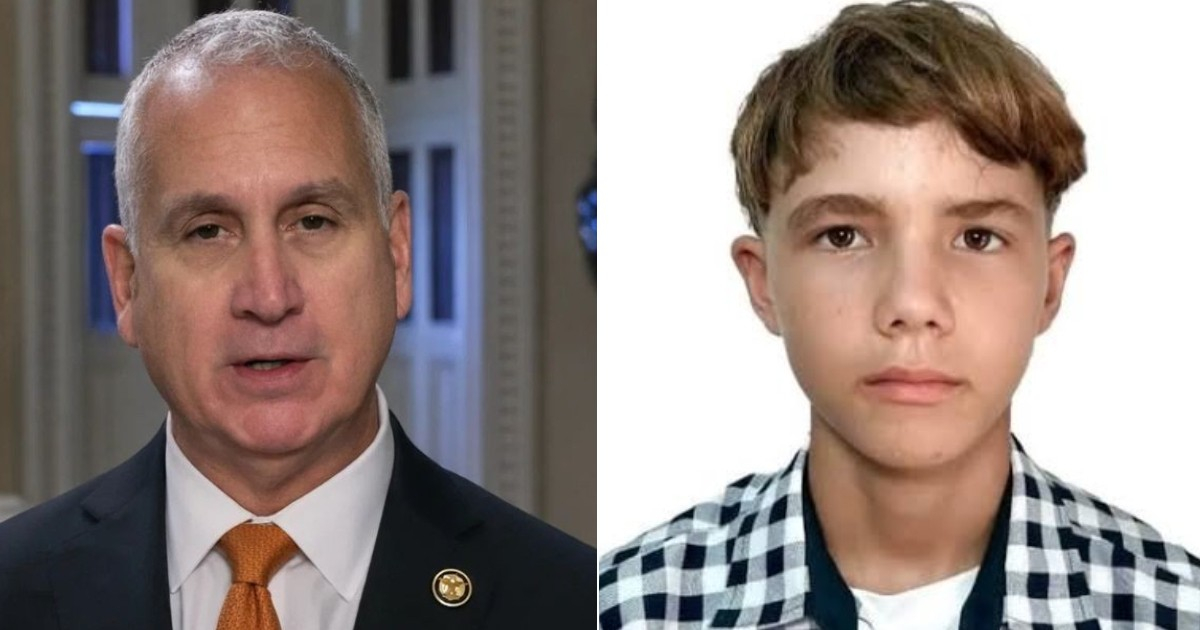
Republican Congressman Mario Díaz-Balart has once again called for the immediate release of Jonathan David Muir Burgos, a 16-year-old who has been imprisoned in Cuba since March 16. He emphasized that "the Castro regime will be held accountable" if anything happens to the teenager.
Accompanied by a video report from Telemundo 51, the representative from Florida's 26th district criticized the Cuban regime as "ruthless," noting that the young man has been "unjustly detained in Cuba for over a month" and is in "fragile" health, necessitating "immediate and appropriate medical attention."
The teenager's mother, Minervina Burgos López, expressed concern in the same video about her son's worsening condition: "He continues to feel unwell, suffering from stomach pains and diarrhea," she stated. She also opposed administering medication without proper diagnostic tests, especially given an ongoing hepatitis outbreak in Ciego de Ávila and her son's poliparasitism condition.
"I don't want my child to deteriorate further in that prison. We want him to come out alive," pleaded the mother, seeking assistance from "any institution within Cuba and abroad."
Jonathan was detained with his father, evangelical pastor Elier Muir Ávila, after they responded to a police summons in Morón following their participation in protests on March 13. These protests were triggered by power outages lasting over 26 hours and extreme food shortages.
While his father was released, Jonathan remained in custody. On April 2, the Municipal Prosecutor's Office in Morón ordered preventive detention, charging the teenager with sabotage, a crime that carries penalties ranging from seven to 15 years or more in aggravated cases.
The young man is held in Canaleta, a maximum-security prison for adults in Ciego de Ávila. His family reports he receives just a single portion of food daily in a small disposable cup and suffers from untreated infections. Early on April 23, he called his father, pleading, "Dad, please get me out of here, I can't take it anymore."
The Inter-American Commission on Human Rights (IACHR) has granted precautionary measures for the adolescent via Resolution 30/2026, citing risks to his life, personal integrity, and health. However, the Cuban regime ignored the commission's request sent on April 10 to Foreign Minister Bruno Rodríguez Parrilla.
Instead of addressing international concerns, the official Cuban media outlet Razones de Cuba released a photo on April 29 showing Jonathan playing a keyboard in prison, with the caption "The piano doesn't lie. The photo is there. And Jonathan... there he is, safe and sound, with his hands on the keys." The father claimed that his son's participation was coerced with the promise of a family visit, a tactic Díaz-Balart condemned as "cruelty" and a "flagrant violation of human rights."
In a subsequent statement, the congressman expanded his demand to include other notable political prisoners such as Luis Manuel Otero Alcántara, Maykel "Osorbo" Castillo, Saylí Navarro, Félix Navarro, and Yosvany Rosell García Caso, alongside nearly 1,000 others unjustly held behind bars.
Key Questions About Human Rights Violations in Cuba
What are the charges against Jonathan David Muir Burgos?
Jonathan is charged with the crime of sabotage, which carries sentences ranging from seven to 15 years or more, particularly in aggravated cases.
Why was the Inter-American Commission on Human Rights involved in this case?
The IACHR granted precautionary measures due to concerns that Jonathan's rights to life, personal integrity, and health face irreparable harm while in custody.
How did the Cuban government respond to international demands for Jonathan's release?
Instead of addressing the demands, the Cuban government released a photo showing Jonathan playing a keyboard in prison, implying he was healthy and safe, which critics see as propaganda.