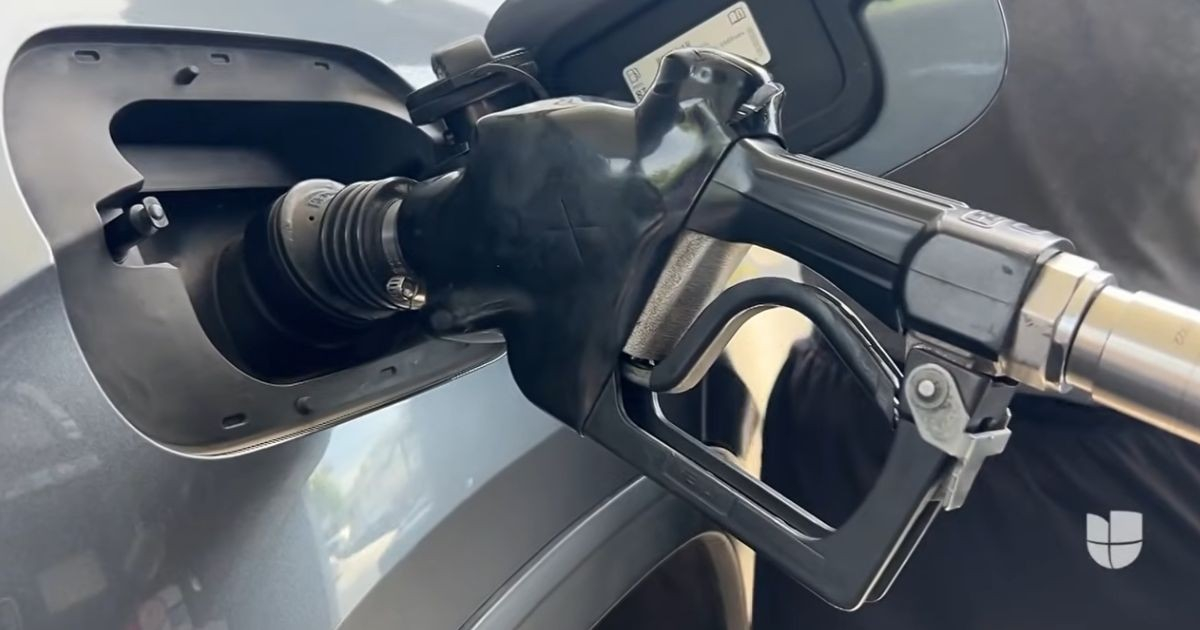
The average cost of regular gasoline in the United States soared to $4.48 per gallon this Tuesday, marking a 31-cent rise in just a week. This represents a staggering 50% increase since the onset of the conflict with Iran, as reported by the AAA organization.
The primary driver behind this price hike is the effective closure of the Strait of Hormuz, a crucial maritime passage in the Persian Gulf that typically handles between 20% and 25% of the world's oil supply. The International Energy Agency has described this as the most significant supply disruption in the history of oil markets.
The Conflict and Its Escalation
The turmoil began on February 28, 2026, with the launch of "Operation Epic Fury," a joint offensive by the U.S. and Israel that obliterated 90% of Iran's missile arsenal. In retaliation, Iran shut down the Strait on March 4, crippling naval traffic by 97% and stranding approximately 2,000 ships.
Crude oil prices surged to $112 per barrel in early April, a sharp increase from the $67-$70 range prior to the conflict, leading to an unrelenting climb in gasoline prices since the war's commencement.
Temporary Relief and Renewed Tensions
In mid-April, a Pakistan-mediated initial ceasefire sparked some optimism, leading to a nearly two-week decline in prices.
"The announcement of the initial ceasefire brought hope that it could mark the beginning of the end of the conflict. Crude prices fell accordingly, spot gasoline prices followed suit, and retailers lowered their prices," explained Rob Smith, Global Retail Fuel Director at S&P Global Energy.
However, hostilities resumed, and prices resumed their upward trend. Since the ceasefire on April 8, Iran has targeted commercial ships nine times and seized two container vessels.
Impact of U.S. Policy and State Variations
Another factor contributing to the price surge was the Trump administration's April decision to block Iranian ports, halting Iran's oil exports.
"Iran had been moving an unusually high volume of oil to global markets, which helped temper prices. The Trump administration chose to penalize Iran by blocking its exports, which, of course, pressures Iran, but also drives up global oil prices. That was likely a significant factor," noted Jim Krane, an energy researcher at Rice University's Baker Institute.
Price differences among states are notable: California tops the list at $6.10 per gallon, followed by Washington at $5.67 and Oregon at $5.30, while Texas ($3.92) and Georgia ($3.85) report the lowest prices.
According to the Energy Information Administration, crude oil accounts for 51% of the cost of a gallon of gasoline in the U.S., demonstrating the close relationship between oil and gasoline prices. Federal and state taxes contribute 17%, refining 14%, and distribution and marketing the remaining 17%.
Future Outlook and Market Uncertainty
On May 3, Trump announced "Operation Freedom" to escort stranded vessels in the Strait, but paused the initiative this Wednesday, adding new uncertainty to the markets.
Analysts warn that gasoline prices will continue to rise as long as the Strait remains blocked, and even a lasting peace might not suffice for an immediate recovery.
"Even if there were a true and lasting resolution to the conflict, and both parties committed to keeping Hormuz open, it would still take months to return to the pre-war state, if not longer. There will remain a risk premium associated with navigating that region for the industry. It will take a long time before anyone is convinced otherwise," warned Smith.
Understanding the Impact of the Iran Conflict on U.S. Gas Prices
Why did U.S. gas prices increase by 50%?
The primary reason for the 50% increase in U.S. gas prices is the closure of the Strait of Hormuz, a major channel for global oil supply, caused by the conflict with Iran.
How have different states been affected by the gas price surge?
States like California, Washington, and Oregon have seen the highest gas prices, while Texas and Georgia have experienced the lowest increases.
What measures has the U.S. government taken in response to the conflict?
The Trump administration blocked Iranian ports to cut oil exports and announced "Operation Freedom" to escort stranded ships, although the latter was paused, creating further market uncertainty.