Uruguayan journalist Fernando Ravsberg recently stirred conversation on Facebook with a rhetorical question that cuts to the core of Cuba's energy policy contradictions: "Why aren't individuals who import gasoline into Cuba allowed to sell it to those of us who can't afford or manage to import a 25,000-liter tank?"
This question highlights a glaring inconsistency in Cuba's 2026 energy policy. Although the government has given the green light to small and medium-sized enterprises (SMEs) and private companies to import fuel, it has imposed strict limitations on resale, confining it solely to self-consumption.
Consequently, while imported gasoline is present on the island, those in desperate need are unable to purchase it due to legal restrictions and the unattainable minimum volume required for importation by the average Cuban citizen.
On February 6, Deputy Prime Minister Óscar Pérez-Oliva confirmed during the "Mesa Redonda" program the so-called "decentralization of fuel importation," which permits capable enterprises to make direct purchases.
Nevertheless, the conditions are overwhelmingly restrictive for most. Cuban SMEs keen on importing fuel must navigate a bureaucratic maze involving mandatory purchases through the state-owned Quimimport, securing micro-localization, fire prevention, and capacity certificates, and acquiring 25,000-liter isocontainers.
Fujian Trebor Trading Company, a Chinese firm based in Miramar, offers diesel and gasoline in these isocontainers at a rate of 2.50 USD per liter with the buyer's own tank, or 3.45 USD per liter when the tank is included. The estimated cost of such a transaction exceeds 150,000 dollars.
Currently, less than 33% of registered SMEs in Cuba meet the technical criteria for fuel importation, leaving entire sectors like gastronomy, commerce, construction, and services excluded due to inadequate infrastructure.
Meanwhile, ordinary Cubans face exorbitant prices on the black market. In January, gasoline shortages drove prices up to 1,500 CUP per liter in some provinces. By February, the price in Havana soared to 4,000 CUP per liter. In March, black market prices in Havana exceeded 30 dollars per gallon, reaching 4,000 CUP per liter.
By April, prices escalated to 6,000 CUP per liter, approximately 10 dollars. Reports emerged of Cubans paying 18,000 pesos for three liters of gasoline in a nation where the average state salary does not surpass 5,000-6,000 CUP monthly.
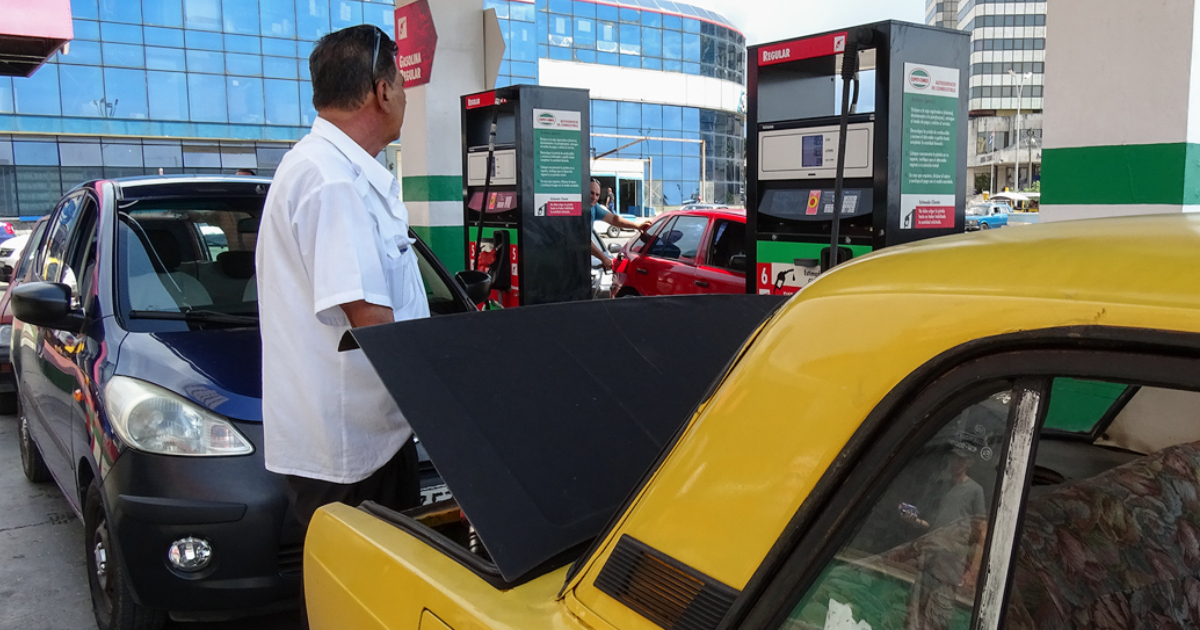
In April, waits at state service stations exceeded 15 hours, according to reports from that month.
Ravsberg, who has lived in Cuba for over three decades as a correspondent and was expelled in 2018—becoming, as he puts it, "the first journalist expelled from Cuba by the new government"—continues to voice his criticism of the system's contradictions.
Understanding Cuba's Fuel Import Challenges
Why can't individuals sell imported gasoline in Cuba?
Cuban policy restricts the resale of imported gasoline to ensure it is used solely for self-consumption by authorized enterprises, preventing individuals from selling it on the open market.
What are the requirements for SMEs to import fuel in Cuba?
SMEs must purchase fuel through the state-owned Quimimport, obtain several certifications, and acquire 25,000-liter isocontainers, which are often financially and logistically out of reach for many businesses.