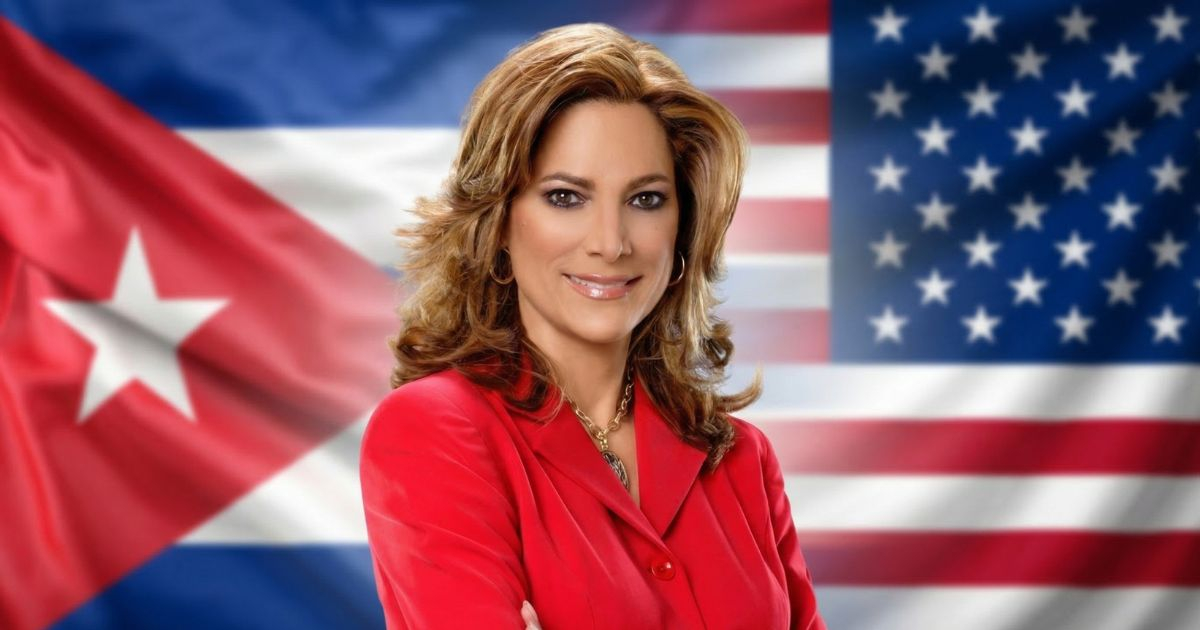
Republican Congresswoman María Elvira Salazar voiced her support on Tuesday for the Trump administration's strategy of maximum pressure on Cuba, stating there is "a real hope for a free Cuba." Her message on social media platform X followed powerful remarks from Secretary of State Marco Rubio at the White House podium.
Salazar, who represents Florida’s 27th district and is the daughter of Cuban exiles, declared, "From Miami to the global stage, Rubio is helping pave a new path for Latin America and a tangible hope for a free Cuba."
The congresswoman emphasized her solidarity with Rubio and President Donald Trump in "the struggle for freedom and democracy in Cuba."
Exposing the Cuban Regime's Narrative
Salazar's comments were a direct response to Rubio's statements that same day, which dismantled the Cuban regime's claims of a supposed U.S. oil embargo. "For decades, the Cuban regime cried 'blockade' while living off Venezuelan oil, taking it from their own people to prop up a broken system," Salazar remarked.
"Now that the money is gone, the mask has fallen," she asserted firmly.
Rubio was equally forthright in his press briefing: "There is no such thing as an oil blockade against Cuba. Cuba used to get free oil from Venezuela. They took around 60% of that oil and sold it for cash. It didn't even benefit the people."
Washington's Heightened Pressure
The Secretary of State labeled the regime a "failed state" and its leaders as "incompetent communists," concluding with a stark warning: "Their economic model does not work. Change is coming."
On the same day, Trump, in an interview, claimed he received "94% of the Cuban vote" and feels "obliged to do something for Cuba," reiterating the deployment of the USS Abraham Lincoln near the island's shores as a pressure tactic.
Salazar's endorsement comes amid Washington's most significant pressure on Havana in decades. Since January 2025, the administration has imposed over 240 sanctions on the regime and intercepted at least seven oil tankers.
On May 1, Trump signed a new executive order expanding sanctions in the energy, defense, mining, and finance sectors, including secondary sanctions on foreign banks dealing with sanctioned Cuban entities.
Cuba's Energy Crisis Deepens
The collapse of Venezuela's crude supply—following the capture of Nicolás Maduro in January 2026—left Cuba without its main source of subsidized energy. Russian oil, which arrived as an alternative, covers merely 10% of the island's energy needs, leading to blackouts lasting up to 25 hours daily in more than 55% of the territory.
The regime has responded with confrontational rhetoric. On May 3, Díaz-Canel invoked the "War of All the People" doctrine before delegates from 36 countries, stating that "every Cuban has a rifle."
In April, Salazar had already described the regime as on "life support," asserting that Trump only needs to "pull the plug." She concluded her message with a sentiment that echoes throughout the Cuban exile community: "Cuba will be free."
Insights into U.S.-Cuba Relations
What is the U.S.'s new strategy towards Cuba?
The United States, under the Trump administration, has adopted a strategy of maximum pressure involving over 240 sanctions and intercepting oil shipments to weaken the Cuban regime economically.
How has the Cuban energy crisis affected the island?
The energy crisis, exacerbated by the loss of Venezuelan oil and limited Russian contributions, has resulted in extensive blackouts, affecting more than half of Cuba with outages up to 25 hours daily.
What role does Marco Rubio play in the U.S. policy towards Cuba?
Marco Rubio is a leading figure in shaping U.S. policy towards Cuba, advocating for a strong stance against the Cuban regime and supporting the maximum pressure strategy.