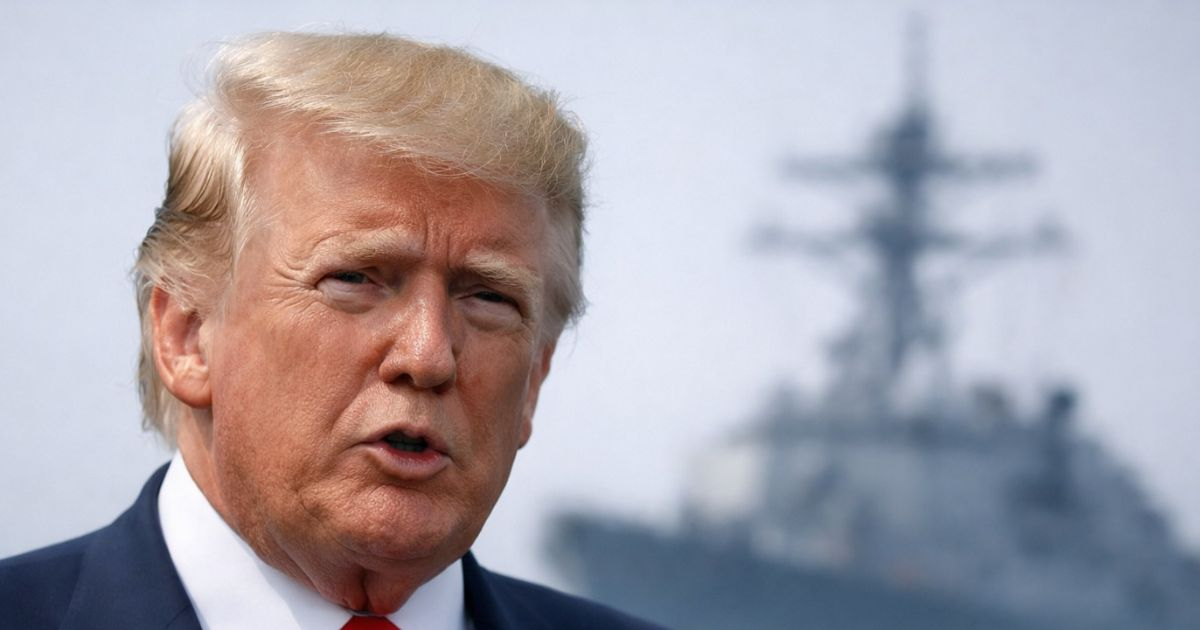
On Tuesday, President Donald Trump announced the suspension of "Operation Freedom," the U.S. naval initiative to escort merchant vessels through the Strait of Hormuz, citing substantial progress in negotiations with Iranian officials and requests from Pakistan and other nations.
In a statement shared on Truth Social, Trump indicated that the decision is grounded in the "tremendous military success" achieved against Iran and the "significant strides made toward a comprehensive and final agreement" with Tehran.
The president clarified that the U.S. naval blockade on Iranian ports will remain "fully enforced and effective" during this pause.
"We have mutually agreed that while the blockade is fully enforced, Operation Freedom—the movement of ships through the Strait of Hormuz—will be paused for a short period to see if the agreement can be finalized and signed," Trump wrote.
Operation Freedom was initiated just recently, on May 4, as a large-scale naval operation involving over 100 aircraft, destroyers, drones, and 15,000 military personnel under CENTCOM's command, aiming to escort between 900 and 1,550 merchant ships with approximately 20,000 crew members stranded in the Persian Gulf.
These vessels have been trapped since Iran closed the Strait of Hormuz at the end of February 2026, in retaliation for Operation Epic Fury, the joint U.S.-Israel assault that crippled Iran's military capabilities and eliminated Supreme Leader Ali Khamenei.
On Tuesday, two U.S. destroyers traversed the Strait of Hormuz under Operation Freedom's escort, but Iran retaliated with naval and aerial attacks. The U.S. destroyed six Iranian vessels and intercepted missiles and drones during the early hours of the operation.
The halt comes amid intense diplomatic negotiations mediated by Pakistan. Since the ceasefire on April 7, multiple rounds of talks have been held in Islamabad, with Vice President JD Vance, Jared Kushner, and Steve Witkoff representing Washington.
The peace talks between the U.S. and Iran ended without an agreement in their first round on April 12, following 21 hours of negotiations.
The primary sticking point has been Iran's nuclear program. In early May, Iran proposed a 14-point peace plan that included a 15-year pause in uranium enrichment, but Trump deemed the Iranian proposal unacceptable, demanding the complete dismantlement of the nuclear program and a 20-year moratorium.
Trump indefinitely extended the ceasefire on April 21 at Pakistan's request, with Prime Minister Shehbaz Sharif and General Asim Munir playing key roles as mediators between Washington and Tehran.
The Strait of Hormuz is the world's most strategic maritime passage, with approximately 20% of the world's oil passing through it.
The pause of Operation Freedom, with the naval blockade remaining intact as leverage, suggests that negotiations have gained new momentum, though the gap between both parties' positions on Iran's nuclear program remains the central hurdle to reaching a definitive agreement.
Key Questions about the U.S.-Iran Negotiations
What is Operation Freedom?
Operation Freedom is a U.S. naval initiative designed to escort merchant vessels through the Strait of Hormuz, involving a large-scale deployment of military resources.
Why did Trump halt Operation Freedom?
Trump paused Operation Freedom due to substantial diplomatic progress with Iran and at the behest of Pakistan and other countries.
What are the main obstacles in the U.S.-Iran negotiations?
The central issue remains Iran's nuclear program, with disagreements over the terms of uranium enrichment and the dismantlement of nuclear capabilities.