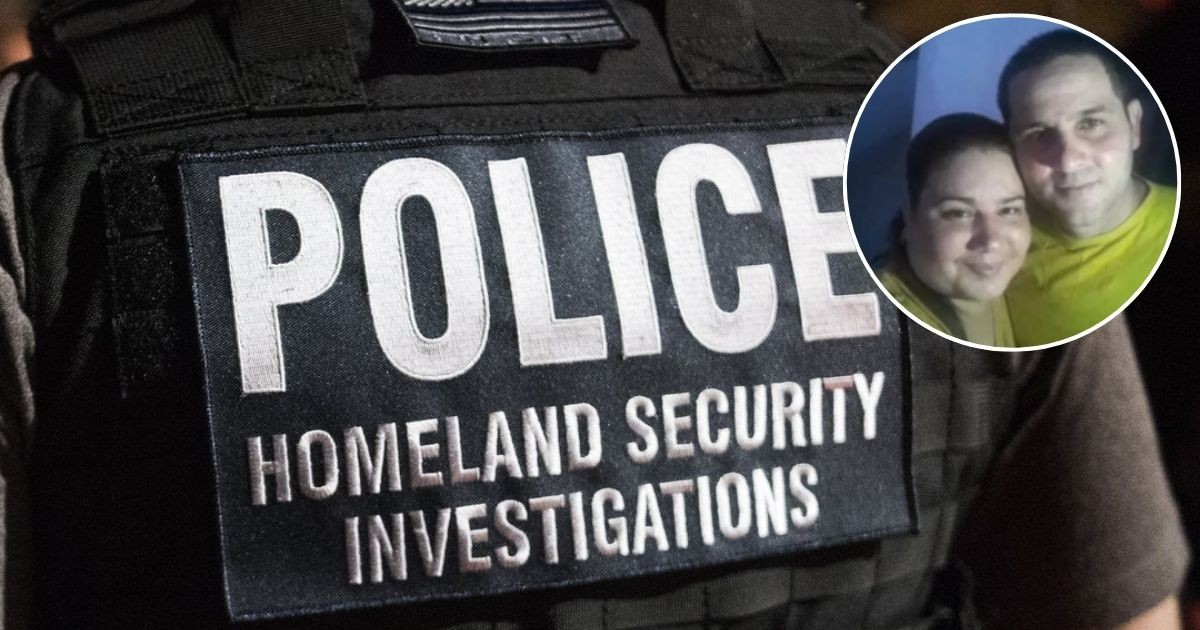
Lester Pérez Sánchez and Ismaray Paz Torres, a couple of Cuban pastors who have resided in the coastal region of Texas for five years, have been held at the El Valle Detention Center in Raymondville since March 31. They were detained during what they believed was a routine supervision appointment with U.S. Immigration and Customs Enforcement (ICE) in Harlingen.
According to a report by Telemundo Corpus Christi, the couple arrived in the U.S. in 2021 seeking asylum. However, instead of being granted humanitarian parole, they received an I-220A status. This document does not equate to parole, nor does it provide a definitive immigration status or access to the Cuban Adjustment Act, as per a 2023 ruling by the Board of Immigration Appeals.
Both Lester and Ismaray have work permits and Social Security cards and run a tire repair workshop in Ingleside that services municipal vehicles.
From the detention center, Lester made a direct plea to Secretary of State Marco Rubio: "I wish these words could reach Marco Rubio, that we do not want to go to Cuba. If there was a possibility for us to be given legal status for my family and me."
Escalating Detentions Under New Administration
Their case highlights an increasing pattern of detentions of Cubans with I-220A during routine ICE appointments, which has intensified since the Trump administration's return in January 2025.
Approval rates for Cuban residencies plummeted by 99.8% in January 2026, dropping from over 10,000 monthly to just 15, while ICE detentions of Cubans surged by 463% under the Trump administration.
The I-220A form impacts approximately 400,000 Cubans living in legal limbo in the United States, according to migration watchdog organizations.
Community Support and Legal Challenges
Francisca Reyes, a pastor and friend who accompanied the couple to their ICE appointment, described their positive impact on the community: "Thank God they have felt free to work with families and children, helping us greatly in any situation."
Members of the congregation gathered at La Roca de Israel Christian Church to show their support, and the mayor of Ingleside wrote a letter requesting the couple's return.
Adelaida Vásquez, a member of the congregation, questioned their detention: "They are doing things the right way, in accordance with U.S. law. I think it's an injustice because they are being locked up when they have a work permit."
Other Cubans in similar situations have achieved release through habeas corpus petitions in federal courts. One Cuban with I-220A was recently released after months of detention, and another, Daniel Alejandro Escobar Rodríguez, regained his freedom last February after nearly three months in detention through the same legal mechanism.
There is also a documented case of a Cuban with active humanitarian parole who has been detained in Texas for months following a routine appointment, illustrating the widespread nature of the issue.
Ismaray's final hearing, initially scheduled for this Monday, was postponed due to a judge's emergency with no new date set. Lester's hearing is scheduled for May 11.
"We hope they can come out, and we can embrace them and say that justice has been done because they are good people. We trust in God that those doors will open," expressed a community member.
FAQs About Cuban Immigration Detentions
What is the I-220A status?
The I-220A status is a document that does not provide a definitive immigration status or equate to parole. It leaves individuals, like many Cubans, in a legal limbo in the U.S.
How has the Trump administration affected Cuban immigration?
Since the return of the Trump administration in 2025, the approval of Cuban residencies has drastically decreased, and ICE detentions have significantly increased, affecting many Cubans with I-220A status.
Can Cubans detained by ICE seek legal relief?
Yes, some Cubans have successfully sought release through habeas corpus petitions in federal courts, challenging their detention under I-220A status.