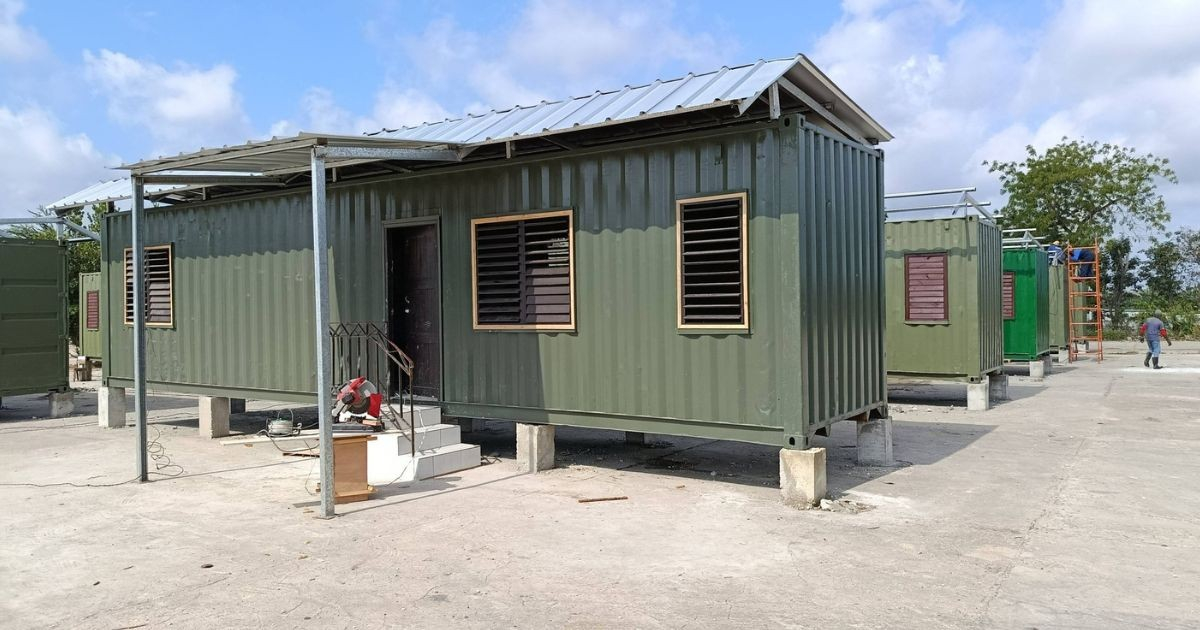
Architect Abel Tablada has raised concerns about the technical risks associated with the Cuban regime's initiative to convert shipping containers into homes. He cautions that these metal structures could turn into "ovens" under tropical conditions.
On Monday, Tablada visited the construction site at the former Toledo bus terminal, opposite the CUJAE in Havana, where the first modules of a project aimed at creating 300 container homes are being installed. These homes are initially intended for young adults who have aged out of orphanages and, eventually, for families displaced by hurricanes.
Challenges of Thermal Control
The architect noted that the primary concern is not only the solar radiation on the roof but also on the vertical surfaces depending on their orientation. This makes thermal management a critical challenge for such housing in the Cuban climate.
During his visit, Tablada observed some mitigation measures in place: an additional roof layer for ventilation, and insulation of the metal walls with an air gap and plywood sheeting inside. Cross-ventilation is achieved through louvered windows in each room. The typical layout includes a porch, kitchen-dining area, two bedrooms, a bathroom, and a rear laundry space.
Proposed Enhancements
Recently ousted from the CUJAE, Tablada suggested three specific improvements. First, he recommended installing solar panels on the double roof to achieve energy self-sufficiency, effectively turning the community into a solar park. Second, he advised painting the exteriors in light colors, such as a lighter green or beige, to reduce radiation absorption since the eaves do not adequately cover the rear and side facades. Third, he proposed adding greenery between the containers, as the concrete expanse absorbs significant heat, increasing temperatures and glare.
While acknowledging the value of these homes for those in dire need, Tablada emphasized that this initiative should not replace a genuine housing policy. "Although these homes provide real benefits for families in need, they should be viewed as temporary, emergency solutions and should not be mistaken for a long-term housing strategy."
Context in Cuba's Housing Crisis
This project is part of a broader housing crisis in Cuba, with an official shortfall exceeding 929,000 homes and 35% of the housing stock in substandard or poor condition. In Havana alone, around 1,000 buildings collapse annually.
The government announced plans to convert over 3,500 containers nationwide, but by April 2026, only 133 units had been delivered across the country. On the previous Sunday, Díaz-Canel and Marrero inaugurated the first two modular container homes in Havana's Nuevo Vedado, a move widely criticized as propaganda.
Residents in Cerro and Guantánamo have reported leaks, electrical issues, and insufficient thermal insulation in already delivered units, reinforcing the technical warnings from academia. Tablada concluded with a call for inclusive participation: "The city is built by all of us, with well-considered regulations, scientific and financial pragmatism, and control, but also with citizen input, from both state and independent architects and engineers, fostering creativity and future vision."
Key Concerns About Container Housing in Cuba
What are the main technical risks of container homes in Cuba?
The primary risk involves inadequate thermal control, as the metal containers can become extremely hot under tropical sun exposure.
What mitigation measures have been considered for these container homes?
Measures include a secondary roof for ventilation, insulating metal walls with air gaps and plywood, and using louvered windows for cross-ventilation.
Are container homes a permanent solution to Cuba's housing crisis?
No, they are seen as temporary, emergency solutions and should not replace long-term housing policies.