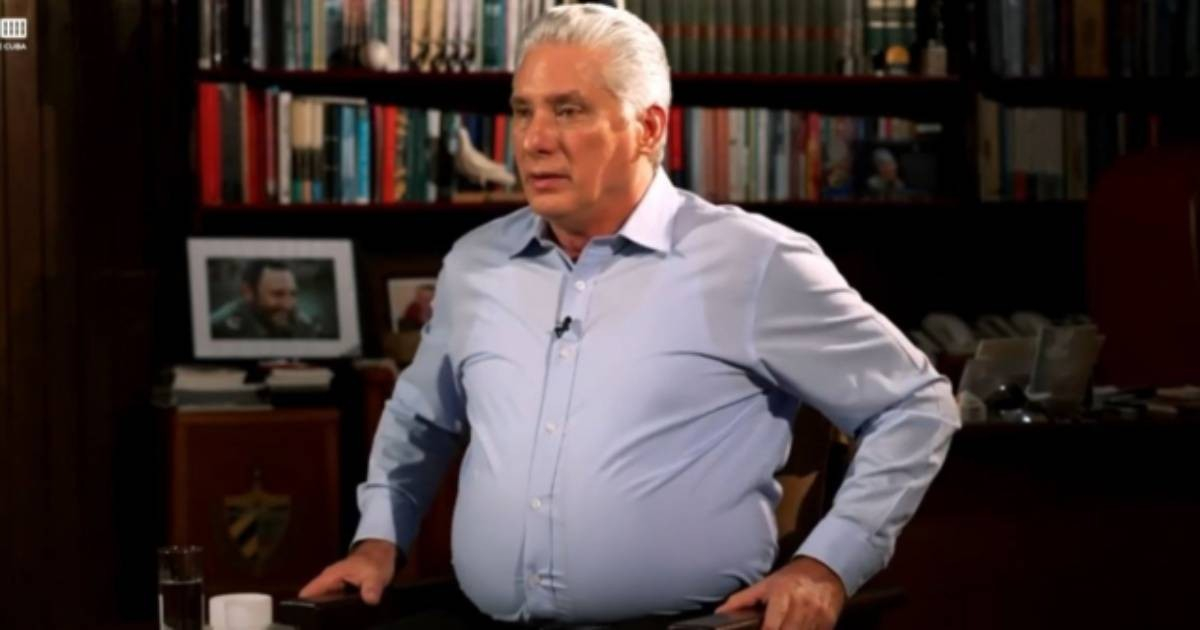
Last Friday, Miguel Díaz-Canel assured delegates from 36 nations gathered in Havana that Cuba would continue to support "the just causes of the world," even as Cuban citizens endure daily blackouts, food shortages, and a lack of basic freedoms. The backlash on social media was swift and scathing.
The speech was delivered during the closing of the International Meeting of Solidarity with Cuba and Anti-Imperialism "100 Years with Fidel," held on May 2 at Havana's Palace of Conventions. The event featured 766 delegates from 152 organizations across 36 countries, united under the slogan "Cuba is not alone."
During his address, Díaz-Canel listed a series of causes the regime pledges to support: "We will continue to back the Palestinian cause, the Lebanese people, the Bolivarian Revolution, the freedom of President Maduro and his wife Cilia, the Sahrawi people's cause, Puerto Rico's cause, and the Iranian people's cause."
He also stated the regime's commitment to fighting for the release of Thiago Ávila and "any other militant or combatant unjustly imprisoned."
This contradiction was not lost on many Cubans: the leader advocating freedom for foreign activists while keeping hundreds of political prisoners on the island, including teenagers and mothers separated from their young children.
The video of the speech garnered hundreds of comments that dismantled Díaz-Canel's statements point by point. The most frequent question was a version of "What about the Cuban people?"
One of the most cited comments encapsulated the general sentiment: "Before offering solidarity to the world, why not clean up the streets, pay decent pensions, provide ATMs with cash, feed children in schools, and supply hospitals with medicine? Charity should begin at home."
Another user was more specific: "We don't ask you to support all these global causes; we only ask you to fulfill at least one of the 63 measures you decreed five years ago to increase food production in Cuba. Cubans can't live on foreign political causes."
The contradiction highlighted by many was straightforward: "Are you seriously calling for Thiago's release in the Middle East while your prisons in Cuba are filled with political prisoners? You're a hypocrite."
The speech comes amid the highest tension between Havana and Washington in decades. On May 1, Trump signed an executive order imposing new sanctions on Cuba's energy, defense, mining, and finance sectors, with extraterritorial reach. The following day, Trump stated that the United States would "almost immediately" take over Cuba after concluding operations in Iran.
In this context, the day before his speech on "just causes," Díaz-Canel warned of the "imminence of a military aggression" from the United States, claiming that "every Cuban has a rifle," a statement that also sparked a flood of criticism.
Díaz-Canel admitted during the meeting that Cuba had gone four months without receiving fuel and that the recently arrived Russian oil was "running out these days, and we don't know when more fuel will come to Cuba," while the energy crisis impacts more than 55% of the national territory.
This pattern repeats itself: each of Díaz-Canel's speeches directed outward triggers a massive response from Cubans demanding the regime look inward. As one comment succinctly put it: "67 years of the same rhetoric."
Exploring the Backlash Against Díaz-Canel's Speech
Why did Díaz-Canel's speech ignite criticism on social media?
Díaz-Canel's speech sparked criticism because he promised support for global causes while the Cuban people face domestic challenges like power outages, food shortages, and restricted freedoms, highlighting a perceived hypocrisy.
What was the context of Díaz-Canel's speech?
The speech occurred during the International Meeting of Solidarity with Cuba and Anti-Imperialism, amidst escalating tensions between Cuba and the United States, marked by new sanctions and military threats.
What are some of the domestic issues facing Cuba mentioned in the article?
Cuba is currently facing issues such as widespread blackouts, food shortages, and a lack of basic freedoms, as well as political imprisonment of dissidents.