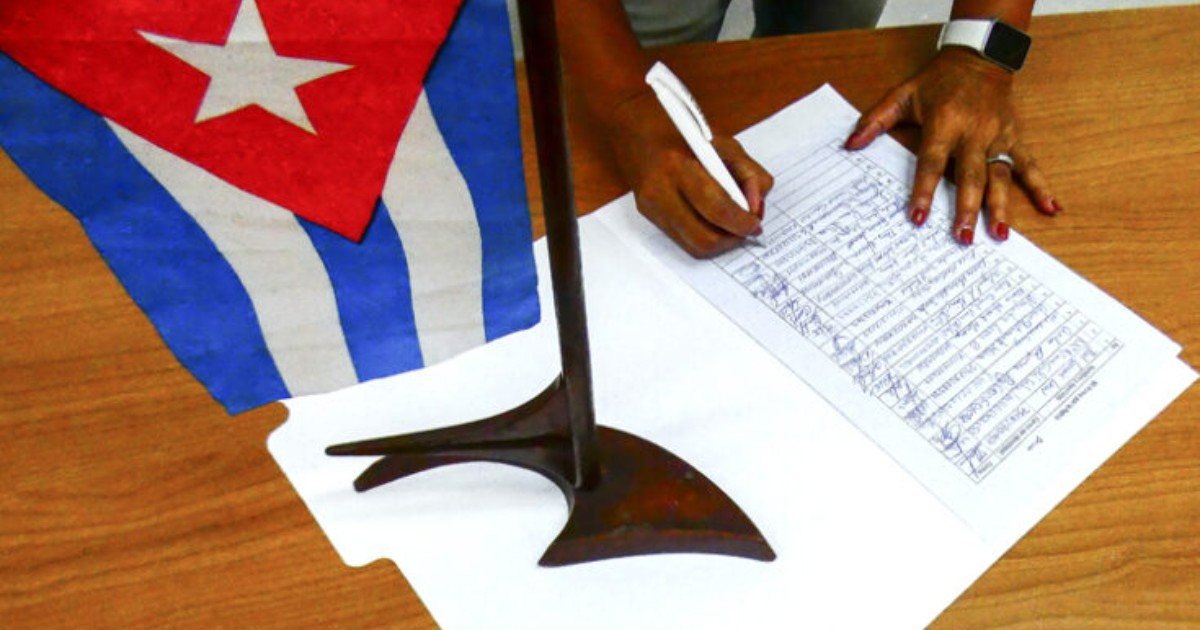
At the time this report was published, a mere 16 individuals had endorsed the declaration by Cuban intellectuals defending national sovereignty, issued yesterday by the Communist Party of Cuba (PCC).
All signatories were identified as recipients of the National Award for Social Sciences or History, which critics see as indicative of the regime's struggle to garner intellectual support beyond those historically aligned and recognized by the government.
The declaration, also circulated by Granma, Cubadebate, and the Cuban News Agency, reaffirms the signatories' commitment to the revolutionary process, denounces the U.S. embargo as a form of aggression impacting the Cuban people's daily lives, and labels the "neofascist surge" led by the United States as a threat to "peace, stability, and the self-determination of nations."
The low number of signatories is striking: the National Award for Social Sciences has been in existence since 1995, indicating decades of awardees. That only 16 have signed the declaration highlights the limited reach of the appeal even within the intellectual circles sympathetic to the regime.
The statement also issues a subtle warning to critical intellectuals, cautioning against "the dangers of discourses that, under the guise of academic analyses or civic concerns, might legitimize destabilizing agendas."
Backdrop of Tensions Between Cuba and the U.S.
The document emerges amid escalating rhetoric between Havana and Washington, following statements made by President Donald Trump on May 1, 2026, to which the PCC responded with massive mobilizations and a call for international solidarity.
This declaration stands in contrast to the growing visibility of critical intellectual activism in recent months. In April, academic Alina Bárbara López Hernández dismantled the official narrative on Cuba's crisis, attributing it to failed internal policies, and denounced over a thousand political prisoners.
Just days earlier, intellectual Miryorly García publicly urged people not to sign the government’s "My Signature for the Homeland" campaign launched on April 17, describing it as a mechanism of coercion and social control.
In March, activist Madelyn Sardiñas Padrón challenged the regime to hold a free plebiscite on government change, while musicologist Rosa Marquetti criticized international solidarity actions with the regime, which she argued "folklorize Cuban misery."
A History of Organized Intellectual Responses
None of the 16 signatories of the new declaration are known for critical stances against the government. Among them are philosopher Isabel Monal Rodríguez, historian María del Carmen Barcia, sociologist Aurelio Alonso Tejada, and economist José Luis Rodríguez García, all with long-standing roles in official institutions such as the Institute of History of Cuba and the University of Havana.
This is not the first time the regime has attempted to organize an intellectual response during times of pressure. Following the protests of July 11, 2021, the official cultural apparatus also mobilized support signatures, with results equally questioned by the international academic community and by artists and intellectuals who sent letters to Díaz-Canel demanding an end to repression.
The declaration concludes with the assertion that the signatories act "in defense of Cuba, of its right to exist without tutelage and without sieges or threats, and of a future built in peace, with social justice and full sovereignty," a formula the regime repeats in every moment of tension with Washington, yet this time it gathered just 16 signatures.
Insights on the Cuban Intellectuals' Declaration
Why are only a few Cuban intellectuals supporting the regime?
Critics argue that the limited support reflects the regime's difficulty in mobilizing intellectual backing beyond those historically aligned and rewarded by the government.
What does the declaration accuse the U.S. of?
The declaration accuses the U.S. of leading a "neofascist surge" that threatens global peace, stability, and the self-determination of nations, and it criticizes the U.S. embargo as an aggressive act impacting daily life in Cuba.