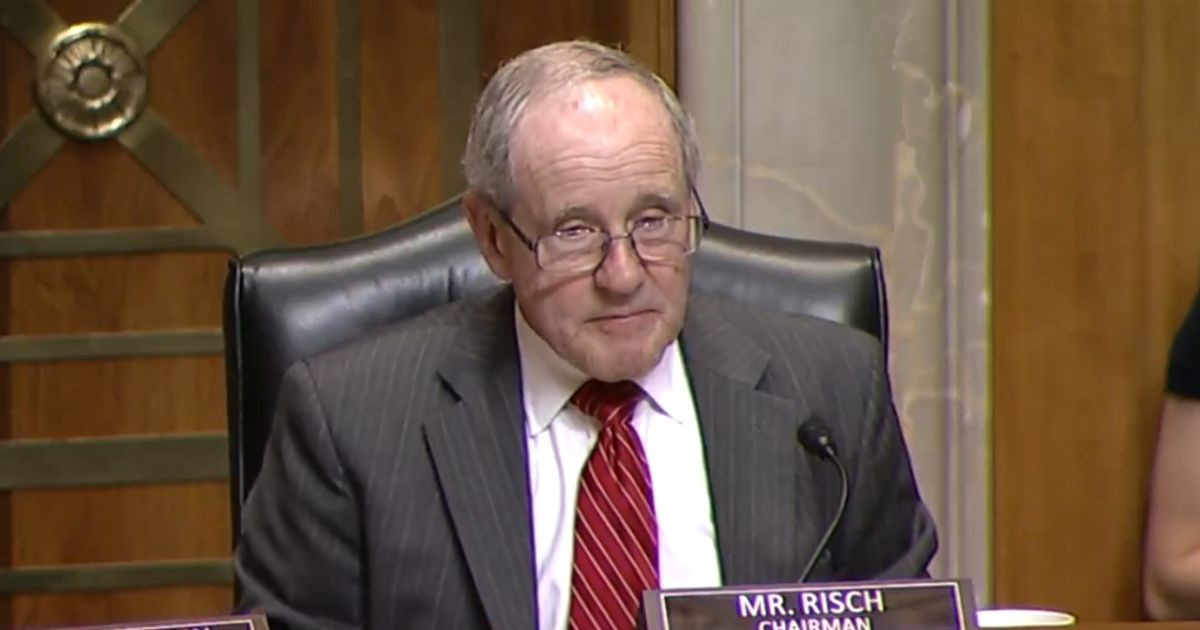
Senator Jim Risch from Idaho, who chairs the Senate Foreign Relations Committee, expressed his support on Monday for the latest executive order by former President Trump targeting Cuba. He accused the Cuban regime of posing direct threats to U.S. national security.
"I am pleased to see the Trump Administration holding the corrupt Cuban communist regime accountable for both the national security threats it poses to the United States and its repression of the Cuban people," Risch stated.
This statement followed President Donald Trump's signing of a new executive order last Friday. The order expands sanctions against Cuba's government, citing its actions as "an unusual and extraordinary threat" to U.S. national security and foreign policy.
A White House official highlighted that "Cuba provides a permissive environment for hostile foreign intelligence, military, and terrorist operations less than 100 miles from U.S. territory."
The order freezes all assets and interests in the United States belonging to individuals and entities linked to the Cuban government. It also introduces secondary sanctions against foreign financial institutions that engage in transactions with those sanctioned.
Moreover, the order bans current and former regime officials, their collaborators, and adult family members from entering the United States, with exceptions made only if deemed in the national interest.
Additional Republican lawmakers endorsed the measure as well.
Representative María Elvira Salazar emphasized that the Cuban regime's alignment with Iran is "a national security reality just 90 miles from our shores, not speculation." Meanwhile, Representative Carlos A. Giménez warned that "if they continue to operate with ill intentions, much harsher consequences will follow."
Representative Nicole Malliotakis was more blunt: "For decades, Cuba has harbored fugitives, provided a safe haven for terrorists and adversaries, and oppressed and even eliminated its own people."
The legislative support for the maximum pressure strategy was reinforced on Tuesday, April 29, when the Senate voted 51 to 47 against a Democratic initiative to restrict Trump's military actions against Cuba.
Since January 2025, the Trump administration has imposed over 240 sanctions on the regime and intercepted at least seven tankers headed to the island, resulting in devastating impacts on the Cuban economy: power outages lasting up to 25 hours a day affecting more than 55% of the territory and a projected economic contraction of 7.2% by 2026, according to The Economist Intelligence Unit.
Secretary of State Marco Rubio has also warned that Washington will not allow any foreign security apparatus to operate with impunity 90 miles from U.S. shores, aligning with the stance Risch now supports from the Senate Foreign Relations Committee.
Understanding U.S. Sanctions on Cuba
What prompted the new executive order against Cuba?
The executive order was prompted by concerns over Cuba's actions being perceived as a significant threat to U.S. national security and foreign policy, as well as its alignment with hostile foreign powers.
How do these sanctions affect the Cuban economy?
The sanctions have led to severe economic consequences in Cuba, including extensive power outages and a predicted economic contraction, exacerbating existing economic challenges.
What are the implications for foreign financial institutions?
Foreign financial institutions that facilitate transactions with sanctioned Cuban entities face secondary sanctions, which could restrict their operations and access to U.S. financial systems.