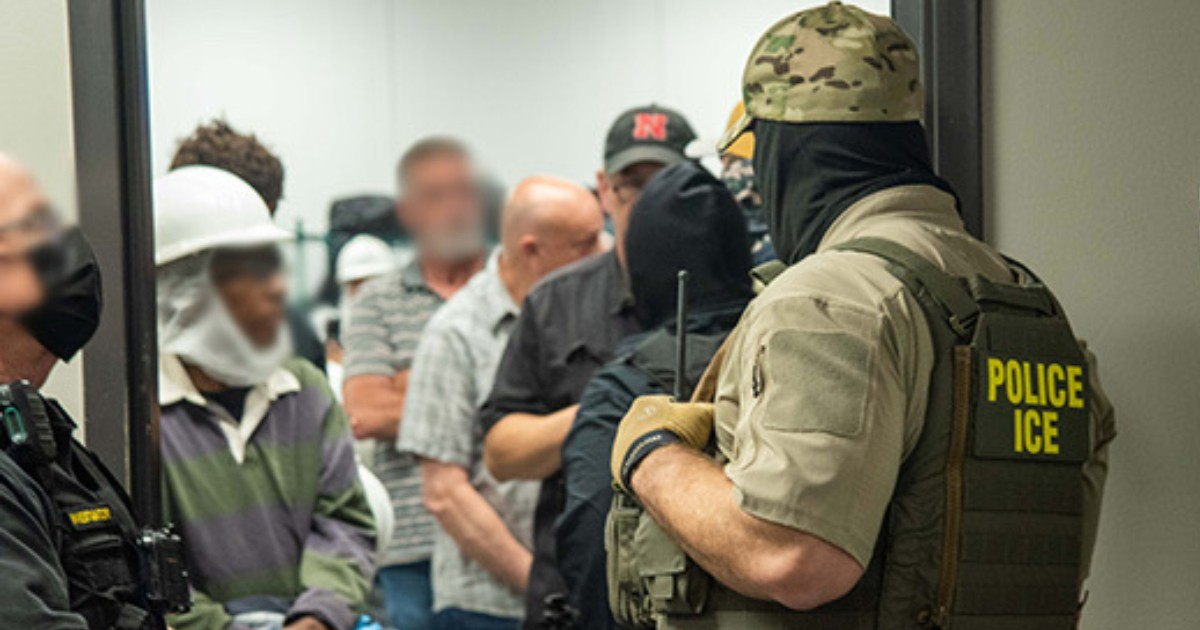
The application of force by personnel within Immigration and Customs Enforcement (ICE) detention facilities surged by 37% in 2025 as compared to 2024, according to data gathered by The Washington Post.
During this period, records show at least 780 incidents involving physical force, tasers, and chemical agents such as pepper spray. The number of impacted individuals rose by 54%, reaching 1,330 people.
Among the most concerning instances were those where force was used against detainees simply requesting basic necessities like food, water, medical care, or access to personal belongings.
Rising Incidents Beyond Detention Centers
This increase within detention centers is part of a larger trend also noted in field operations. Internal communications from the Department of Homeland Security revealed that between January 19 and March 20, 2025, incidents involving force during arrests spiked by 353% compared to the same timeframe in 2024.
The current situation aligns with a record number of deaths in ICE custody not seen in over twenty years. In 2025, 33 detained immigrants died, up from 11 in 2024. By May 1, 2026, at least 18 deaths have been recorded this year, resulting in a death rate of 88.9 per 100,000 detainees, the highest in 22 years according to a study published in the medical journal JAMA.
Impact on the Cuban Community
The Cuban community has been particularly affected. Three Cubans have died in ICE custody in recent months. Geraldo Lunas Campos, aged 55, passed away on January 3 in Camp East Montana, Texas; the coroner's autopsy labeled his death as homicide by asphyxiation, contradicting ICE's official account describing it as "spontaneous use of force." Witnesses reported hearing him say "I can't breathe" during the restraint. The FBI has launched an investigation into the case.
The autopsy confirmed Lunas Campos died from asphyxia due to compression of the neck and torso, a finding that directly disputes the agency's narrative. Previously, human rights organizations had already demanded investigations into three deaths in detention centers.
Aled Damien Carbonell-Betancourt, 27, died on April 12 at the Miami Federal Detention Center. Denny Adán González died on May 1 at the Stewart Detention Center.
Escalating Detention Capacity and Policies
ICE's detention capacity nearly doubled in a year, increasing from approximately 40,000 beds in January 2025 to about 70,000 by January 2026, as part of executive orders from the second Trump administration to ramp up deportations. Since the beginning of this second term, at least 47 individuals have died in ICE custody.
According to the Cato Institute, ICE detentions of Cubans increased by 463% from October 2024 to the end of 2025, rising from less than 200 to over 1,000 per month, highlighting the disproportionate impact of these policies on the Cuban diaspora.
Key Questions About ICE Detention Policies
Why did the use of force in ICE detention centers increase in 2025?
The increase is attributed to heightened enforcement measures and policies under the second Trump administration, which aimed to intensify deportations and expand detention capacity.
What was the impact on the Cuban community?
The Cuban community suffered significantly, with a 463% increase in detentions and several deaths in ICE custody, reflecting the harsh consequences of immigration policies.
How has ICE detention capacity changed recently?
ICE's detention capacity nearly doubled from about 40,000 beds in January 2025 to around 70,000 by January 2026 due to executive orders to enhance deportation efforts.