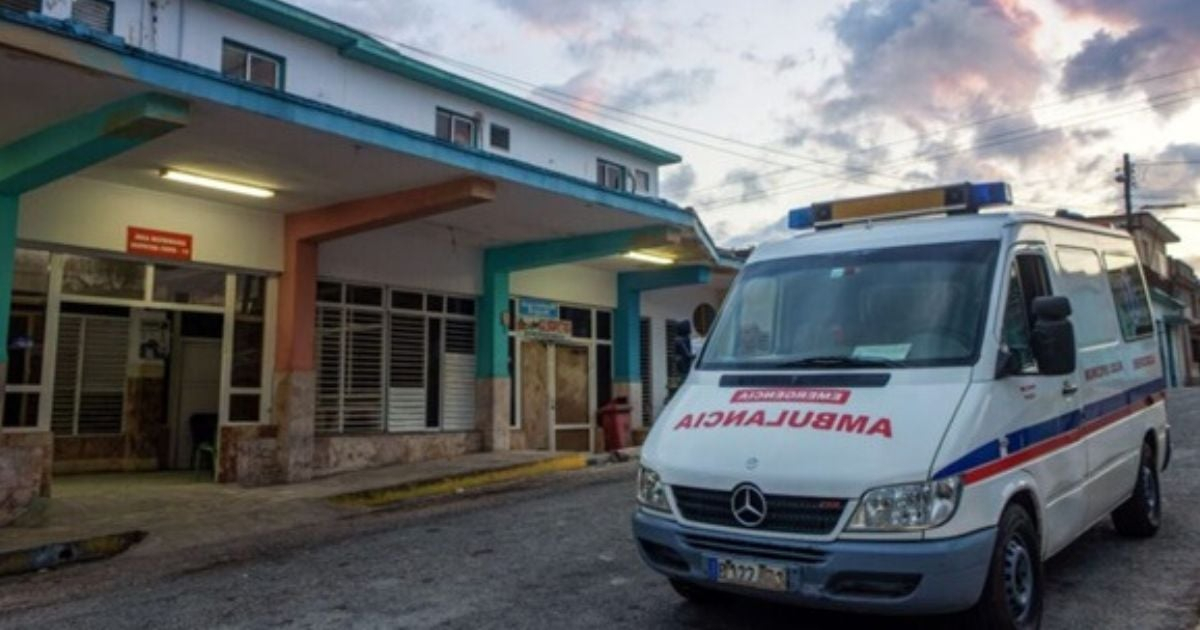
On Monday, health officials in Matanzas confirmed an outbreak of hepatitis A in the Versalles neighborhood, with 18 active cases identified. These cases are primarily located in the area stretching from Plácido's pharmacy to the Yumurí River, including the Americano district, La Cumbre, and areas near the Ernest Thaelman school.
Dr. Andrés Lamas Acevedo, who heads the Provincial Center for Hygiene, Epidemiology, and Microbiology, referred to the situation in Versalles as the most concerning in the province. However, he clarified that the outbreak is not of a large scale, according to statements made to the state-run newspaper Girón.
Just two days prior, Dr. Lamas Acevedo had mentioned that the active cases in Versalles were "quite controlled."
Broader Impact Across the Province
In addition to Versalles, the province has reported seven cases in the La Marina neighborhood of Cárdenas municipality, along with isolated cases in most municipalities. The outbreak hotspots in Pálpite and Cidra are nearing closure, as no new infections have been reported in approximately a month.
As a containment strategy, authorities have temporarily closed businesses in the Plácido area. "When a group of people in a specific area, like Plácido, falls ill, we have to shut down places, including sugarcane juice stalls and cafes serving liquid drinks, like coffee and juice, due to potential safety concerns," explained Dr. Lamas Acevedo.
Understanding Transmission and Safety Measures
The expert clarified that the current transmission is person-to-person, unlike a previous outbreak in Versalles about two decades ago linked to contaminated water. He also highlighted the contagious period: "The virus can be transmitted 10 days before symptoms appear and up to 15 days after. Therefore, one can feel fine and still be spreading it."
Authorities are urging residents to boil or chlorinate water, though Dr. Lamas Acevedo acknowledged the practical challenges: "Not everyone can boil water, either due to lack of gas or the need for charcoal."
Underlying Water Crisis Fuels the Outbreak
This situation is exacerbated by a structural water crisis. Over 300,000 residents of Matanzas are struggling with water supply issues, worsened by power outages lasting 30 to 48 hours, which disrupt the operation of water pumps. Between October 2025 and March 2026, informal wells in Matanzas neighborhoods increased from 20 to over 40, many of which were dug near septic tanks, posing a significant cross-contamination risk.
In February 2025, authorities detected fecal contamination by coliforms in the Bello water source, including E. coli, linked to a spill from the Boris Luis Santa Coloma sugar mill, affecting networks in El Naranjal, East, West Matanzas, and Versalles.
The Matanzas outbreak is not an isolated incident. The Ministry of Public Health (MINSAP) confirmed a significant rise in hepatitis A cases across the country in December 2024. By April 2026, Camagüey also raised alarms with reports of 30 to 40 positive cases daily from residents, although authorities formally denied an outbreak.
Dr. Lamas Acevedo also announced measures for the arbovirus season starting in May, which include the treatment of 100% of the urban areas and the deployment of 25 fumigation units. This comes as the province's vector control workforce is operating at only 50% capacity.
FAQs About the Hepatitis A Outbreak in Matanzas
What is the source of the hepatitis A outbreak in Versalles?
The outbreak is primarily transmitted from person to person, unlike a previous outbreak related to contaminated water.
What measures are being taken to control the outbreak?
Authorities have temporarily closed certain businesses in affected areas and are advising residents to boil or chlorinate water.
How is the ongoing water crisis affecting the outbreak?
The structural water crisis, compounded by frequent power outages, limits access to clean water, potentially exacerbating the spread of the virus.