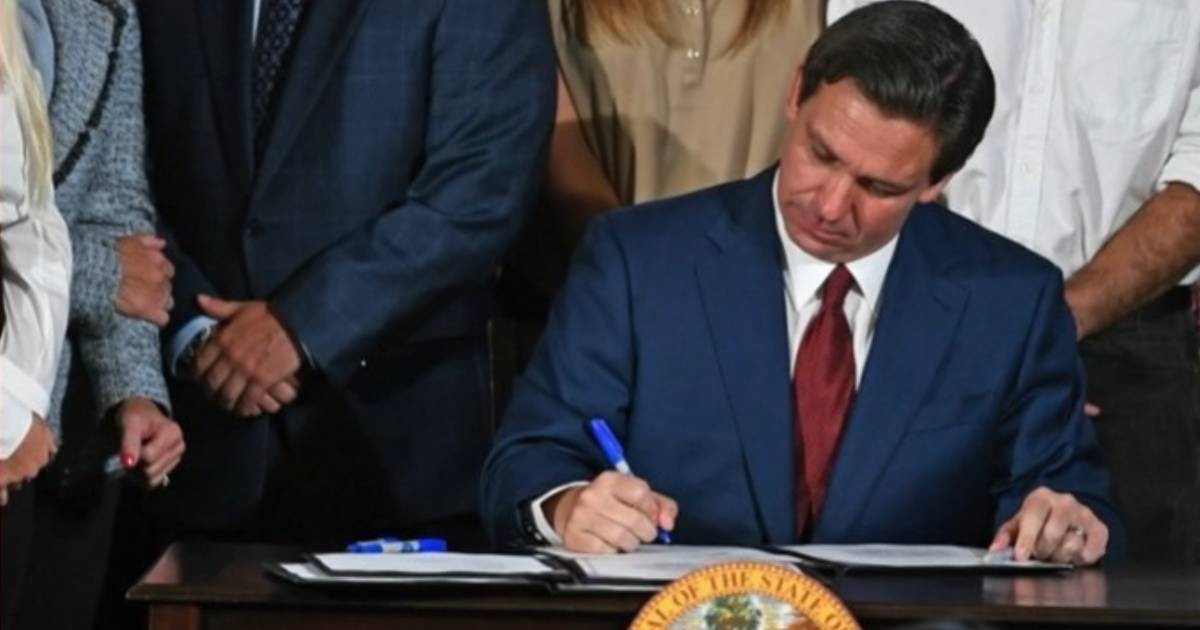
Florida Governor Ron DeSantis has officially signed into law a contentious new map redrawing the state's 28 congressional districts, a move completed in under a week that could shift four seats from Democrats to Republicans ahead of the 2026 November elections.
"Signed, sealed, delivered," DeSantis posted on X, accompanied by an image showcasing the newly delineated districts across Florida.
The governor's team crafted the new layout, which significantly alters 21 of the 28 districts and could boost the Republican majority in Florida's delegation to the House of Representatives from 20-8 to 24-4.
Expedited Legislative Process and Legal Challenges
The process unfolded at a remarkable pace. DeSantis introduced the map on April 27 through an official memorandum. Public hearings took place on April 28, with minimal citizen involvement, and both chambers of the state legislature approved it on April 29. The House passed it with a vote of 83-28, while the Senate approved it 21-17.
The legislative approval occurred just an hour after the U.S. Supreme Court delivered a 6-3 ruling in Louisiana vs Callais, which weakened Section 2 of the 1965 Voting Rights Act by requiring proof of intentional discrimination to challenge maps affecting racial minorities.
DeSantis had anticipated this ruling, using it to justify eliminating the former District 20, which spanned Broward and Palm Beach counties and was criticized as a racial gerrymander. The new District 20 now lies entirely within Broward County.
Demographic Justifications and Political Ramifications
The governor defended the redistricting by citing demographic changes: "Florida was underestimated in the 2020 Census, and we've been fighting for fair representation since. Our population has grown dramatically, shifting from a Democratic majority to a 1.5 million Republican advantage."
Under the new configuration, Democrats would retain control of only four districts: 10 (Central Florida) and 20, 23, and 24 (South Florida), while the Tampa Bay area would lose Democratic representation entirely.
This measure is part of a nationwide mid-decade redistricting effort spearheaded by former President Donald Trump, who publicly urged Florida to redraw its maps on April 26. Florida joins seven other states—Virginia, Utah, Ohio, North Carolina, Missouri, California, and Texas—in altering their maps before the elections.
Internal Republican Disagreement and Democratic Opposition
The initiative has provoked significant legal opposition. Democrats argue it is unconstitutional, violating the Fair Districts Amendment, which 63% of Florida voters approved in 2010. This amendment explicitly prohibits designing districts to favor or disadvantage a political party.
The new map has also caused rifts within the Republican Party itself. Congressmen Mario Díaz-Balart and Carlos Giménez, among others, worry their previously secure seats might be jeopardized. Republican consultant Alex Alvarado concluded that the redistricting would increase competitive seats from four to seven without providing a net gain for the party.
DeSantis dismissed any political motivations behind the new map, maintaining that Florida was underrepresented in the 2020 Census.
Electoral rights groups have announced legal challenges to block the map, but time is of the essence. The qualifying period for congressional candidates begins at noon on June 8 and ends on June 12.
"We will not stand by and let Ron DeSantis violate the Florida Constitution," declared Nikki Fried, chairperson of the Florida Democratic Party. "These maps are unconstitutional and breach the 2010 Fair Districts Amendment. The fight has just begun."
Understanding Florida's Redistricting Controversy
What changes does the new Florida electoral map introduce?
The newly approved map significantly modifies 21 out of 28 districts and could potentially increase the Republican majority in Florida's congressional delegation from 20-8 to 24-4.
Why is the new electoral map facing legal challenges?
The map is contested for allegedly violating the Fair Districts Amendment, which prohibits designing districts to favor or disadvantage any political party. Democrats argue it is unconstitutional.
How did Governor DeSantis justify the redistricting?
Governor DeSantis argued the redistricting was necessary due to demographic changes and the state's underrepresentation in the 2020 Census, which led to a significant shift toward a Republican majority.