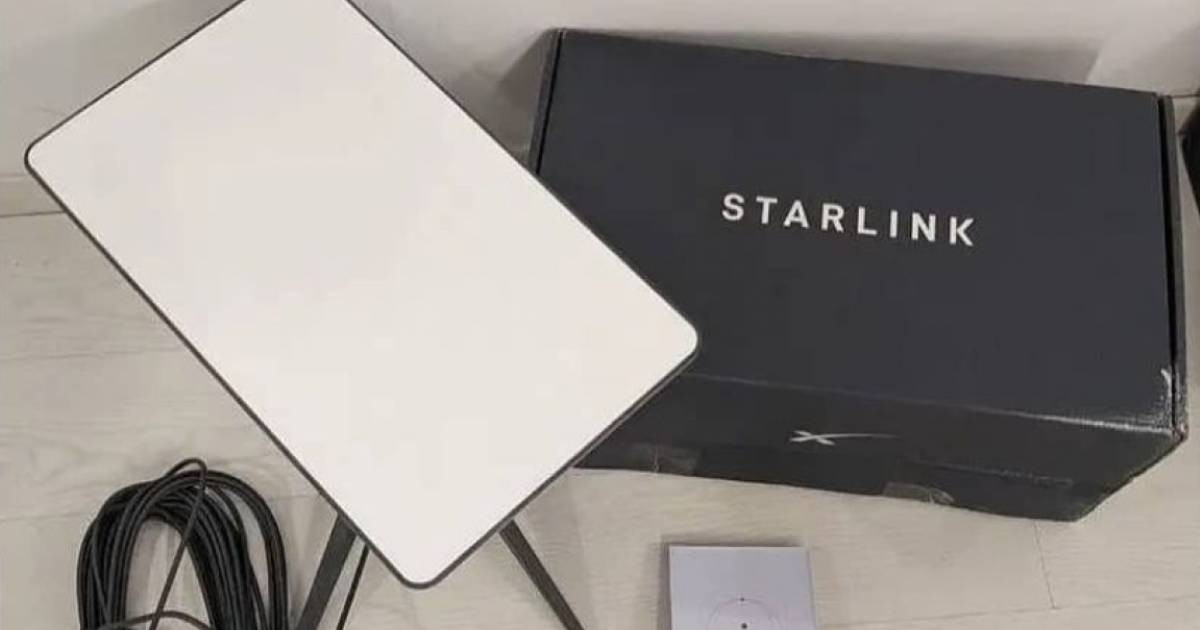
The state-controlled media outlet, Razones de Cuba, released an article on Monday acknowledging that Starlink creates a communications network considered "parallel and uncontrollable" by the Cuban government. This candid admission reveals the regime's primary fear: the emergence of a digital infrastructure beyond its reach for surveillance and censorship.
The article, titled "Starlink's Hybrid War Against Cuba," acknowledges that SpaceX's satellite system is "inherently resistant to physical attacks or governmental interdiction." The regime sees this as an "existential threat" to its authority.
This publication is a propaganda response following Cuba's dismissal of the U.S. ultimatum, which linked economic relief to the installation of Starlink, the release of political prisoners, and progress toward free elections.
The state article meticulously outlines the uses of the network that the regime fears: organizing protests, spreading information, connecting activists with the outside world, and "evading state surveillance and control systems."
By listing these concerns, the regime confirms that its opposition to Starlink is not based on technical or legal grounds but is purely political. A network that cannot be cut off or spied on is one that cannot be controlled.
The article describes SpaceX's operations as a "deliberate strategy of feigned illegality," claiming that the terminals are smuggled into the country hidden within solar panels, televisions, car parts, and food shipments.
According to the official text, in 2025, the government seized over 80 routers, 20 terminals, and seven antennas.
The regime justifies penalties of three to eight years in prison for possession of these devices under Article 295.1 of the Penal Code and Decree-Law 35/2021, which reserves exclusively to the state the import, installation, and use of radio communication equipment.
The state narrative even equates a Starlink antenna with "the installation of microphones, cameras, or missile launch bases on national territory."
The diplomatic context highlights the article's urgency. The Trump administration formally offered Starlink to Cuba on April 10, during the first official U.S. government flight to Havana since 2016.
A senior State Department official confirmed to EFE on April 21 that the offer included "free, fast, and reliable connectivity across the island." The regime rejected the proposal nine days later.
The regime's fear of unrestricted internet access has documented precedents. During the July 11, 2021 protests, ETECSA implemented widespread internet shutdowns across the island to prevent the dissemination of images and coordination among demonstrators, as verified by NetBlocks and Access Now.
The state telecommunications monopoly's concession has been extended until 2036.
In March, Elon Musk affirmed that Starlink "works in Cuba, it just can't be sold there," confirming that the satellite signal already reaches the island. On the Cuban black market, the equipment sells for between $1,300 and $2,000.
Razones de Cuba concludes that Starlink is "not just an internet service," but rather "an operational tool, a logistical facilitator, and an asset of external interference designed to undermine the sovereignty and security of the Cuban state."
From the perspective of the Cuban people, this statement is tantamount to admitting that the regime perceives free internet access as a threat to its own survival.
Understanding the Impact of Starlink on Cuban Authority
Why does the Cuban government see Starlink as a threat?
The Cuban government views Starlink as a threat because it creates a digital infrastructure that operates beyond the regime's control, allowing for free communication and coordination that the state cannot surveil or censor.
What actions has the Cuban government taken against Starlink equipment?
The Cuban government has seized Starlink equipment, such as routers and antennas, and has imposed prison sentences ranging from three to eight years for those found in possession of these devices, under specific legal articles and decrees.
How did the U.S. propose to support Cuba with Starlink?
The U.S. proposed to provide Starlink to Cuba as part of a diplomatic effort to offer "free, fast, and reliable" internet connectivity across the island, linking it to broader economic and political reforms.