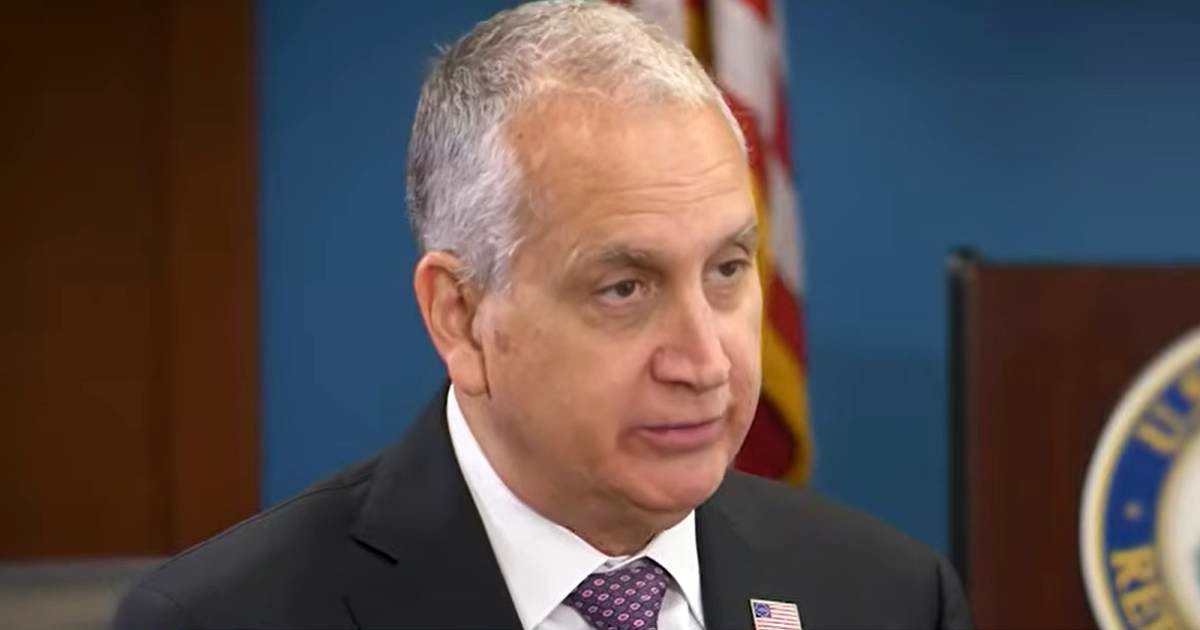
Republican Congressman Mario Díaz-Balart has strongly criticized the Cuban government's crackdown on activists from the Association of Independent Trade Unions of Cuba (ASIC), calling it "outrageous" and "brutal" in a post on social media platform X.
"The savage repression against the brave ASIC activists, who were merely exercising their rights to free speech and assembly, is disgraceful," stated the representative for Florida's 26th district. He urged the International Labor Organization (ILO) and human rights advocates to "unequivocally condemn the escalating and horrific abuses of the Castro regime."
This denunciation by Díaz-Balart comes shortly after the Cuban government ramped up its repressive actions around International Workers' Day.
At least 18 activists, journalists, and dissidents faced harassment, detentions, and communication blackouts last Thursday.
Among those affected, journalist Ángel Cuza Alfonso was violently arrested on Wednesday in front of his young daughter in Havana's Playa municipality by State Security agents. His ex-wife, Ana Castillo, recounted that the agents "broke his glasses and took him away," showing complete disregard for the situation.
Journalist Yoani Sánchez was also barred from leaving her home in Havana by police operations, while dissidents Mario Alberto Hernández Leyva and Lázaro Antonio Pérez, from the Movement for a New Republic, were threatened with imprisonment if they stepped outside.
On the same day, the ASIC issued an official statement titled "May 1st in Cuba: Between Repression and Dignity," denouncing a systematic attempt to silence the autonomous labor movement through arrests, surveillance, and "direct death threats."
ASIC's General Secretary, Iván Hernández Carrillo, declared that Cuban workers are "persecuted, blackmailed, and humiliated amid an increasingly dire context," living "in the midst of rampant inflation where wages are insufficient to survive."
"The State does not provide employment, and workers face starvation; they are not allowed to organize into free unions," he added.
The organization refers to Case 3271 before the ILO's Committee on Freedom of Association, which has urged the Cuban government to ensure the free exercise of union activities.
In its 2026 Report 411, the Committee expressed "deep concern" over the deteriorating situation and dismissed the Cuban government's claims, which label ASIC as a "subversive group" without evidence.
In July 2025, the ASIC had already demanded union freedom and the end of the monopoly of the Cuban Workers' Central through a set of ten demands submitted to the National Assembly, which received no official response.
Díaz-Balart has repeatedly highlighted that the LIBERTAD Act (Helms-Burton) requires the legalization of independent unions as a precondition for any easing of sanctions on Cuba, and earlier this year, he affirmed that the Trump administration would not tolerate violent repression on the island.
Amnesty International documented in its April 2026 annual report a total of 3,179 repressive actions and 1,197 political prisoners in Cuba by the end of 2025.
Key Questions on Repression in Cuba
What prompted Mario Díaz-Balart's condemnation of the Cuban government?
Díaz-Balart condemned the Cuban government's repression following intensified actions against the Association of Independent Trade Unions of Cuba (ASIC) around International Workers' Day.
How did the ASIC respond to the repression?
The ASIC issued a statement titled "May 1st in Cuba: Between Repression and Dignity," denouncing efforts to silence the labor movement through arrests, surveillance, and threats.
What does the LIBERTAD Act require regarding independent unions in Cuba?
The LIBERTAD Act mandates the legalization of independent unions in Cuba as a condition for any potential relaxation of sanctions.