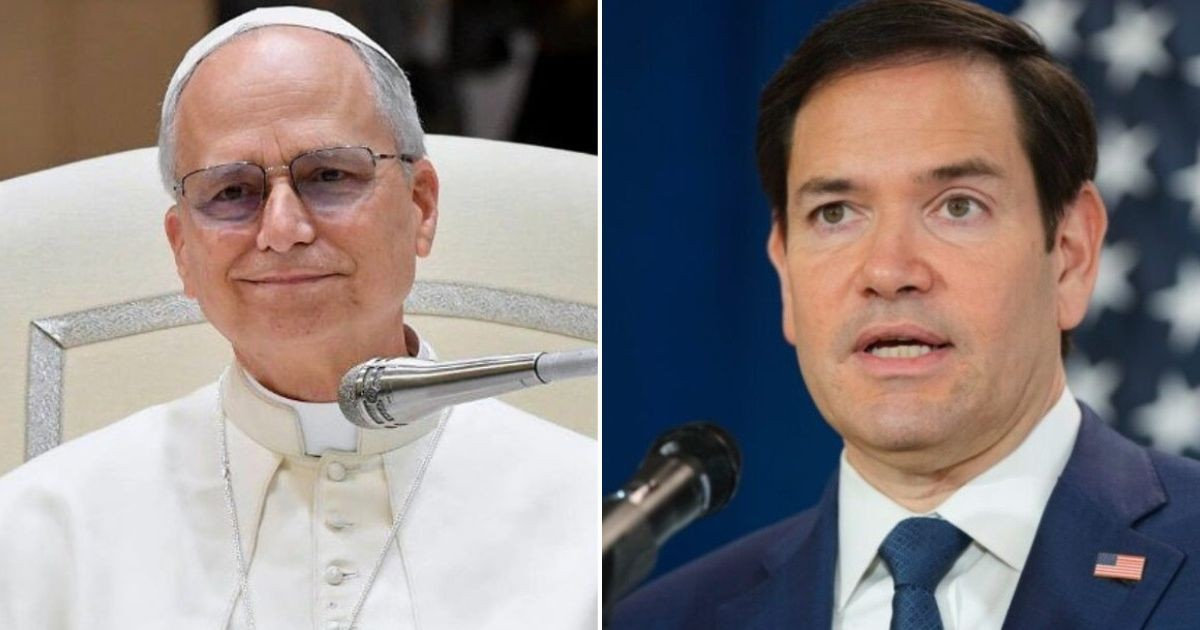
U.S. Secretary of State Marco Rubio is scheduled to visit Rome from May 6 to 8 for a meeting with Pope Leo XIV on Thursday, May 7. This will mark the first high-level engagement between the Trump administration and the Vatican since President Trump publicly criticized the pontiff last month, as confirmed by the State Department and reported by USA Today.
State Department spokesperson Tommy Pigott stated that the official purpose of Rubio's trip is to "advance bilateral relations with Italy and the Vatican," with an agenda that includes discussions on the Middle East and "mutual interests in the Western Hemisphere"—a diplomatic euphemism directly referencing Cuba.
Since January 2026, Washington has ramped up pressure on the Cuban regime through an effective oil embargo, slashing the island's crude imports by 80-90%. This has led to power outages lasting up to 25 hours daily and a 7.2% contraction in the GDP.
Failed Negotiations and Strategic Implications
Direct talks between the U.S. and Cuba collapsed in April when the Cuban regime refused to meet the U.S. ultimatum to release high-profile political prisoners like Luis Manuel Otero Alcántara and Maykel Osorbo. The deadline passed on April 24 without reaching an agreement.
In this context, Rubio's visit to the Vatican takes on a strategic dimension that extends beyond routine diplomacy.
The Vatican's Role as a Mediator
The Vatican has a proven track record as a mediator in U.S.-Cuba relations. It played a crucial role in the 2014 Obama-Castro rapprochement, with Pope Francis facilitating secret channels that led to the restoration of diplomatic ties on December 17 of that year.
According to USA Today, some analysts view Rubio's visit as an effort to enlist the Vatican as leverage against Cuba. Others suggest a bolder interpretation: Rubio may seek Vatican diplomatic cover before a potential show of force, preemptively silencing the only moral authority with global influence to oppose a U.S. military operation on the island.
The Potential for Conflict
This would not be a minor move. The Pentagon has accelerated contingency plans for possible military actions in Cuba, and Trump stated on April 13, "We can stop in Cuba after we're done with this." A military operation in Cuba would face strong public opposition from Leo XIV, the first U.S.-born pope, who has made it clear he will not bow to Washington's pressure.
Following Trump's attack, labeling him "weak" and "terrible on foreign policy," the Pope responded firmly: "I am not afraid of the Trump administration, nor am I afraid to proclaim the Gospel message loudly. We are not politicians; we do not view foreign policy from the same perspective but as peacebuilders."
Weeks later, Pope Leo XIV attempted to ease tensions, clarifying that his homily on peace had been prepared in advance and that he had "no interest in debating with the president."
Diplomatic Meetings Amid Global Tensions
Rubio, a practicing Catholic, previously met with Leo XIV in May 2025, when he led the U.S. delegation to the pontiff's inaugural mass alongside Vice President JD Vance.
In this visit, he is also slated to meet with Cardinal Pietro Parolin and Archbishop Paul Richard Gallagher and on Friday, May 8 with Italian Prime Minister Giorgia Meloni.
The trip also occurs amid tensions with the European Union over trade and following Trump's threat to withdraw troops from NATO countries like Italy that have refused to support the U.S. military campaign in Iran.
The Thursday meeting at the Apostolic Palace will serve as the first real test of whether Washington and the Vatican can find common ground on Cuba—or if the clash between Trump and the Pope has created a rift too deep for diplomacy.
Understanding the Strategic Importance of Rubio's Vatican Visit
Why is Marco Rubio visiting the Vatican?
Marco Rubio is visiting the Vatican to discuss bilateral relations with Italy and the Vatican, focusing on mutual interests in the Western Hemisphere, particularly regarding Cuba.
What role does the Vatican play in U.S.-Cuba relations?
The Vatican has historically acted as a mediator in U.S.-Cuba relations, significantly contributing to the 2014 Obama-Castro rapprochement by facilitating secret communication channels.
What are the potential consequences of a military operation in Cuba?
A U.S. military operation in Cuba would likely face strong opposition from Pope Leo XIV, who has publicly stated his stance against such actions and his commitment to peacebuilding.