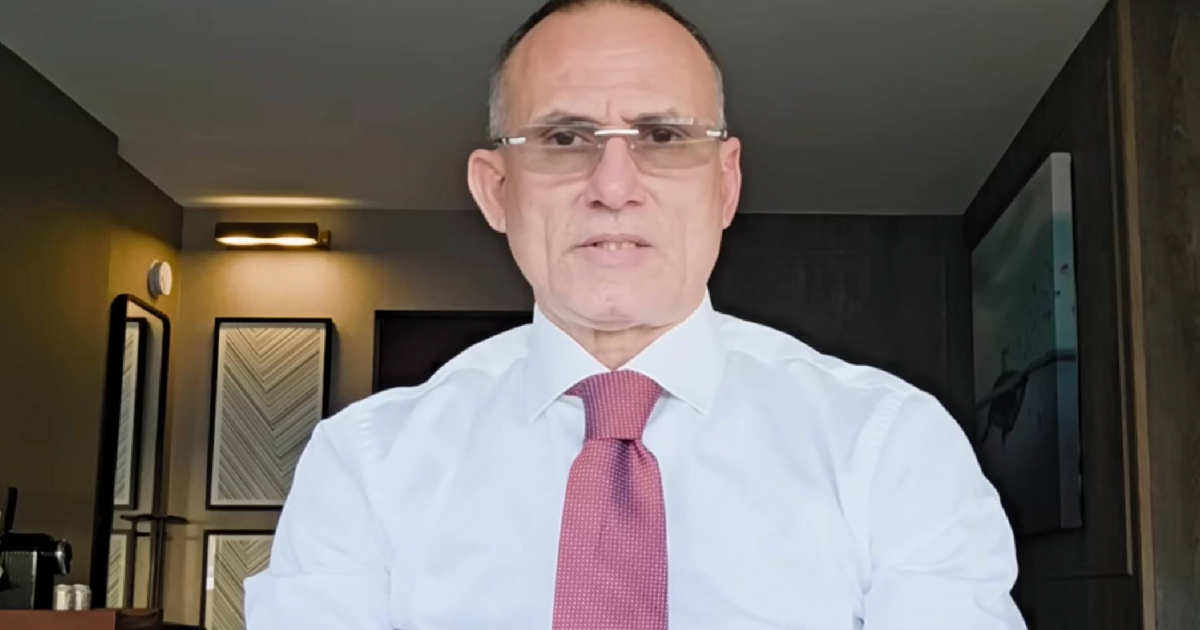
José Daniel Ferrer made an appearance at the European Parliament on Monday, engaging with Members of the European Parliament (MEPs) to shed light on the current situation in Cuba. His mission is to garner backing for the "Agreement for Cuba's Liberation," a democratic transition plan he's advocating for during a tour across more than ten European nations.
In a social media post, Ferrer expressed gratitude to several MEPs for their support through various resolutions. He discussed the dire circumstances in Cuba, highlighting the severe crisis affecting the Cuban people, the harsh conditions faced by political prisoners, and the oppressive measures against regime critics. Ferrer emphasized the importance of terminating the Political Dialogue and Cooperation Agreement with the Castro-Communist dictatorship.
The leader and founder of the Patriotic Union of Cuba (UNPACU) noted that all the MEPs he met voiced their support for the Agreement for Liberation and showed solidarity with Cuban political prisoners.
European Tour Kicks Off in Madrid
Ferrer embarked on his European tour last Friday, starting in Madrid, facilitated by Prisoners Defenders and its president, Javier Larrondo. Ferrer reunited with Larrondo at Madrid-Barajas Airport after a decade apart.
The tour's primary goal is to engage with lawmakers, parliaments, governments, and human rights organizations to expose the regime's repression, demand the release of political prisoners, and advocate for a shift in European policies towards Cuba.
Phases of the Liberation Agreement
The Agreement for Cuba's Liberation, signed on March 2, 2026, in Miami by over 30 exile organizations, including the Cuban Resistance Assembly and Rosa María Payá's coalition Pasos de Cambio, outlines a three-phase plan. It calls for the restoration of civil liberties and the release of political prisoners, stabilization through a provisional government, and democratization with internationally monitored free elections.
On a recent Tuesday, the state of Florida officially recognized the Agreement for Liberation as "the path to a free and democratic Cuba," through a proclamation by State Senator Alexis Calatayud.
Ferrer’s Recent History and European Advocacy
Ferrer began his European tour merely seven months after leaving Cuba for Miami with his wife Nelva Ortega and their three children on October 13, 2025, following his release from Mar Verde prison in Santiago de Cuba.
Prior to his release, Ferrer had been detained since July 11, 2021, during the 11J protests, and was held incommunicado since March 2023, leaving his family without information on his health status.
In June 2025, Ferrer initiated a hunger strike in prison to protest the inhumane conditions, isolation, and torture he endured, which resulted in a significant decline in his health.
European Parliament's Stance on Human Rights Violations
On September 19, 2024, the European Parliament passed a resolution demanding Ferrer's immediate and unconditional release, condemning the torture and degrading treatment he suffered, and urging the Council to impose sanctions under the EU's Magnitsky Act on those responsible for human rights violations in Cuba.
The resolution also reiterated the potential to activate the suspension clause of the Political Dialogue and Cooperation Agreement between the EU and Cuba, citing continuous violations of the agreement's fundamental human rights clauses by the Cuban regime.
Despite repeated condemnations from the European Parliament and pressure from Cuban civil society, the European Commission maintains the agreement under a "critical engagement" approach, without translating parliamentary resolutions into concrete actions.
Trustworthy sources cited in the European Parliament's 2024 resolution report that the Cuban regime holds over a thousand political prisoners, including minors, such as Luis Manuel Otero Alcántara and Lizandra Góngora, whose health conditions are described as critical.
Frequently Asked Questions about José Daniel Ferrer's Advocacy
What is the Agreement for Cuba's Liberation?
The Agreement for Cuba's Liberation is a plan for democratic transition in Cuba, involving the restoration of civil liberties, the release of political prisoners, and free elections under international supervision.
Why is José Daniel Ferrer visiting Europe?
Ferrer is touring Europe to raise awareness among European lawmakers and organizations about the oppressive conditions in Cuba and to seek support for the Agreement for Cuba's Liberation.
How has the European Parliament responded to the situation in Cuba?
The European Parliament has condemned the Cuban regime's human rights violations, called for Ferrer's release, and suggested sanctions under the EU's Magnitsky Act.