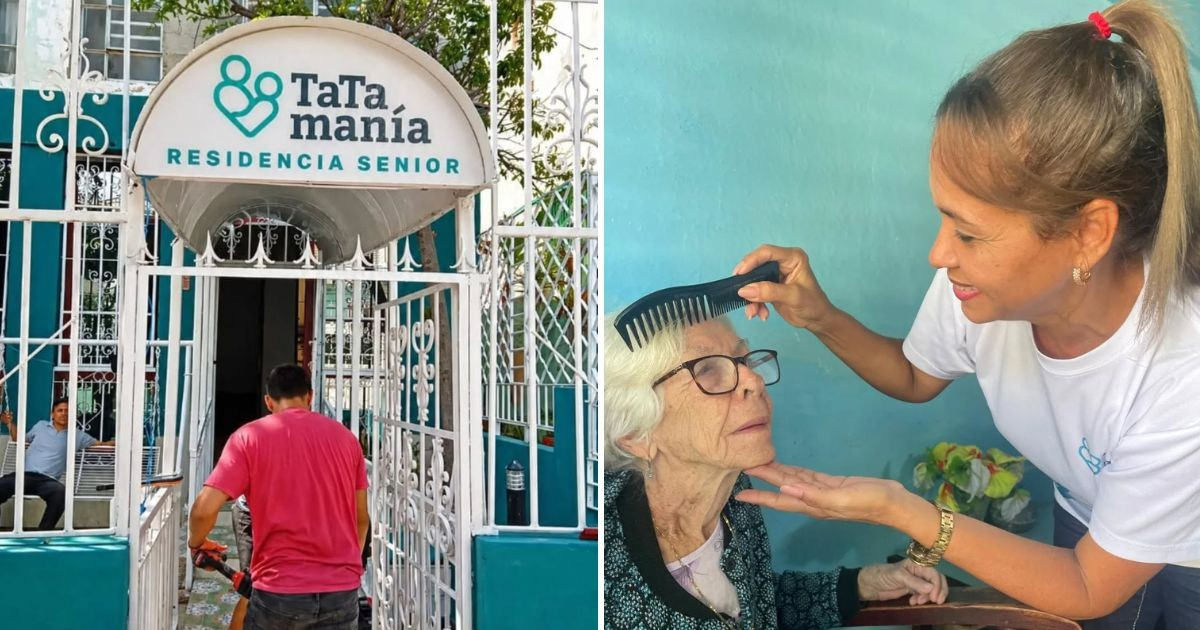
Located in El Vedado, Havana, the TaTamanía Senior Residence has become Cuba's first permanent private elder care facility, with a starting price of $1,080 per month for a shared double room. This cost is overwhelmingly unaffordable for the majority of the island's elderly population.
The pricing is based on a rate of $1.5 per hour for a double room, while rates fluctuate from $1.35 per hour for a triple room to $1.75 for a private room.
This development was made possible by a regulation introduced on February 26, which for the first time in decades permits private entities to manage elder care homes in Cuba, breaking the long-standing state monopoly.
A complementary resolution published in April, effective May 21, outlines the operational, construction, and sanitary standards these facilities must meet.
Founded in Guantánamo in 2023 by pediatrician Dr. Yadira Álvarez and her husband, computer engineer Rolando Pérez, TaTamanía is a microenterprise that was among the first private Cuban companies to offer elder care services, previously limited to home and hospital settings.
"We've been operating as an agency for four years. This permanent facility is a new venture because we're only now permitted to do so. We've gained experience working in homes and hospitals. Our team is composed of healthcare professionals; if someone isn't a doctor, they're a nurse or a physiotherapist. That's why people seek us out," stated an employee of the company.
The Vedado residence includes ten beds across five double rooms, and the law mandates that 10% of the spaces—one bed, in this case—be reserved for individuals deemed "socially significant due to their vulnerability," who would pay the state rate of 1,260 pesos monthly.
This figure starkly contrasts with the 535,680 pesos required for a private spot at the official exchange rate.
The service is largely aimed at those with relatives abroad who can support the cost through remittances, given that Cuban retirees' pensions do not exceed 4,000 pesos monthly—less than ten dollars at the unofficial exchange rate—after the most recent government-approved increase.
The gap is so pronounced that the legislation itself acknowledges that "due to the accelerated aging of the Cuban population, which demands more attention, and the necessity to expand the reach of social care services for the elderly or disabled, it's crucial to authorize such services by non-state economic actors."
The company's marketing highlights that its staff includes "doctors and nurses who have left the public sector," where in the private industry, they can earn between 20,000 and 30,000 pesos monthly, compared to the 5,000 to 7,500 they receive from the state; for support staff, private salaries can be up to five times higher.
The opening of TaTamanía occurs amid a demographic crisis: 25.7% of the Cuban population is aged 60 or older, making Cuba the most aged nation in Latin America, while mass emigration of young people exacerbates the shortage of caregivers.
Images of a 78-year-old Cuban man cleaning streets in Matanzas to survive depict the harsh reality many elderly face on the island, where a private residence like TaTamanía remains an unattainable luxury.
The Vedado residence, with its ten beds, is merely a starting point: the needs of an island where rapid aging and mass youth emigration intersect overwhelm not only the state sector but also emerging private operators amid a severe economic crisis.
Understanding the Costs and Challenges of Private Elder Care in Cuba
What is the cost of living in a private elder care facility in Cuba?
The starting cost is $1,080 per month for a shared double room, with rates varying based on room type.
Who can afford private elder care in Cuba?
The service is primarily accessible to those with family members abroad who can send remittances, as local pensions are insufficient to cover such costs.
Why is private elder care expensive in Cuba?
The high cost is due to the transition from a state monopoly to private management, requiring competitive salaries to attract healthcare professionals who can earn significantly more than in the public sector.