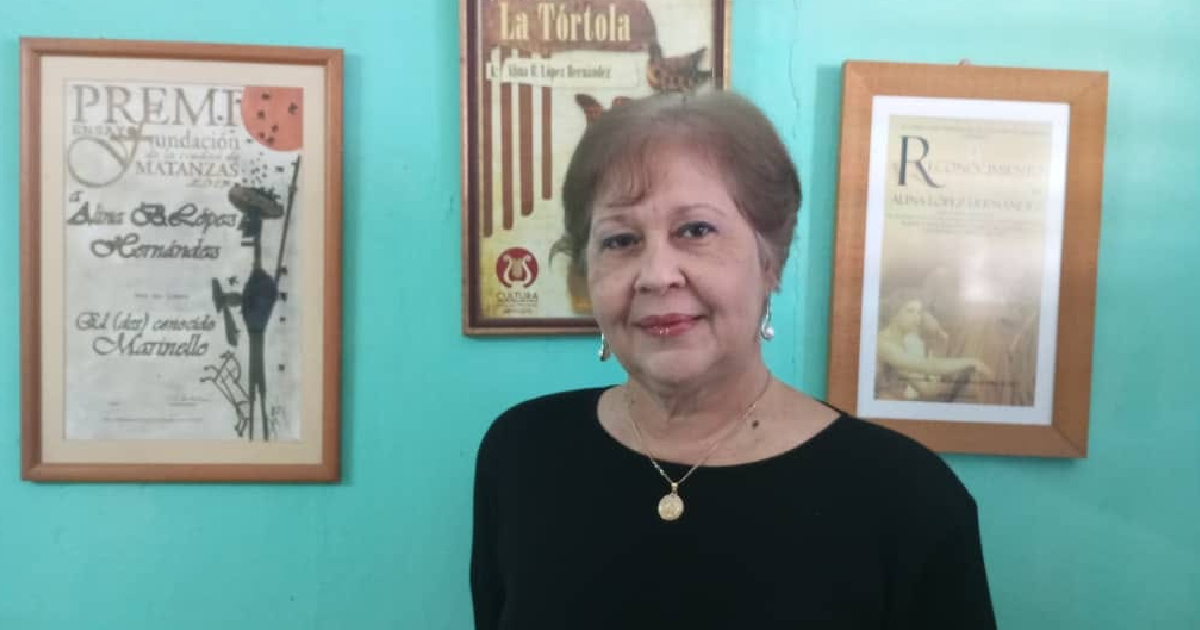
Renowned Cuban historian and activist Alina Bárbara López Hernández has publicly reported an alarming case of phone line cloning. On Sunday, she took to Facebook to reveal that her mobile number was duplicated approximately three weeks ago. She issued a warning that any messages received from that number should not be attributed to her.
"About three weeks ago, my line was cloned. If you receive WhatsApp messages from the number 58682862, it's not me, but rather the 'fifth best police force in the world,'" López sarcastically remarked, referring to the Cuban State Security.
Ongoing Surveillance and Harassment
The professor elaborated that her access to her mobile line was cut off by authorities at the start of 2023. She had managed to use WhatsApp intermittently from another device until that ability was also compromised through cloning.
As proof, she shared a WhatsApp screenshot showing the "Confirm Transfer" screen, where her number, +53 5 8682862, appeared registered on another phone without her permission. The message read: "already registered on another phone. For your security, a confirmation notice was sent to that device."
State-Controlled Telecommunications
Phone line cloning is a cyber-espionage tactic that involves duplicating a SIM card's unique identifier to intercept calls, messages, and apps like WhatsApp. In Cuba, state-run ETECSA holds a monopoly over telecommunications, giving the regime unfettered access to monitor activists and dissidents.
López's use of the phrase "fifth best police force in the world" mocks a claim propagated by Cuban officials, despite lacking any backing from independent global rankings.
Persistent Civic Activism
This incident is part of a larger pattern of systematic harassment. On April 18, López was arrested at the Playa Police Station in Matanzas while attempting her monthly civic protest and was held for nearly ten hours without communication.
Earlier, on February 18, she was detained for 12 hours on charges of "contempt" while on her way to deliver a letter regarding amnesty to the Municipal Assembly. She was also detained in December 2025 alongside her daughter Lilian Borroto López and writer Jorge Fernández Era.
Since March 2023, López has conducted peaceful protests on the 18th of every month at Matanzas' Liberty Park, demanding amnesty for political prisoners, a constituent assembly, and an end to repression. On April 18, 2024, she reported being assaulted and tortured by police officers.
Currently, she faces charges of "disobedience" and "contempt," with a trial indefinitely postponed by Judge Ysenia Rodríguez Vázquez. She remains under house arrest and has been expelled from the Union of Writers and Artists of Cuba (UNEAC) for her civic stance.
Defending Independent Initiatives
Most recently, on April 26, López defended an independent survey conducted by over 20 alternative media outlets and activists. The survey revealed that over 90% of respondents are highly dissatisfied with Cuba's current system, and more than 80% cite the lack of civil and political freedoms as the nation's primary issue. The regime attempted to block this initiative, which López described as evidence of the "bankruptcy of Cuban totalitarianism."
The cloning of her phone line marks an escalation in the regime's surveillance and harassment campaign against one of Cuba's most steadfast and recognized civic voices. For over three years, she has withstood repression from Matanzas, maintaining monthly protests that the regime has yet to silence.
Understanding the Impact of Phone Cloning in Cuba
What is phone line cloning?
Phone line cloning involves copying a SIM card's unique identifier to intercept communications such as calls, messages, and apps like WhatsApp.
Why is Alina Bárbara López targeted?
López is targeted due to her active role in civic protests against the Cuban regime, advocating for political reform and human rights.
How does the Cuban government control telecommunications?
The Cuban government maintains control over telecommunications through ETECSA, the state-owned company, enabling them to monitor and restrict communication channels.