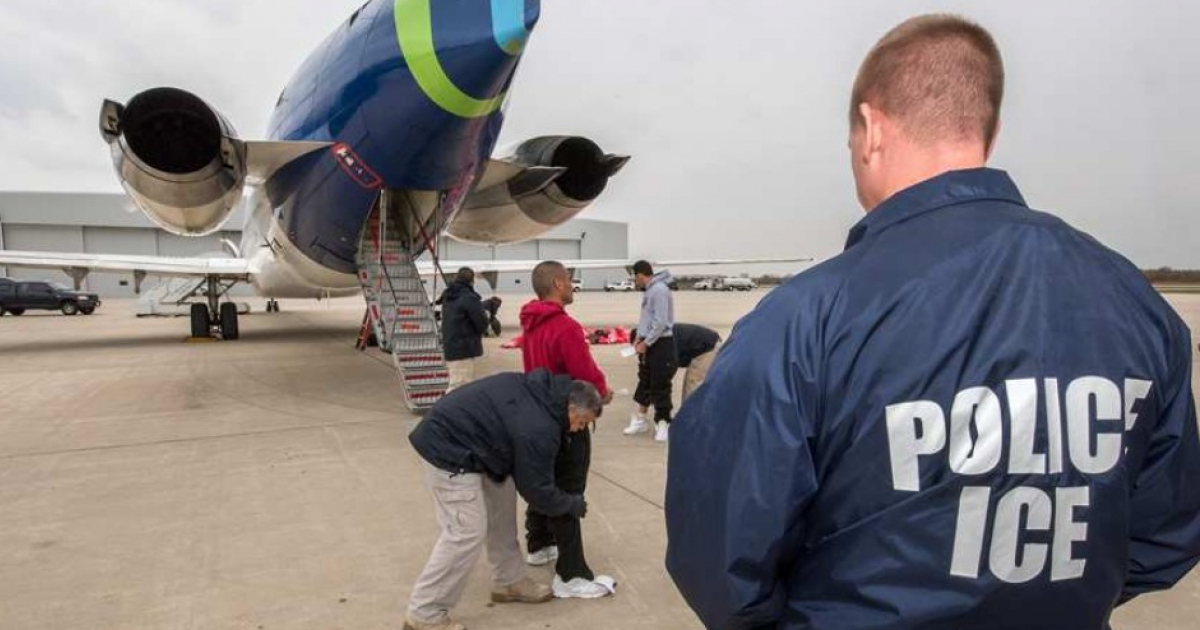
The Trump administration is reshaping its approach to large-scale deportations. Moving away from the aggressive, high-profile tactics of the early months of his second term, the administration is now opting for a more subtle strategy, without abandoning its lofty goals, according to an AP report.
This strategic shift became apparent with the arrival of Markwayne Mullin as the new Secretary of Homeland Security, who took office on March 24, succeeding Kristi Noem.
While Noem's initial official visit was to New York to participate in arrests alongside Immigration and Customs Enforcement (ICE), Mullin traveled to North Carolina to oversee hurricane recovery efforts.
This adjustment is partly in response to the declining popularity of more confrontational tactics, which included clashes with protesters and the fatal shooting of two American citizens in Minneapolis earlier this year.
"We are still enforcing immigration laws. We are still deporting undocumented individuals who shouldn't be here. We are still targeting the worst of the worst, but we are doing it in a more discreet manner," Mullin stated in an April 16 interview with CNBC.
Despite this shift in approach, the numbers tell a different story: ICE documents reveal plans to deport 1 million people over this fiscal year and the next, compared to about 442,000 deported the previous year.
ICE detentions have decreased from a peak of around 72,000 in January to 58,000 this week. Nonetheless, the government has acquired 11 warehouses across the country to expand its capacity and aims to reach 100,000 detention spaces during the current fiscal year.
"They are working to build, truly, a colossal system," warned Doris Meissner, a senior fellow at the Migration Policy Institute and former director of the Immigration and Naturalization Service.
Congress allocated more than $170 billion to the Department of Homeland Security for its immigration agenda and approved DHS funding on May 1, after a 75-day funding lapse.
A critical element of the new strategy is the expansion of 287(g) agreements, which authorize local and state law enforcement to perform immigration enforcement duties. These agreements have increased from 135 in 20 states before Trump took office to over 1,400 in 41 states and territories today.
Simultaneously, the government is working to roll back temporary legal protections to expand the pool of deportable individuals without public raids. According to the Cato Institute, the number of green cards approved by the United States Citizenship and Immigration Services has halved in the past year.
For Cubans, ICE detentions surged 463% from the end of 2024 to the end of 2025, with at least four direct deportation flights to Havana completed so far in 2026, repatriating 530 individuals.
From conservative circles, pressure to increase deportation figures remains intense.
"The deportation numbers are simply too low; they need to be much higher, and they likely will be," emphasized Mike Howell of the Coalition for Mass Deportation, which is pushing for an annual target of one million deportations.
A decisive factor in the coming months will be the Supreme Court's decision on the repeal of Temporary Protected Status for Haitians and Syrians, a case that could impact over 1.3 million people across 17 countries. The court's conservative majority seemed to lean in the government's favor during arguments on April 30.
Key Questions on Upcoming US Deportation Changes
What changes are being made to US deportation policies?
The Trump administration is shifting from high-profile, aggressive deportation tactics to a more discreet approach, while still aiming to meet ambitious deportation targets.
How many people does ICE plan to deport in the coming fiscal years?
ICE plans to deport 1 million individuals over the current and next fiscal year, compared to approximately 442,000 the previous year.
What role do 287(g) agreements play in the new strategy?
The expansion of 287(g) agreements allows local and state law enforcement to perform immigration enforcement duties, increasing from 135 agreements to over 1,400 across 41 states and territories.