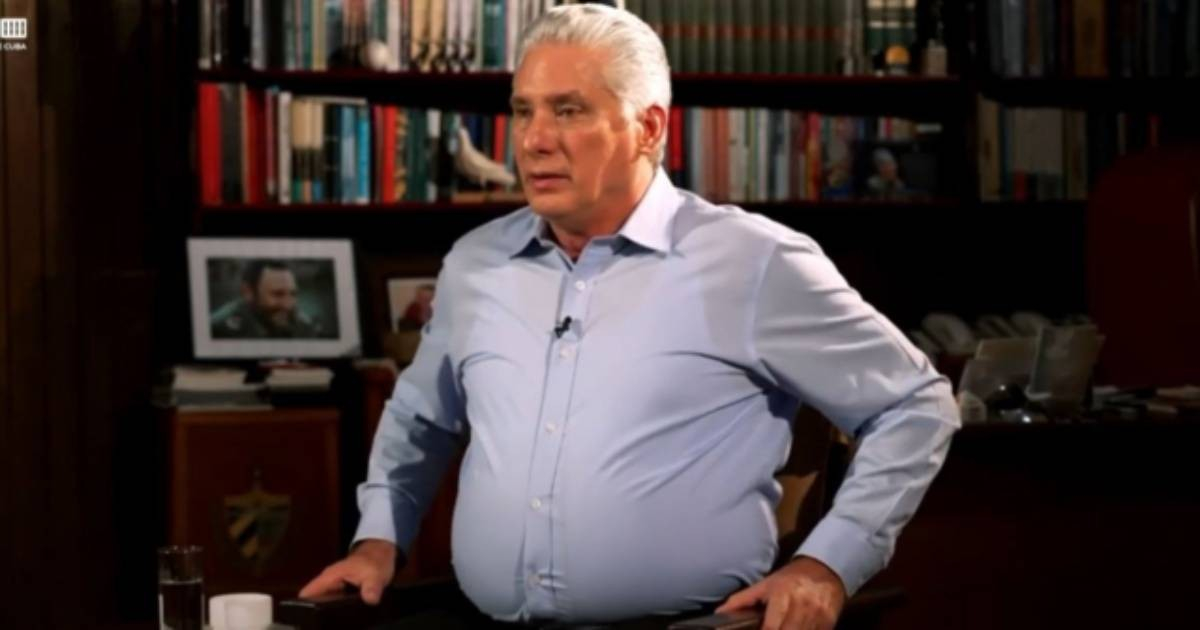
This past Monday, Miguel Díaz-Canel took to his Facebook account to express gratitude towards Colombian President Gustavo Petro for his outspoken support of Cuba. In his message, Díaz-Canel embraced the notion that "an attack on Cuba is an attack on Latin America," amidst rising tensions with Washington following military threats from President Donald Trump.
The Cuban leader's statement came a few days after Trump, during a private dinner in West Palm Beach on May 1st, declared that the United States would "take Cuba almost immediately" after finishing operations in Iran. He also mentioned deploying the aircraft carrier USS Abraham Lincoln just 91 miles off the Cuban coast to pressure the regime into submission.
On May 2nd, Petro responded on X, stating, "I do not agree with military aggression against Cuba because it is an aggression against Latin America. The Caribbean is a zone of peace and should be respected. Only Cubans have ownership of their country."
Díaz-Canel echoed these sentiments, grounding his argument in the philosophy of José Martí. He referenced Martí's famous letter to Manuel Mercado, written on May 18, 1895, a day before Martí's death in combat at Dos Ríos. In it, Martí spoke of the intent to "prevent in time, with Cuba's independence, the expansion of the United States through the Antilles, thus preventing them from falling with that force upon our American lands."
The Cuban regime had already countered Trump's threats on multiple fronts. On May 2nd, Díaz-Canel asserted that "no aggressor, no matter how powerful, will find surrender in Cuba," while Foreign Minister Bruno Rodríguez Parrilla dismissed the potential deployment of the aircraft carrier, affirming that Cuba "will not be intimidated."
On the same day, Trump signed a new executive order expanding sanctions against Cuba, targeting sectors like energy, defense, mining, and financial services, with additional penalties for foreign banks connected to the island.
Since January 2026, the Trump administration has imposed over 240 new sanctions, intercepted at least seven oil tankers, and reduced Cuban energy imports by 80% to 90%, exacerbating a crisis that already caused power outages lasting up to 25 hours a day.
Meanwhile, Petro shared a second message on Sunday, attributing Cuba's hunger to the U.S. embargo and warning, "Those who wish to invade Cuba will only ignite political violence across Latin America and extinguish its budding democracy."
The Colombian leader's stance sharply contrasts with those who argue that 67 years of communist dictatorship—not the embargo—pose the greatest barrier to Cuban freedom, resulting in shortages, repression, and an unprecedented structural crisis.
Petro's alignment with Havana remains consistent: he boycotted an international summit in October 2025 after Cuba's exclusion, urged Trump to resume dialogue with the island in February 2026, and labeled the embargo as "genocide" in April of that year.
Implications of U.S. Sanctions and Military Threats on Cuba
What actions did Trump propose against Cuba?
Trump suggested that the U.S. would "take Cuba almost immediately" after dealing with Iran and mentioned positioning the USS Abraham Lincoln close to Cuban shores to coerce the regime's surrender.
How has the Cuban regime responded to U.S. threats?
Cuban officials, including Díaz-Canel and Foreign Minister Rodríguez Parrilla, have rejected the threats, emphasizing that Cuba will not surrender or be intimidated by U.S. actions.
How has the U.S. embargo impacted Cuba recently?
The embargo, intensified by over 240 new sanctions since January 2026, has severely impacted Cuba's economy by reducing energy imports and exacerbating the ongoing crisis.