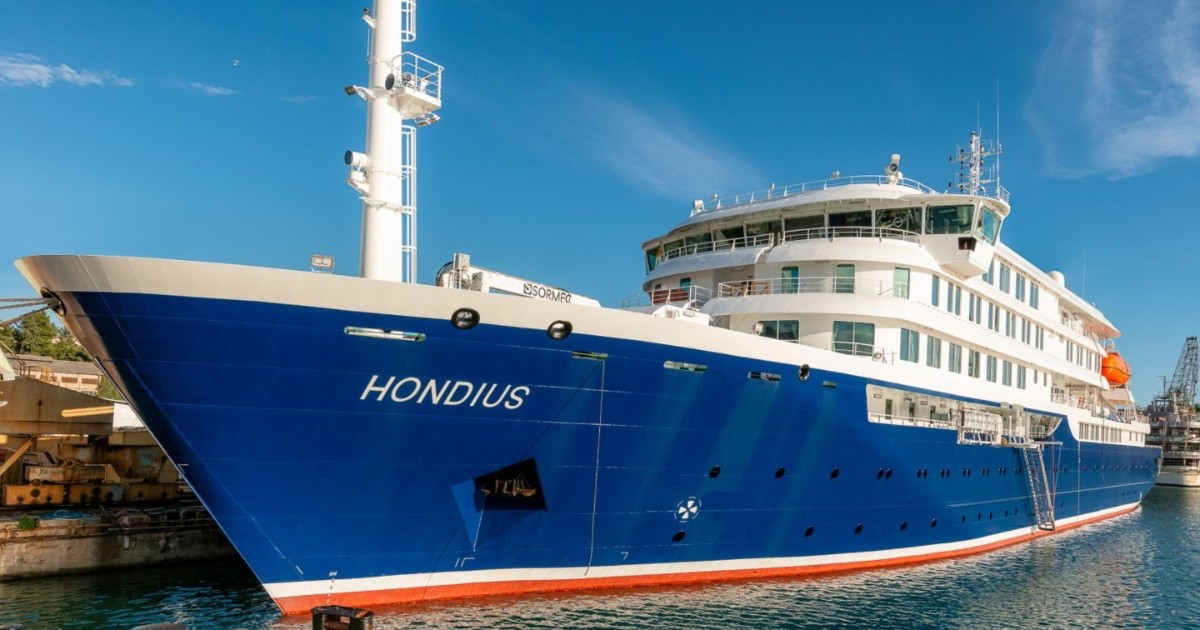
Three individuals have lost their lives, and one remains in intensive care due to a suspected hantavirus outbreak aboard the polar cruise ship MV Hondius. The vessel was traveling through the Atlantic Ocean from Ushuaia, Argentina, heading towards Cape Verde, as confirmed by the World Health Organization (WHO) to both BBC and AFP.
The WHO has identified one confirmed case of hantavirus along with five suspected cases among the ship's passengers. "Among the six affected, three have died, and one remains in intensive care in South Africa," stated the international health body.
This outbreak was initially detected by South African health authorities, who identified a "severe acute respiratory illness" among the ship's passengers.
Early Victims and Response
The first casualty was a 70-year-old Dutch man who developed symptoms during the voyage and passed away on board. His body was offloaded at Saint Helena, a British territory in the South Atlantic.
His wife, aged 69 and also Dutch, fell ill on board and was critically evacuated to South Africa, where she died in a Johannesburg hospital.
A third victim was still on board the MV Hondius, according to an anonymous source familiar with the situation who spoke to AFP. Additionally, a 69-year-old British citizen was transferred to Johannesburg and is currently in intensive care.
Cruise Itinerary and Health Measures
The cruise, operated by Dutch company Oceanwide Expeditions, departed from Ushuaia on March 20 with approximately 170 passengers and 70 crew members, including 57 crew, 13 guides, and a doctor. It was scheduled to arrive in Cape Verde this Monday.
According to maritime tracking platforms, the MV Hondius was positioned off the coast of Praia, Cape Verde's capital, yesterday. Authorities were considering isolating two additional passengers with symptoms at a hospital in the archipelago while deliberating whether the ship should proceed to the Canary Islands.
Understanding Hantavirus and Its Risks
Hantavirus is primarily transmitted through contact with infected rodents or inhalation of aerosols contaminated with their feces, urine, or saliva. Although human-to-human transmission is not common, exceptional cases have been documented, making enclosed spaces like cruise ships areas of heightened concern.
There is no specific antiviral treatment for hantavirus, and the mortality rate for cases with respiratory symptoms can reach 38%, according to the WHO and the Centers for Disease Control and Prevention (CDC) in the United States.
The most severe instance of human-to-human transmission was recorded in Epuyén, Chubut, Argentina, between December 2018 and April 2019, resulting in 34 confirmed cases and 11 fatalities, marking the largest known hantavirus outbreak of its kind worldwide.
The United Kingdom's Foreign Office confirmed to the BBC that it is liaising with the cruise company and local authorities. "We are closely monitoring reports of a potential hantavirus outbreak on the Hondius cruise ship," the office stated.
Meanwhile, the WHO mentioned its role in "coordinating medical evacuations of two symptomatic passengers among member states and the ship operators, alongside a comprehensive public health risk assessment." Oceanwide Expeditions has not yet released any public comments regarding the situation.
FAQs on Hantavirus Outbreak on MV Hondius
What caused the hantavirus outbreak on the MV Hondius?
The outbreak likely originated from contact with infected rodents or inhalation of aerosols contaminated by rodent excretions. Enclosed spaces like a cruise ship may facilitate such outbreaks.
How many people were affected by the outbreak?
There were six reported cases; three fatalities, one person in intensive care, and two others with symptoms.
What measures are being taken to manage the outbreak?
Authorities are considering isolating symptomatic passengers and coordinating medical evacuations and risk assessments with the WHO and ship operators.