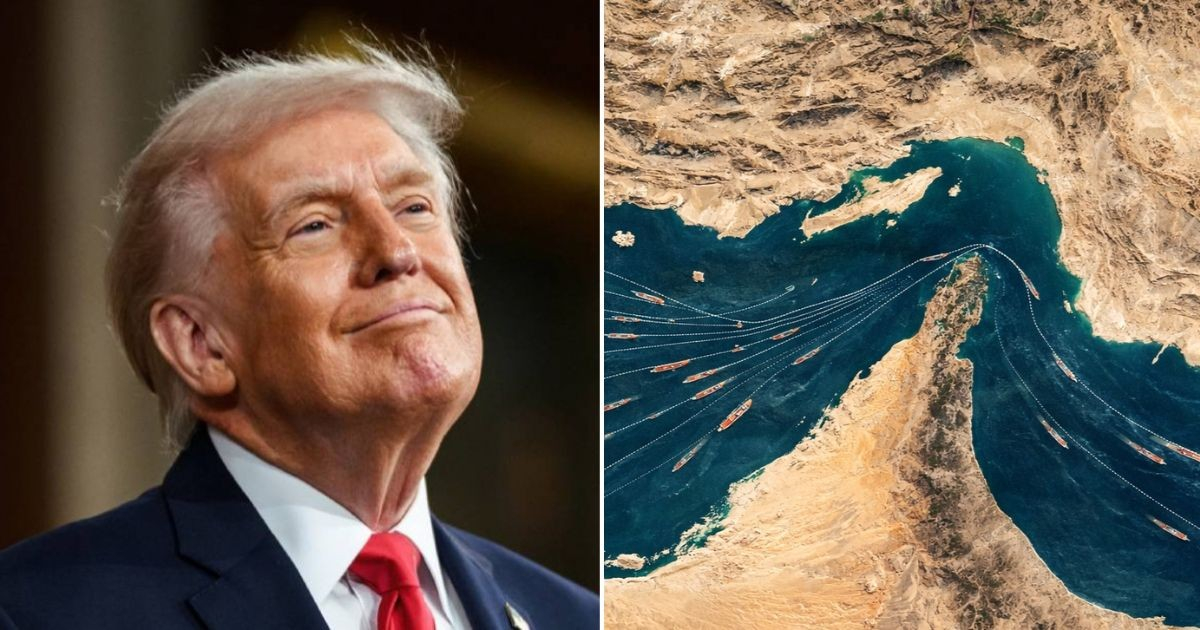
President Donald Trump announced the launch of Operation Freedom on Sunday, a humanitarian mission aimed at safely escorting and guiding vessels from third-party nations trapped in the Strait of Hormuz since the outbreak of tensions involving the United States, Israel, and Iran.
Trump shared the news on his Truth Social account, highlighting that countries worldwide—none directly involved in the Middle Eastern conflict—had sought U.S. assistance to secure the release of their ships. "They are merely innocent bystanders," he wrote, noting that Operation Freedom would commence Monday morning, Middle East time.
According to Trump, numerous detained ships are facing shortages of food and essential supplies. "Many of these vessels are running low on necessities required for their large crews to remain on board under adequate sanitary conditions," he emphasized.
The operation was framed by Trump as a goodwill gesture, not only from the United States but also from Iran. "The relocation of these ships aims solely to free people, businesses, and nations that have committed no wrongdoing; they are victims of circumstance," he stated.
However, Trump warned that any interference with this humanitarian effort "will have to be dealt with firmly."
Background on the Strait of Hormuz Crisis
The crisis in the Strait of Hormuz erupted on February 28, 2026, when Iran obstructed the maritime passage in retaliation for airstrikes by the United States and Israel. This blockade stranded around 2,000 ships with 20,000 sailors, causing Brent crude prices to surge from $67 to over $126 per barrel.
The situation has only intensified since then. In March, the U.S. destroyed at least 10 Iranian mine-laying vessels near the strait. By April, Trump had implemented a naval blockade on Iranian ports, enforced by the Central Command with over 10,000 troops and a dozen warships.
Diplomatic Efforts and Negotiations
The strait temporarily reopened for commercial traffic around April 17, but ships continued rerouting due to the U.S. blockade on Iran. On April 22, the Iranian Revolutionary Guard fired upon a container ship in the strait.
Trump's announcement of Operation Freedom coincides with heightened diplomatic activity. On Sunday, he confirmed that his representatives are engaged in "very positive talks" with Iran that "could lead to something very beneficial for everyone," though he clarified that the ship movements are separate from nuclear negotiations.
Last Thursday, Iran sent the U.S. a 14-point peace proposal structured in three phases to end the conflict within 30 days, delivered via Pakistan. The plan proposes gradually reopening the strait, a 15-year freeze on uranium enrichment, and lifting sanctions, but it excludes missile issues.
Trump dismissed the Iranian proposal as "unacceptable," although on Sunday, Iran received a formal U.S. response to the 14-point plan amid ongoing negotiations stalled by incompatible positions: Washington demands the complete dismantlement of Iran's nuclear program and a 20-year moratorium, while Tehran offers only a five-year pause.
"I believe this would greatly contribute to demonstrating the goodwill of all those who have fought so hard over the past few months," Trump concluded in his post, leaving the door open for a broader agreement if Operation Freedom proceeds without incident.
Key Questions About the Strait of Hormuz Operation
What is the goal of Operation Freedom?
Operation Freedom aims to safely escort and release vessels trapped in the Strait of Hormuz due to the ongoing conflict involving the U.S., Israel, and Iran.
Why are ships detained in the Strait of Hormuz?
Ships are detained as a result of Iran's blockade in response to U.S. and Israeli airstrikes, which has led to a significant escalation in regional tensions.
What has been the international response to the crisis?
The international community has largely remained neutral, with many nations seeking U.S. assistance in securing the release of their vessels without direct involvement in the conflict.
How has the crisis affected oil prices?
The blockade of the Strait of Hormuz has caused Brent crude oil prices to more than double, significantly impacting global markets.