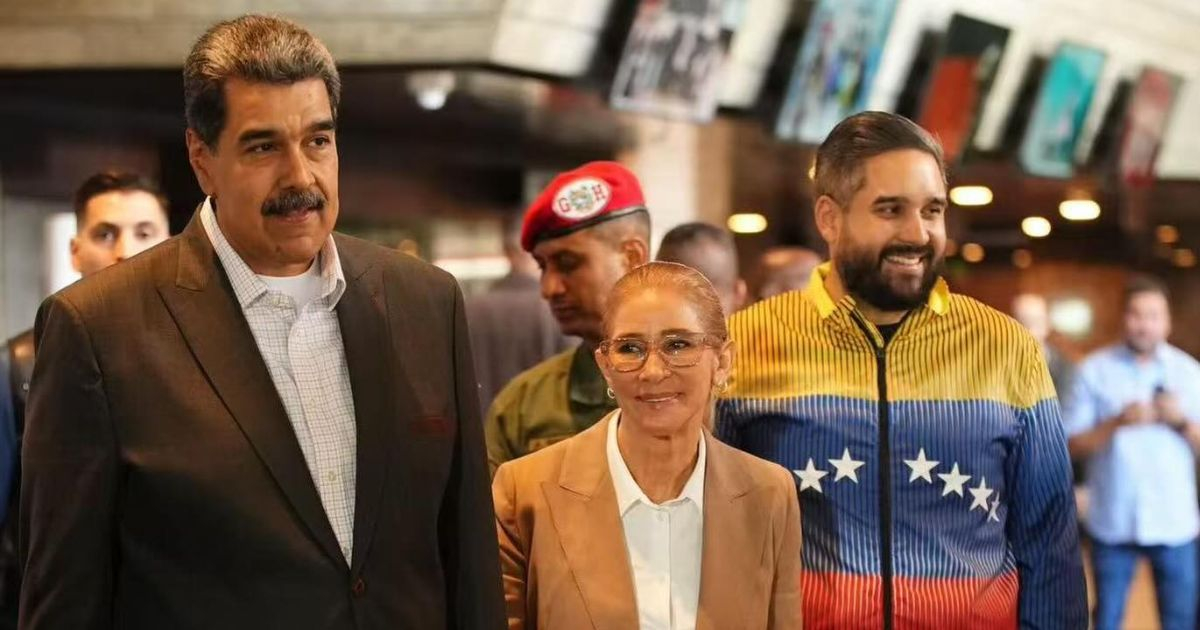
Nicolás Maduro Guerra, the sole biological son of the former Venezuelan dictator imprisoned in the United States, shared intimate details this Sunday in an interview with El País. He recounted the early hours of January 3, 2026, when his father was apprehended by U.S. special forces in Caracas and subsequently taken to a federal prison in New York.
This marks the first time someone close to the former leader has provided insights into that night, which resulted in the deaths of 83 individuals, both soldiers and civilians, during Operation Absolute Resolution. The detailed timeline of the U.S. strike on Venezuela indicates the capture occurred at 2:01 AM local time at Fort Tiuna, involving over 150 aircraft. Among the casualties were 32 Cuban soldiers protecting the dictator, whose presence the Cuban government had consistently denied.
Prior to the initial bombing, Maduro managed to send an audio message to his son: "Nico, they are bombing. Let the homeland keep fighting, we move forward." It was a farewell. "He believed he would die that day. We all thought he was going to die that day," the deputy recounted to journalist María Martín from the Spanish newspaper.
Personal Accounts and Emotional Struggles
Maduro Guerra disclosed that he has yet to release that audio publicly—"it will come out at some point," he promised—but acknowledged the weight of those words.
A month and two days later, while the deputy was debating the amnesty law in the National Assembly, he received his first call from his father from the Metropolitan Detention Center in Brooklyn. Rising from his seat, he ascended the chamber stairs and, away from the cameras, he admitted to shedding "a little" tear. Since then, he records all calls. The prison where Maduro is held has been described as hellish due to its extreme conditions: cells of about six square meters and up to 23 hours of isolation daily.
Unexpected Interests and Connections
The former president is allowed 510 minutes per month to communicate with the outside world. During Holy Week, he mingled with other inmates and briefly encountered rapper Tekashi 6ix9ine, to whom he signed a handcrafted SpongeBob figurine. "He must have met him just one day. My father mentioned signing something for him, but I didn't even know he was famous," his son recounted. Details of the encounter between Maduro and Tekashi 6ix9ine emerged when the rapper showcased the signed figurine upon his release.
From his cell, Maduro has also developed a surprising biblical devotion, which astonishes even his son. "He learned it. He tells us some crazy verses," he laughed. "My dad was never like this, but now he starts off with: 'You have to listen to Matthew 6:33. And Corinthians 3. And Psalm 108.'" The writings Maduro has sent from prison are almost entirely based on verses, something his son described as "more of a mass." Additionally, the former president has read approximately 60 books, ranging from Bolívar's Angostura Address to works by García Márquez, Lenin, and the New York penal code—the latter sent for his wife, Cilia Flores, a jurist studying it from the female wing of the same prison.
Political Reflections and Regrets
Not everything in their conversations is contemplative. Maduro also expressed anger over FC Barcelona's elimination from the Champions League on April 14: "Damn, that was a screw-up," he told his son.
On the political front, Maduro Guerra posed the question his father must be pondering in prison: "What did I do or not do that could have prevented January 3?" He answered himself: "January 3 was a sum. Of aggression, sanctions, mistakes. Of interests. Of everything." When confronted about why political openness wasn't initiated earlier, he admitted slightly: "Yes. Mistakes were made from all sides." In his responses, he omitted the crimes of decades of dictatorship that forced millions of Venezuelans to leave their country.
The deputy, who chairs the National Assembly's Internal Policy Commission, acknowledged that from that position "we have seen excesses, to put it nicely," and distanced himself personally from his father's legacy: "I am a member of the party, my dad was the president, but I am young, I didn't decide."
Since the day of the capture, when Maduro's son broke his silence on social media warning that "history will tell who the traitors were," the deputy has become one of the few chavismo voices still speaking in the present tense about the former leader. His faith in his father's return, he said, doesn't rest on the courts but on a political agreement.
With Maduro's capture and subsequent pressures from Washington on interim President Delcy Rodríguez's government, the Cuban regime suddenly lost its primary economic support—a crucial source of oil supply—and its most unwavering ideological ally in the region.
Frequently Asked Questions About Maduro's Capture
What were the circumstances surrounding Maduro's capture?
Maduro was captured by U.S. special forces on January 3, 2026, during an operation involving over 150 aircraft. The capture occurred at Fort Tiuna in Caracas, and the event resulted in the deaths of 83 individuals, including 32 Cuban soldiers.
How has Maduro's time in prison been described?
Maduro's imprisonment has been described as extremely harsh, with conditions akin to a hellish environment. He is confined to a small cell for up to 23 hours each day and is allowed limited contact with the outside world.
How has Maduro's capture affected Cuba?
Maduro's capture significantly impacted Cuba, as it lost its primary economic support and most steadfast ideological ally in the region, particularly in terms of vital oil supplies.