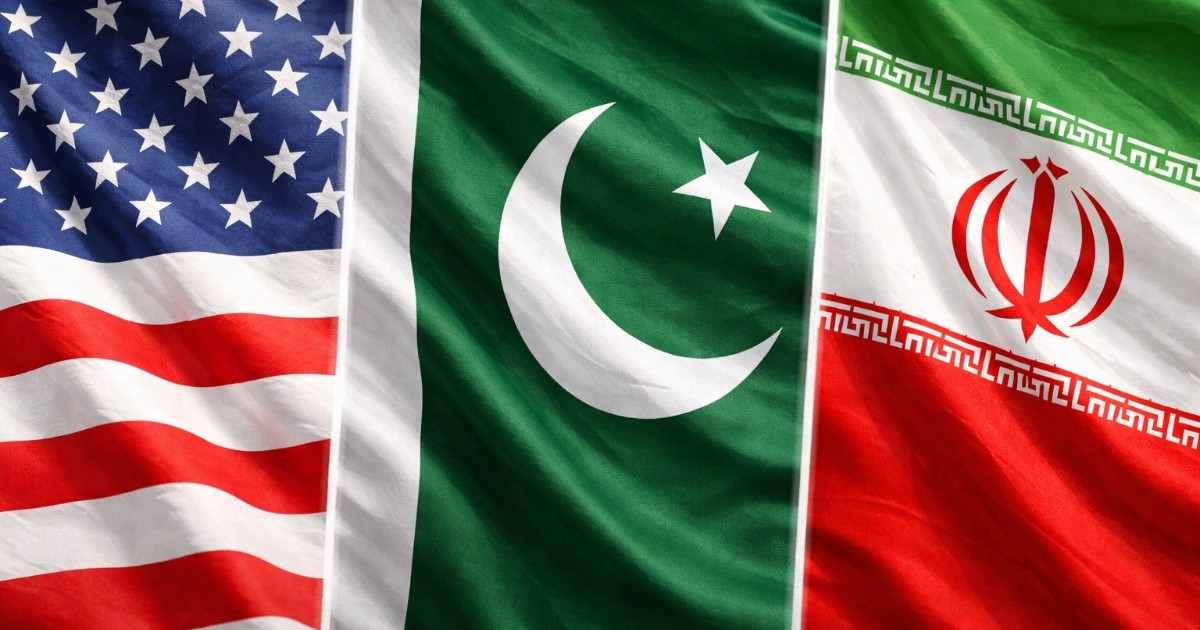
On Sunday, Iran announced it had received the United States' feedback on its 14-point peace proposal through Pakistan, as stated by Esmaeil Baqaei, the spokesperson for Iran's Ministry of Foreign Affairs.
"The U.S. perspective on Tehran's proposal has been delivered to Iran via Pakistan. This response is currently under review, and Iran's reply will be issued once the evaluation is complete," Baqaei mentioned, according to the Tasnim news agency, which is affiliated with Iran's Revolutionary Guard.
He further clarified, "Iran's 14-point plan is solely focused on ending the war. Nuclear issues are not included in these points."
This Iranian proposal counters a prior nine-point plan from Washington, aiming to permanently cease hostilities stemming from Operation Epic Fury, a joint military offensive by the U.S. and Israel that commenced on February 28, 2026.
Key components of the Iranian plan include an initial two-month ceasefire, withdrawal of American forces from the region, lifting of the naval blockade in the Strait of Hormuz, release of frozen assets, compensation payments, and cessation of hostilities across all fronts, including Lebanon.
Iran's Deputy Foreign Minister, Kazem Gharibabadi, described the plan's goal as permanently ending "the imposed war," warning that "the ball is in the United States' court to choose between diplomacy or continuing a confrontational approach," while affirming Iran's readiness for either path.
President Donald Trump initially expressed skepticism. As reported by the American media, Trump stated he couldn't envision the proposal's acceptability, arguing that Iran "hasn't paid a sufficiently high price" for its actions over the past 47 years, though he noted the proposal is under review.
This exchange of proposals occurs amid a ceasefire in place since April 7, extended indefinitely at Pakistan's request, following unsuccessful formal negotiations in Islamabad from April 10 to April 12.
During those talks, U.S. Vice President JD Vance led the American delegation, yet 21 hours of discussions failed to yield an agreement. "They have chosen not to accept our terms," Vance declared after the unsuccessful negotiations in Islamabad.
The current 14-point plan is Iran's second major formal proposal, following a 10-point counteroffer on April 6 where Tehran pledged not to develop nuclear weapons but demanded the right to enrich uranium and economic compensation.
Pakistan has served as the diplomatic conduit in all documented negotiation rounds since the conflict's onset, acting as the sole communication bridge between Washington and Tehran.
The war has cost the U.S. approximately $25 billion by the end of April, with 13 soldiers killed and over 380 wounded, according to official reports.
Iran now awaits Washington's formal response to its 14-point plan to end the conflict, with no public deadline set for the reply.
FAQs on Iran-U.S. Peace Proposal
What is the focus of Iran's 14-point peace proposal?
Iran's 14-point peace proposal is aimed at ending hostilities and includes measures such as a ceasefire, withdrawal of U.S. forces, lifting of blockades, and other peace-promoting strategies, explicitly excluding nuclear issues.
How has Pakistan contributed to the Iran-U.S. peace talks?
Pakistan has played a crucial role as a diplomatic intermediary, facilitating communication and negotiations between Iran and the United States throughout the peace talks.
What was President Trump's response to the Iranian proposal?
President Trump expressed skepticism regarding the Iranian proposal, stating it may not be acceptable and criticizing Iran for not having paid a significant price for past actions, although he acknowledged that the proposal is under review.