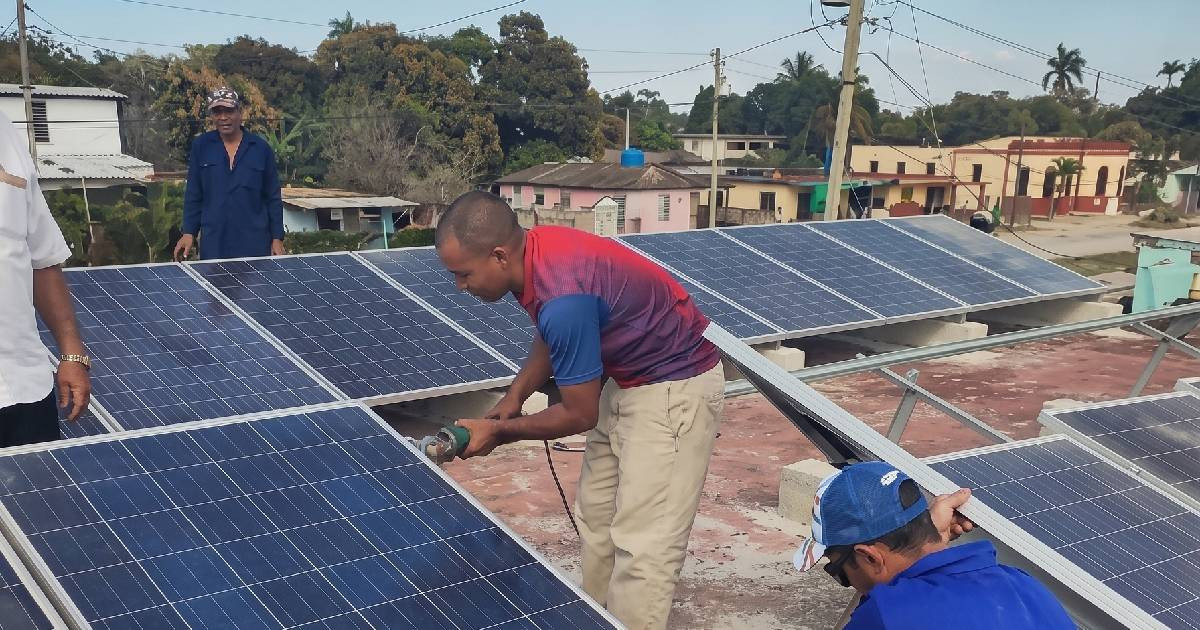
Mario Sabines Lorenzo, the First Secretary of the Communist Party in Matanzas, has unveiled a strategy to establish nine "solar charging stations" to allow residents to charge their electronic devices and cook collectively. This initiative is part of a broader set of measures aimed at alleviating the severe energy crisis impacting the province.
"We are in the process of relocating and setting up nine solar charging stations, enabling people to charge their gadgets and even cook there," stated the official following the May Day parade. These remarks were reported in the official newspaper, Girón, this past Sunday.
The term "solar charging station" is a Cuban neologism blending "solar" and "gas station," referring to energy service stations powered by solar panels, operating independently of the National Electric System (SEN). These stations emerged as a decentralized solution to the collapse of the state-run electrical grid.
Sabines candidly acknowledged the dire circumstances. "Our community is plagued by prolonged power outages, water shortages, and disrupted communications due to electricity deficits."
Matanzas: A Province Struggling Under the Energy Deficit
Matanzas is among the provinces most severely affected by the crisis. The Antonio Guiteras thermoelectric plant, one of the country's key facilities located in Matanzas, was taken offline on April 6 due to a boiler malfunction, exacerbating the national power deficit.
Nationwide, the shortfall in electricity generation exceeded 1,400 MW during several days in April, leading to blackouts lasting up to 24 hours in multiple regions.
Additional Measures to Combat the Energy Shortage
In addition to the solar charging stations, Sabines outlined other ongoing measures, including the installation of photovoltaic kits at clinics, funeral homes, and banks; electrical protection for water pumping stations Bello, Canímar, and El Conde; and the addition of 1,500 new streetlights donated by both state-owned and private companies.
He also announced that Etecsa, the sole state-owned telecommunications company, in collaboration with a small private enterprise, has set up 18 connectivity points in municipal centers. Specialized vehicles for dialysis and oncology patients, along with new electric tricycles, will also be introduced.
Expanding the Solar Charging Station Model
The concept of solar charging stations is not new to Cuba. The first of its kind in Villa Clara was launched on April 4 in the Virginia community of Santa Clara, operated by the private company Eléctrica Total.
That facility is equipped with 56 solar panels, 30 kilowatts of power, and the capability to service 52 cooking devices simultaneously, offering free food preparation services to the public.
In Villa Clara, private enterprises have established solar charging stations that collectively generate 5.5 MW, while the state sector has installed five megawatts across 185 entities.
The Roots of Cuba's Energy Crisis
The energy crisis necessitating these emergency solutions has worsened since January 2026, following Venezuela's suspension of crude oil shipments and Mexico's halt in petroleum exports due to pressure from the Trump administration's sanctions. Cuba's daily requirement ranges from 90,000 to 110,000 barrels, yet only 40,000 are produced domestically.
The National Electric System has experienced eight total collapses within just 18 months, with the seventh and eighth occurring on March 16 and 22.
Understanding the Solar Charging Stations Initiative
What is the purpose of the solar charging stations in Matanzas?
The solar charging stations are intended to provide a location where residents can charge their electronic devices and cook collectively, serving as a response to the ongoing energy crisis in the province.
How do the solar charging stations operate?
These stations operate independently from the National Electric System, utilizing solar panels to generate energy. They are a decentralized solution to the failing state-run electrical grid.
What other measures are being implemented to address the energy crisis in Matanzas?
Other measures include installing photovoltaic kits at essential facilities like clinics and banks, upgrading electrical protection for water pumps, adding new streetlights, and enhancing connectivity and transportation for medical needs.