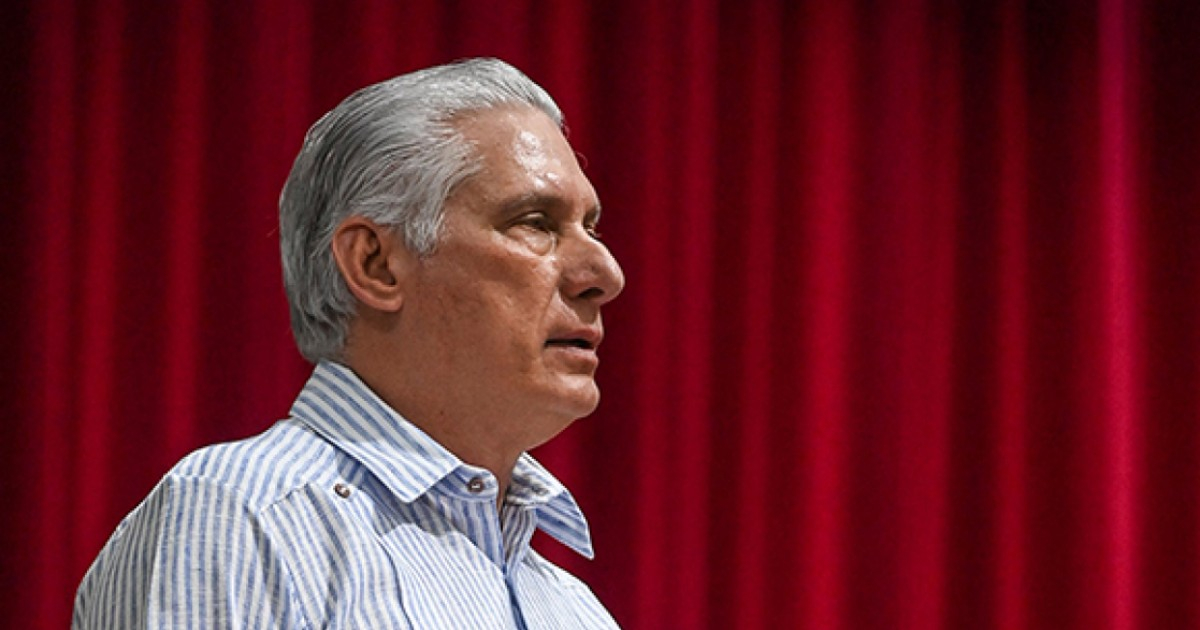
On Saturday, Miguel Díaz-Canel addressed an audience of international communists in Havana, emphasizing that Cuba's future sustenance will rely solely on what its people are able to produce rather than imports from abroad.
As the crowd erupted into applause, the Cuban leader proposed agroecology as a remedy for the severe food crisis that the island has faced in recent decades. This approach is a cornerstone of his government's plan for economic and social development.
Highlighting a focus on sovereignty and sustainability, Díaz-Canel stated, "We are aware that we will consume not what we import, but what we are capable of producing domestically."
Facing Reality with Rhetoric
Anticipating criticism, he rhetorically asked, "You might say, 'Are you crazy? With less fuel and fewer resources, how will you achieve food sovereignty?'" His answer relied on the "effort and talent of Cubans" and the adoption of agroecological techniques.
"In the absence of products and fertilizers, we are implementing agroecology and developing a sustainable agricultural program that suits our environmental conditions," he emphasized.
The Stark Contrast of Current Conditions
These declarations sharply contrast with the harsh realities faced by the Cuban population. The nation imports between 70% and 80% of its food, spending around $2 billion annually on external purchases, while domestic production has been in a freefall for years.
According to the Cuban Statistical Yearbook 2023, pork production plummeted by 93.2%, rice by 59.1%—a 70% decrease compared to 2018, meeting less than 11% of national demand—eggs by 43%, and milk by 37.6%. These official statistics underscore a severe food crisis that the government itself cannot conceal.
Admissions and Acknowledgments
In June 2025, Díaz-Canel conceded, "We have not made the necessary investments in agriculture and food production." That same year, the regime acknowledged its economic missteps without implementing substantial changes. By December 2024, the Communist Party admitted to the failure of food production at its IX Plenum of the Central Committee.
Vice Prime Minister Jorge Luis Tapia Fonseca candidly admitted that the progress of the Food Sovereignty Law 148 is "far from what the people expect."
Worsening Crisis Amid Energy Collapse
The crisis escalated dramatically in 2026 following an energy collapse after Nicolás Maduro's capture on January 3. In March 2026, the FAO warned that a diesel shortage was preventing the harvest of already planted crops, rendering the agroecological proposal a mere propaganda response to a genuine humanitarian crisis.
The human toll is devastating. A staggering 96.91% of the population has lost adequate access to food due to inflation and declining purchasing power. Alarmingly, 25% of Cubans go to bed without dinner, and 29% of families have cut out one meal daily.
An April 2026 report indicated that five provinces—Havana, Matanzas, Cienfuegos, Guantánamo, and Santiago de Cuba—are teetering on the edge with "critical levels of food survival."
While Díaz-Canel received applause from foreign communists, The Economist Intelligence Unit forecasted a 7.2% contraction of Cuba's GDP for 2026, marking the worst performance among 27 regional economies, with an accumulated decline since 2019 reaching 23%.
A staggering 80% of Cubans believe the current crisis is worse than the Special Period of the 1990s.
Understanding Cuba's Food Crisis and Economic Challenges
What is agroecology and how is it being used in Cuba?
Agroecology refers to sustainable farming practices that work with natural ecosystems. In Cuba, it is being promoted as a solution to the food crisis, focusing on reducing reliance on chemical inputs and enhancing local food production.
How has the Cuban government acknowledged its role in the current economic crisis?
The Cuban government has admitted to failing to make necessary investments in agriculture and food production, acknowledging economic mismanagement without implementing significant changes.
What impact does the energy crisis have on Cuba's food situation?
The energy crisis, exacerbated by a diesel shortage, prevents the harvesting of crops, worsening the food crisis and challenging the effectiveness of agroecological initiatives.
How is the current crisis compared to the Special Period of the 1990s?
A significant majority of Cubans, 80%, view the current economic and food crisis as more severe than the hardships experienced during the Special Period of the 1990s.