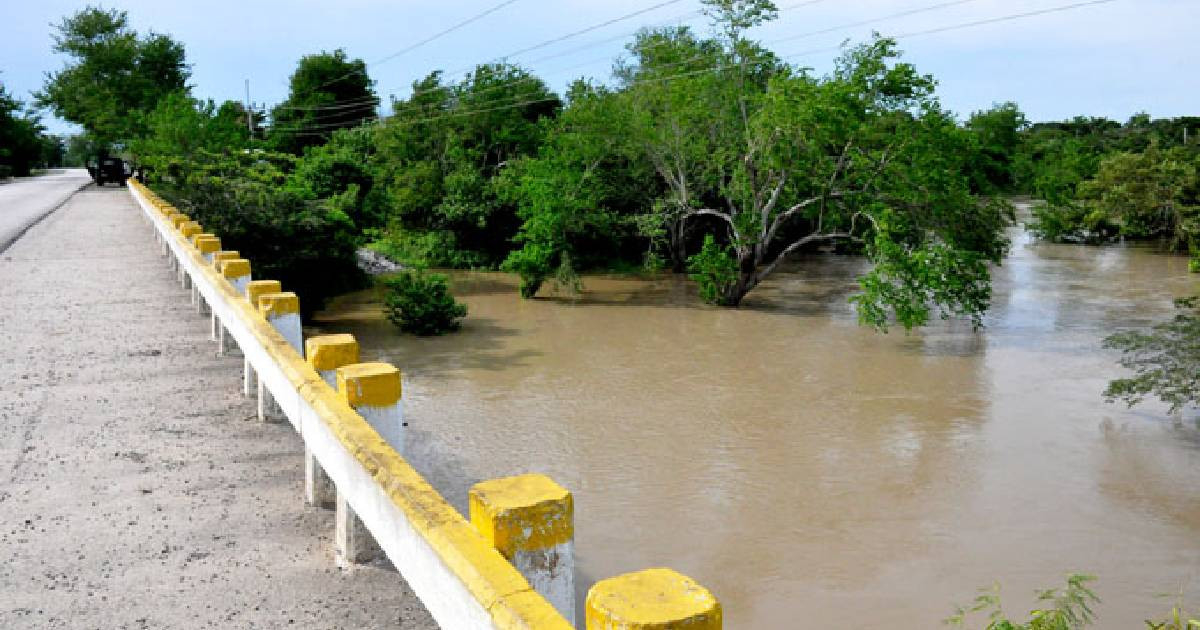
The Provincial Traffic Safety Commission of Granma declared on Saturday the complete shutdown of the bridge at kilometer 34 on the Las Tunas-Bayamo highway, crossing the Salado River in the town of the same name. This closure is a result of the destruction caused by Hurricane Melissa back in October 2025.
This decision halts traffic in both directions, compelling drivers to detour via the Central Highway through the Tunas–Holguín–Granma route, as detailed in a note published on the CNC TV Granma Facebook page.
In a response to the official post, local resident Lázaro Aguilera clarified that the issue lies not with the bridge's structure itself, but rather with the approach embankment, which connects the road to the bridge.
"Continuous monitoring has been maintained concerning the embankment's erosion. There is no structural damage to the bridge. Thanks to this oversight, no accidents have occurred," Aguilera explained.
Authorities have emphasized that efforts are underway to restore traffic "as soon as possible" and have apologized for the inconvenience.
Public Outrage Over Delayed Response
What truly frustrates the Cuban people is not just the closure, but the delay in implementing it, considering Hurricane Melissa made landfall on October 29, 2025, as a Category 3 storm along the southern coast of Guamá, Santiago de Cuba. Many roads in the eastern region have been impassable since early November.
The formal announcement of the closure over six months after the hurricane has sparked a surge of criticism across social media.
"After so many months since the hurricane, they finally implement safety measures. Thankfully, no tragedies have occurred," commented Luis Felipe Garlobo Estrada.
Mariela Guerrero Delgado expressed her disbelief more bluntly: "For God's sake, Melissa hit in October and the issue still persists. It will likely continue. No words."
Jose Manuel Ricardo summed up the general sentiment with sarcasm: "Excellent preventive work following Hurricane Melissa," he remarked.
Economic Implications of the Detour
The economic impact of the detour is as concerning as the delay itself. The alternative route through Holguín demands more fuel, a critically scarce resource in Cuba, raising the costs of both passenger fares and freight for small and medium-sized enterprises.
"Now, with increased fuel consumption for vehicles traveling from Oriente to Havana and back via Holguín, passenger fares, which are already high, will rise further, as will the transport costs for freight in SMEs," warned Leandro Barcaz.
Roberto Santiesteban pointed to a deeper issue: the lack of maintenance. "Look at the bridges on the Central Highway; they've been there for nearly 100 years. We've lost the practice of maintaining them," he observed.
Ongoing Challenges in Infrastructure Repair
The road recovery process in the eastern region has been both slow and inconsistent. In November 2025, Venezuela dispatched technicians to repair hurricane-damaged roads, yet two weeks after Melissa, the Plan Turquino remained unrecovered, highlighting both the extent of the damage and the sluggish state response.
"It's almost a year since Melissa, and I understand nothing," summarized Mayra Aguilera Angeriz, echoing the frustration shared by thousands of Eastern Cubans still waiting for the cyclone-shattered infrastructure to be repaired.
FAQs on the Bridge Closure and Hurricane Melissa's Impact
Why was the bridge on the Bayamo-Las Tunas highway closed?
The bridge closure was due to damage to the approach embankment caused by Hurricane Melissa in October 2025, not the bridge's structure itself.
What alternative routes are available due to the bridge closure?
Drivers are advised to use the Central Highway, taking the Tunas–Holguín–Granma route as an alternative.
How has the closure affected transportation costs?
The detour increases fuel consumption, a scarce resource in Cuba, thus raising the costs for passenger fares and freight transport for small and medium enterprises.