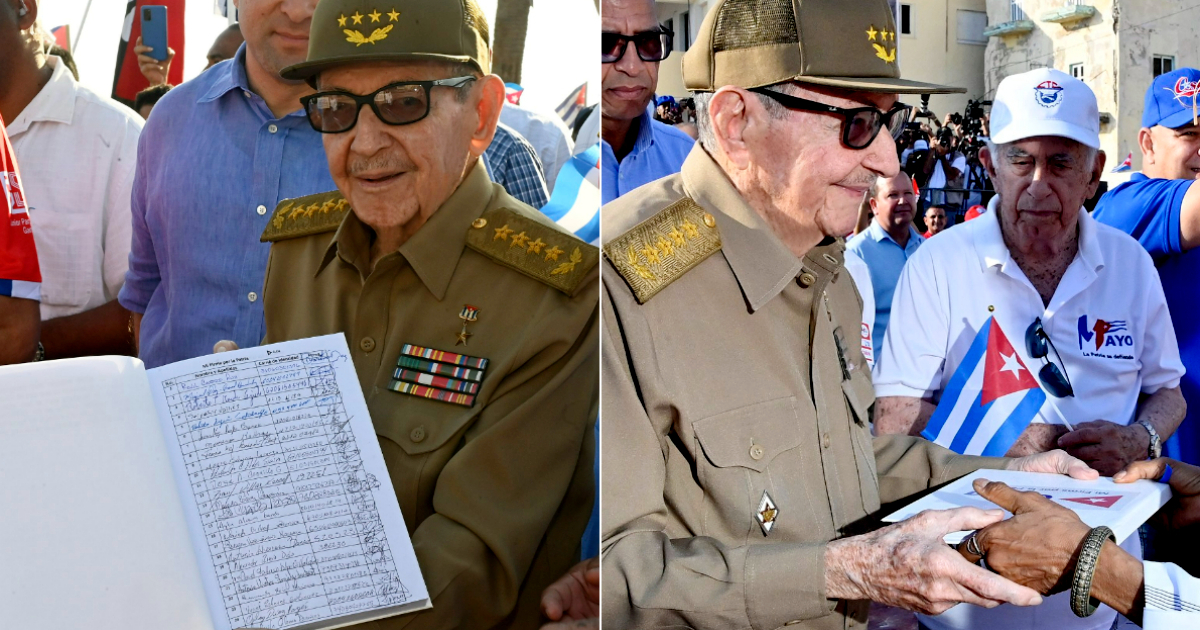
On May 1st, General of the Army Raúl Castro made a public appearance in Havana, clutching a book filled with signatures from the "For the Homeland" campaign. This event was one of the more symbolic images from the regime's dwindling propaganda effort.
The scene, shared on the Presidency's social media platforms, unfolded during the official parade at Havana's Malecón. The regime's leadership aimed to project an illusion of unity amidst Cuba's deepening economic and social crisis. However, the sparse attendance, potentially the lowest in the 67-year history of the dictatorship, painted a different picture.
Symbolic Gesture Amidst a Struggling Regime
The book is part of a propaganda campaign claiming over six million signatures, allegedly demonstrating popular support. Yet, this narrative clashes sharply with reports of low turnout at some events and widespread criticism regarding the lack of freedoms and questions about the authenticity of public participation.
The event was not without controversy on social media, as many Cubans mocked the official discourse. Meanwhile, state media attempted to portray a festive atmosphere through carefully curated images and videos. Accusations of photo manipulation also surfaced, highlighting efforts to control public perception of the event.
Castro's Enduring Influence
In this context, the image of Raúl Castro—noticeably aged, according to several analyses—holding the signature book carries a strong symbolic weight. It suggests the twilight of a regime the Castro family has held since 1959, struggling to find "continuity" amid the current economic collapse.
Beyond the gesture, the page displayed by the general identifies several signatories, exposing the internal makeup of this supposed "support." It reveals a mix of top political leaders, military commanders, Communist Party officials, and figures prominent in the regime's propaganda machine.
Key Figures Behind the Signatures
These are the names listed on the first page:
Raúl Castro Ruz — General of the Army; key figure in Cuba's power structure
Miguel Díaz-Canel Bermúdez — President of the Republic
Roberto Morales Ojeda — Secretary of Organization of the Central Committee of the PCC
Salvador Valdés Mesa — Vice President of the Republic
Roberto Legrá Sotolongo — Army Corps General; Chief of the General Staff of the FAR
Yuniasky Crespo Baquero — Head of the Ideological Department of the Central Committee of the PCC
Nemesia Rodríguez Montano (“the coal flower”) — Symbolic figure in the official narrative
Mario Felipe Sabines Lorenzo — Governor of Matanzas and first secretary of the PCC in the province
Humberto Camilo Hernández Suárez — Head of the Policy of Cadres Department of the Central Committee of the PCC
José Antonio Carrillo Gómez — General; Head of the Political Directorate of the FAR and member of the Central Committee of the PCC
Raúl Villar Kessel — Division General; head of the Central Army
Caridad Meyvis Estévez Echeverría — First secretary of the UJC
Lis Cuesta Peraza — Official and wife of Miguel Díaz-Canel
Aylín Álvarez García — Rector of the “Ñico López” Higher School of the Party; former first secretary of the UJC
Marieta Poey Zamora — Official in the political-administrative apparatus
Gerardo Hernández Nordelo — National coordinator of the CDR
Antonio Álvarez Blanco — Senior colonel; Head of the Central Command's Political Section of the FAR
Bienvenido Roig Chirino — First secretary of the PCC in Ciénaga de Zapata
Yurién Estévez Gutiérrez — President of the Municipal Assembly of People's Power in Ciénaga de Zapata and deputy
Oslay Díaz Pagés — Food coordinator in Pedro Betancourt
Liudmila Álamo Dueñas — Deputy Chief of the Sectoral Attention Department of the Central Committee of the PCC
Four other names remain unidentified due to illegible handwriting in the image.
This list is a carefully crafted representation of the political elite, senior military personnel, the Communist Party's ideological apparatus, territorial cadres, and symbolic figures. More than just a collection of signatures, the document displayed by Raúl Castro serves as a visual representation of Cuba's power structure at a time when the regime is trying to reaffirm control and legitimacy in the face of growing social discontent.
Understanding the "For the Homeland" Campaign
What is the "For the Homeland" campaign?
The "For the Homeland" campaign is a propaganda initiative by the Cuban regime, claiming to collect over six million signatures as a show of popular support.
Who are the main figures in the signature book?
The first page of the book includes names such as Raúl Castro, Miguel Díaz-Canel, and other high-ranking political and military officials, as well as figures from the Communist Party and its ideological apparatus.
Why is the image of Raúl Castro with the book significant?
The image of Raúl Castro holding the book symbolizes the enduring influence of the Castro family and the regime's struggle for continuity amid economic difficulties and social unrest.