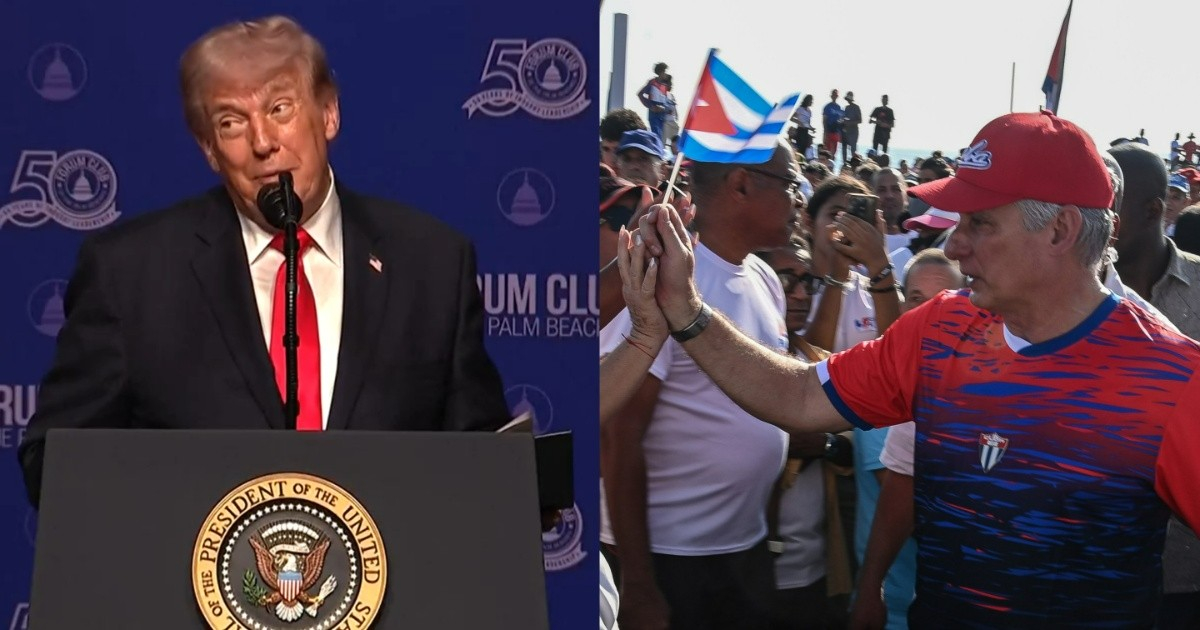
On Friday, Miguel Díaz-Canel took to social media platform X to express his disapproval of a new executive order issued by Donald Trump, which intensifies sanctions against the Cuban regime. He accused the U.S. government of displaying "moral poverty" and showing "contempt for the sensitivity and common sense of Americans and the international community."
In the official tweet posted on Friday, Díaz-Canel dismissed Washington's rationale, stating, "No honest person can accept the claim that Cuba poses a threat to that country. The blockade and its reinforcement cause immense harm due to the intimidating and arrogant behavior of the world's largest military power."
His reaction came shortly after Trump, on International Workers' Day, signed a new executive order that freezes all assets linked to the Cuban regime within U.S. territory.
Expanded Sanctions and International Repercussions
The order is grounded in the International Emergency Economic Powers Act and extends Executive Order 14380 from January 29, 2026, which labeled the Cuban government as an "unusual and extraordinary threat" to U.S. national security.
Among its most significant provisions, the new order enforces secondary sanctions on banks and foreign entities conducting transactions with sanctioned Cuban entities, risking their access to the U.S. dollar.
Additionally, it bans sanctioned Cuban officials and their adult family members from entering the United States and grants the Secretary of State and Treasury joint authority to target new sectors, including energy, defense, mining, and financial services.
Cuban Officials and International Backlash
Cuban Foreign Minister Bruno Rodríguez also condemned the measures, calling them "reprehensible, illegal, abusive, and ridiculous," asserting that they "will not intimidate us."
The announcement coincided with Raúl Castro and Díaz-Canel leading the May Day parade at the José Martí Anti-Imperialist Tribune, opposite the U.S. Embassy in Havana, a somber display of coerced allegiance.
Secretary of State Marco Rubio defended the sanctions, arguing that Cuba hosts intelligence bases of China and Russia just 90 miles from the U.S. and that economic reforms are unfeasible under the current leadership.
Since January 2026, the Trump administration has imposed over 240 sanctions on Cuba and intercepted at least seven tankers bound for the island.
Cuban-American Congresswoman María Elvira Salazar applauded the new measures, encapsulating Washington's stance with the phrase, "The era of looking the other way is over."
Understanding U.S. Sanctions on Cuba
What is the main reason behind the new U.S. sanctions on Cuba?
The new sanctions were imposed due to concerns about Cuba hosting intelligence bases from China and Russia, posing a threat to U.S. national security.
How do the sanctions affect international banks and entities?
International banks and entities conducting transactions with sanctioned Cuban entities risk losing access to the U.S. dollar under the new sanctions.
Who has the authority to implement additional sanctions on Cuba?
The Secretary of State and the Treasury Department have joint authority to impose additional sanctions on sectors such as energy, defense, mining, and financial services.